
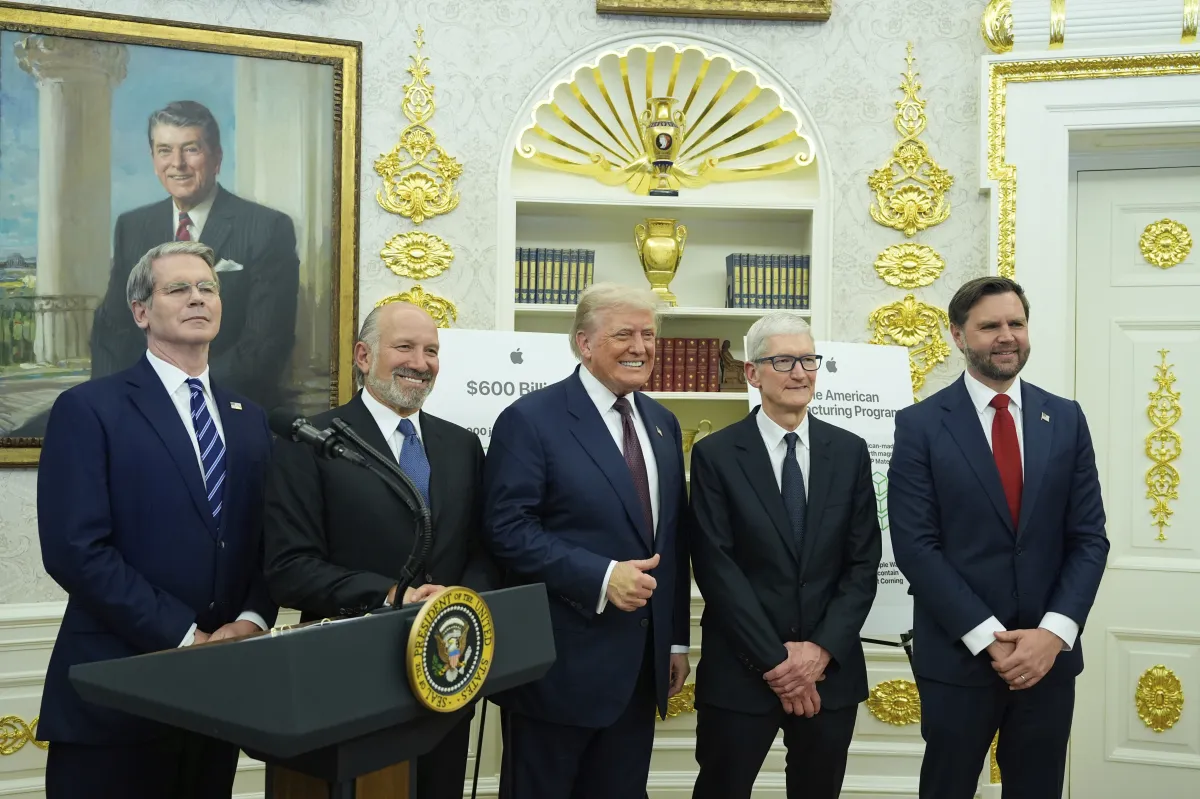
On Wednesday, President Donald Trump announced a 100 per cent tariff on computer chips. This move could lead to higher prices for a wide range of electronics, including cars, household appliances, and other products powered by these essential processors. "We will be putting a tariff of approximately 100% on chips and semiconductors," Trump stated in the Oval Office while meeting with Apple CEO Tim Cook.
He added, "But if you are building in the United States of America, there is no charge." This announcement comes more than three months after his administration temporarily exempted most electronics from its most significant tariffs.
Aimed at encouraging domestic production
Trump's policy aims to encourage domestic production by exempting companies that manufacture chips within the U.S. This is a significant departure from the CHIPS and Science Act, which offered over $50 billion in funding and tax credits to support new chip plants and research. Trump has been vocal in his opposition to this approach, instead favoring tariffs to compel companies to move their manufacturing to the U.S. He is betting that the threat of dramatically higher costs will push companies to build factories domestically, despite the risk of squeezing profits and increasing prices for consumers.
Effect on iPhones made in India
It remains to be seen whether the agreement between Cook and Trump will protect the millions of iPhones made in China and India from existing tariffs and prevent Apple from having to raise prices on its new models, which are expected to be unveiled next month.
Investors view this as positive development
Investors appear to view the potential tariff exemptions as a positive development for major tech companies like Apple, which have already committed to increasing their U.S. manufacturing. Since Trump returned to the White House in January, Big Tech has collectively pledged about $1.5 trillion in U.S. investments. This includes a $600 billion commitment from Apple after the company added another $100 billion to a previous promise made in February.
Wall Street's optimism was reflected in stock market gains. After Apple's stock price rose by 5% during regular trading, shares increased by another 3% in extended trading following Trump’s announcement. Investors also showed confidence in other companies with significant U.S. commitments. Shares of AI chipmaker Nvidia, which has made major investments in the U.S., rose slightly in extended trading, adding to the $1 trillion gain in market value since the start of Trump's second administration. Intel, a computer chip pioneer, also saw its stock price climb.
ALSO READ: iPhone 15 gets huge discount, available for less than Rs 40,000: Find out how to get this deal
