
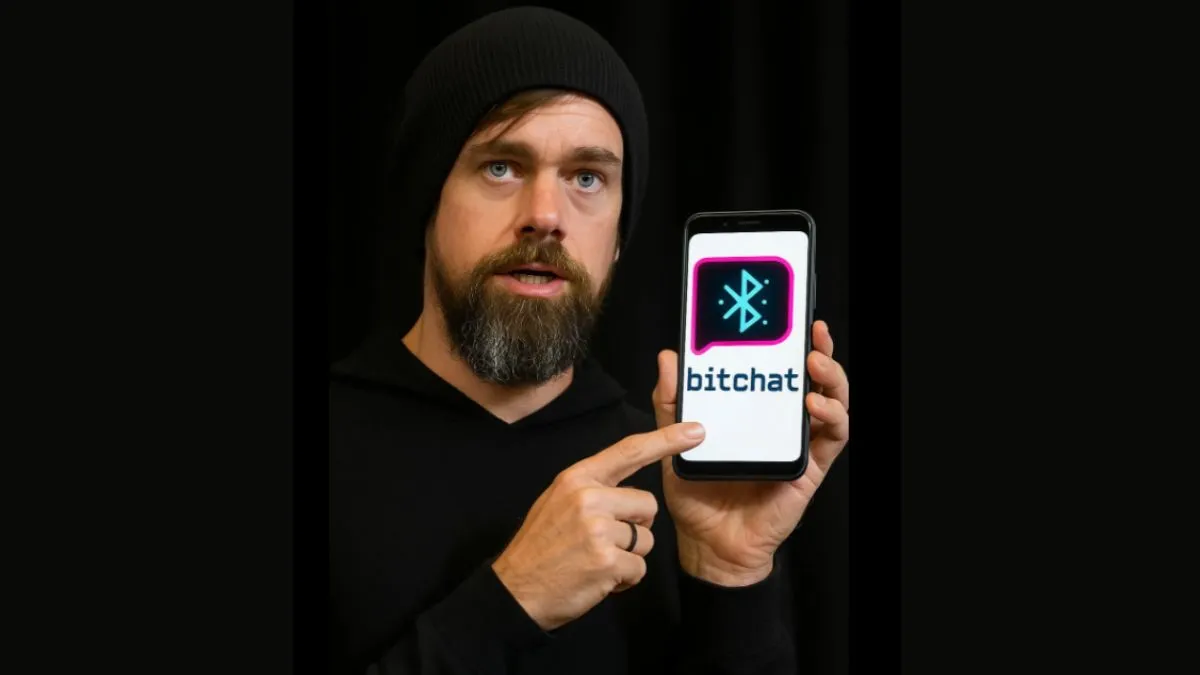
Jack Dorsey, one of the founders of Twitter (now known as X), has surprised the world yet again by introducing a new offline texting app, dubbed 'Bitchat'. The main idea behind the app is to change the way we communicate in a connected ecosystem. The app runs on Bluetooth mesh networks, which enables the users to send end-to-end encrypted messages without relying on mobile data, SIM cards or Wi-Fi networks. There's no need to sign up and no usernames are involved—privacy is built-in by design.
Messaging without SIM, internet or login
There are multiple things a user can do with the new offline messaging app, like:
- Send temporary messages to contacts
- Easily create group chats
- Access password-protected rooms
- Chat without revealing your identity
As the mobile application does not store messages or require accounts, it is especially useful in places with internet blackouts, censorship or during emergencies.
Competing in the Mesh Networking Space
Bitchat app has entered an increasingly competitive space. Other platforms like Fernweh (fernweh.chat) by Offline Protocol already offer mesh-based messaging and even offline crypto payments.
Although the Bitchat app has been focusing on simplicity and privacy, Fernweh, on the other hand, has been pushing towards a more feature-rich offline communication ecosystem.
A new direction for secure communication
With growing concerns around digital surveillance and data misuse, apps like Bitchat, which operate offline, reflect a broader shift toward decentralised, censorship-resistant communication. Whether you are at a festival, protest or in an area with poor internet access, Bitchat claims to keep the user connected without breaching privacy.

Bitchat is currently in the early stages, but it hints towards the beginning of an offline messaging service, which provides connection and security altogether.