
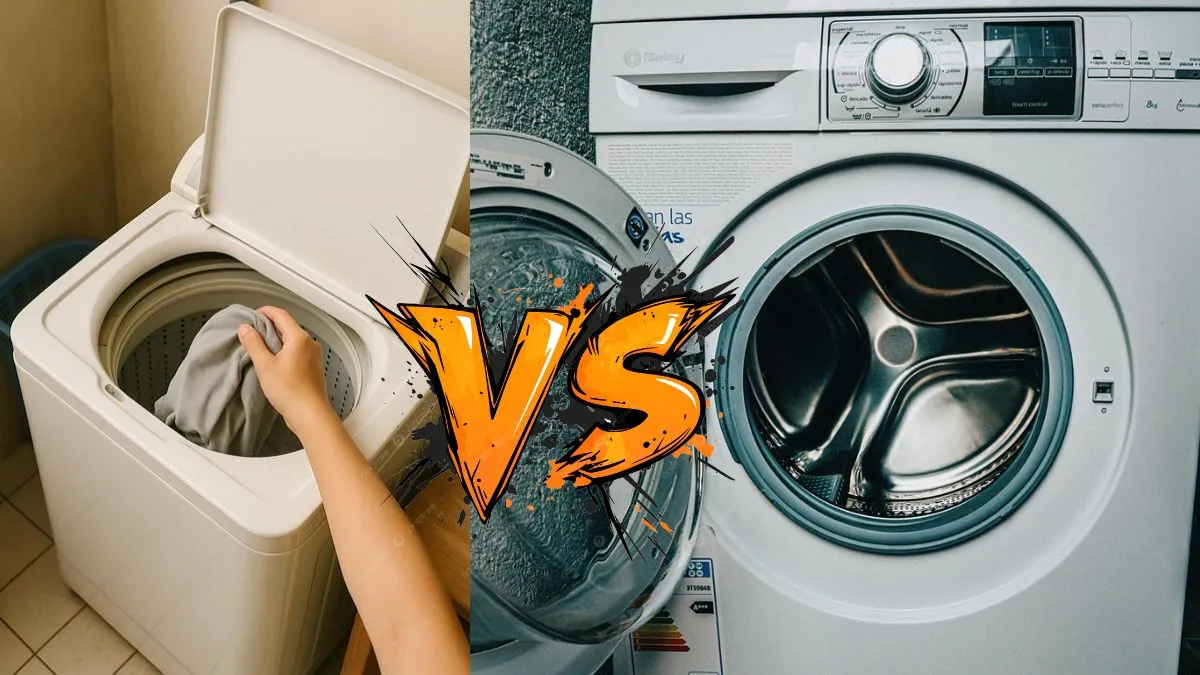
If you step into any Indian household these days, there is a good chance that you will spot a washing machine humming away in a corner. Whether it is a semi-automatic, fully automatic, top-load, or front-load, people choose based on what their wallet and routine demand. But here’s a question a lot of new buyers keep asking: Do front-load washing machines really use less electricity (and water) than top-load models?
Let us compare and understand how the washing machines are different.
Front-load washing machines: Built for efficiency
Front-load washing machines generally use less electricity. Modern front-loaders often come equipped with Inverter and Direct Drive (DD) technology, making them way more energy-efficient. Many run on BLDC (Brushless Direct Current) motors. These motors spin with less friction, using DC power, which lets your machine clean clothes using less energy—and makes everything run a little smoother.
Water usage is another area where front-loaders win. They can save up to 50 per cent more water compared to old-school top-load machines. The drum spins faster, so clothes come out drier, which also means you don’t need to run the dryer as long—more energy saved. It’s a double win.
Top-load washing machines: Simple, but thirsty
Most top-load washing machines use regular AC motors, not the DC ones you get in front-load machines. This means they draw more power each cycle. Plus, top-loaders need to fill the drum nearly to the top for every wash. More water in the drum means the motor has to work harder—so both your electricity and water bills go up.
Add in the agitator inside many top-loaders, which tries to scrub away dirt by spinning clothes around aggressively. Sure, it cleans well, but it can also wear out your clothes faster and sometimes makes a tangled mess.
So why do people still buy top-load machines?
Price and convenience: Top-load washing machines usually cost around 30% less than front-loaders. The design’s simple—pop in your laundry, no need to bend over to load or unload—which makes them easier for some folks to use.
So, which one should you choose?
If you are on a tight budget or you just want something basic and hassle-free, a top-load machine gets the job done. They are affordable, straightforward, and reliable. But if you are thinking long-term and want to cut your electricity and water bills, front-load machines clearly pull ahead. Experts say families can save 5 to 10 units of electricity per month just by switching.
If your family washes clothes often or you care about keeping bills in check over the years, front-loaders pay off. You really notice that difference as the months go by.
Lastly, the top-load washing machines are budget-friendly and easy to use, but front-load models are the real winners when it comes to energy and water efficiency. Overall, the best machine is the one that fits your budget and your priorities. Means, in case you want lower energy bills and better efficiency, then you may go for a front-loader, and you will feel the difference.
