
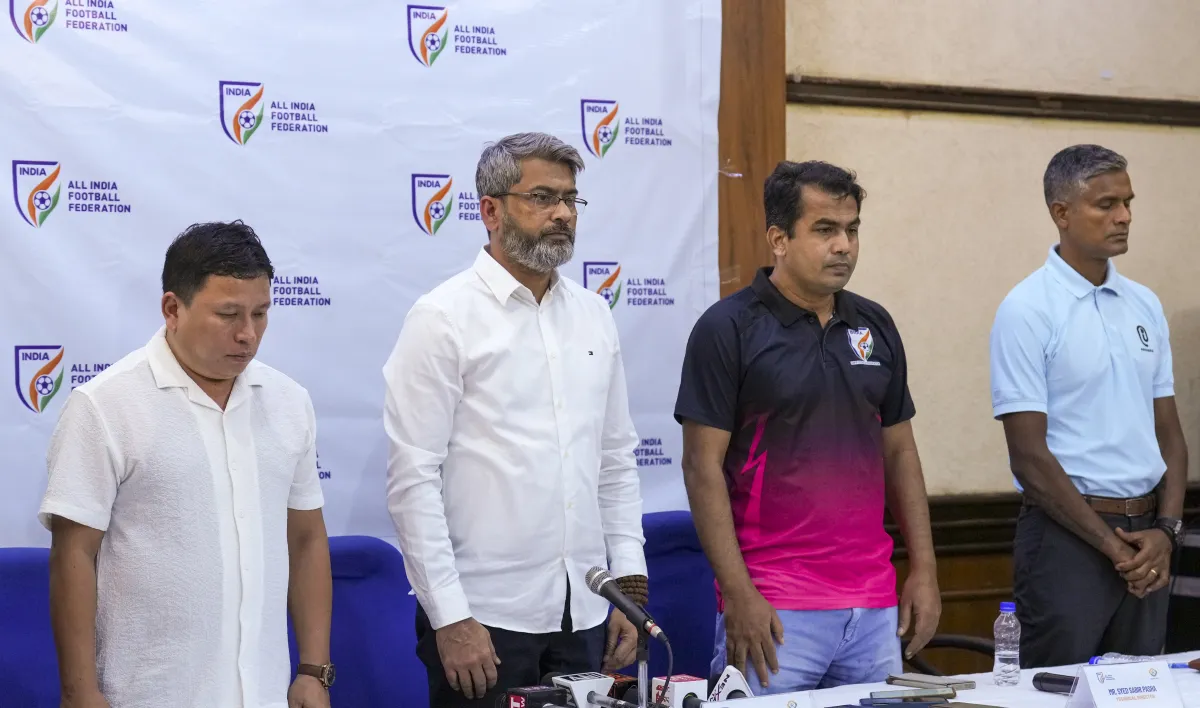
The much-anticipated meeting between the All India Football Federation (AIFF) and its commercial partner, Football Sports Development Limited (FSDL), on Monday failed to produce a clear resolution regarding the future of India’s domestic football competitions. Despite both sides expressing optimism, concrete decisions on the upcoming Indian Super League (ISL) and Super Cup remain pending.
In a statement released post-meeting, the AIFF said the discussion was ‘constructive and positive,’ with both parties aiming to reach a joint proposal. However, no timeline or clarity was provided on the scheduling or commencement of the ISL season, which has been clouded by contractual and administrative uncertainty/
The ongoing dispute is currently under judicial scrutiny, with the Supreme Court having directed both parties on August 23 to work towards a resolution ahead of the next hearing scheduled for August 28.
“Both parties approached the discussions in a constructive and positive spirit and expressed confidence in arriving at a mutually agreed proposal that will ensure the continued development and progress of football in India,” the AIFF noted in its statement. It also confirmed that a joint proposal will be submitted to the Supreme Court and declined to make further comments due to the matter being sub judice.
What’s the root cause?
The root of the crisis lies in the non-renewal of the Master Rights Agreement (MRA) between the AIFF and FSDL, which has led to the 2025–26 ISL season being placed “on hold” since July 11. As a result, several ISL clubs have paused operations or delayed salaries, raising fears of a full-scale shutdown.
The issue came to the forefront when 11 ISL clubs warned the AIFF that the ongoing impasse could lead to their closure. They stressed the severe implications of a non-functional league on the national team’s preparation for AFC and FIFA competitions, as well as the risk of Indian clubs being excluded from continental tournaments due to a lack of competitive matches.
The Supreme Court had earlier reserved its verdict on the finalisation of the AIFF’s draft constitution, adding another layer of complexity to Indian football’s governance crisis.
