
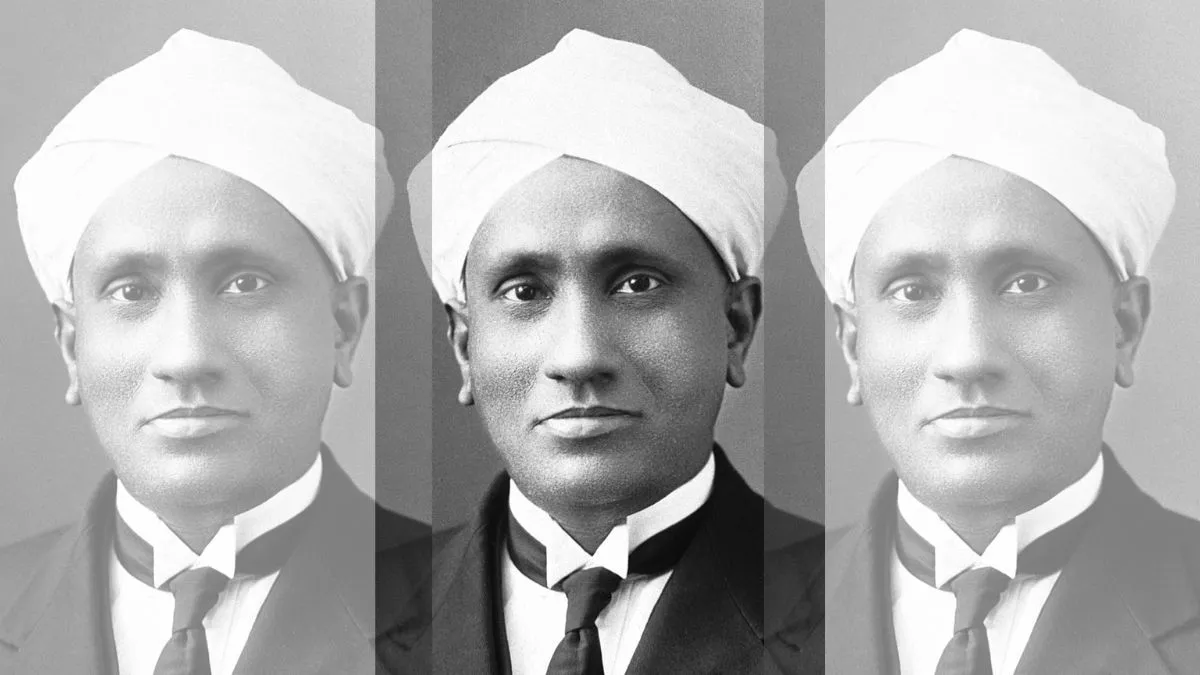
Chandrasekhara Venkata Raman is considered as one of best physicists ever produced by India. Born on November 7, 1888, in Tamil Nadu's Tiruchirapalli, Raman is known for his work in the field of light scattering and discovering the subsequent Raman Effect or Raman scattering. For this, he received the coveted Nobel Prize in Physics in 1930.
Thus, every year, CV Raman's birth anniversary is celebrated widely in India.
Notably, Raman received several chances, particularly after receiving the Nobel Prize in Physics, to work in Western labs. After discovering the Raman Effect and receiving the Nobel Prize, many European universities and research institutions, including those in England, Germany, and the United States (US), had approached Raman, but he had always rejected them.
Why did CV Raman refuse to leave India for Western labs?
Though Raman received several chances to work in Western labs, he always rejected them as he wanted to work in India. He strongly believed that India should have its own robust scientific culture and he was very much committed to working for it.
Additionally, Raman believed that it was his duty to mentor his students and help the country generate more scientists. "I have my laboratory in India, my students are here, and my work is here. Why should I go anywhere else?" he had said once.
What is Raman Effect?
Discovered in 1928, Raman Effect scattering of light phenomenon that describes the changes in the wavelength of light when it passes through a transparent substance such as solid, liquid or gas. It was discovered during the study of the blue colour of the Mediterranean Sea.
In simple terms, Raman Effect says that light scatters without changing its wavelength when it passes through an object. Some of the scattered light can have shorter wavelength, while some can have longer wavelength.
How does the Raman Effect still matter in 2025?
Even in 2025, Raman Effect is considered to be very important because it is the foundation of Raman spectroscopy, which is a standard analytical technique that is commonly used in physics, chemistry and biology. The Raman effect helps in identifying molecules via their unique "vibrational fingerprints".
"The Raman Effect is a proof of the quantum nature of light and of the energy levels in molecules," Raman had said once, while talking about his theory.
