
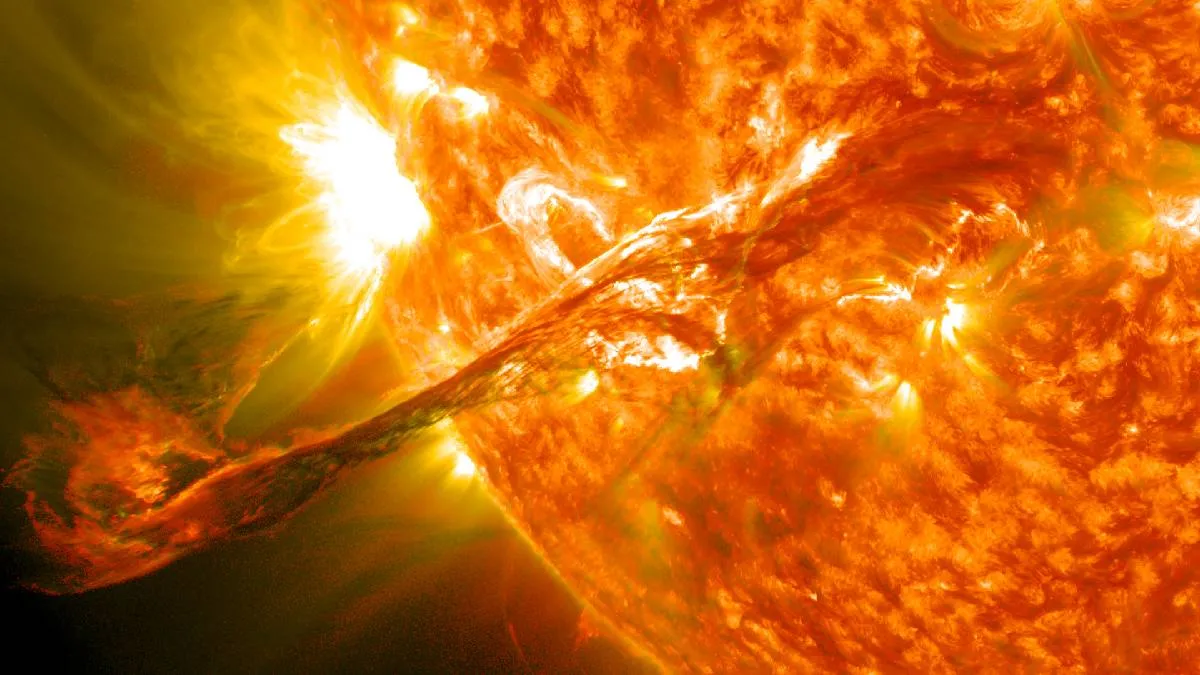
The Sun is emitting powerful solar storms that have raised concerns among space agencies worldwide, including ISRO. These solar storms can trigger radio blackouts, impact satellites, and disrupt television signals, radar systems, and power grids.
ISRO has confirmed that it is continuously monitoring more than 50 operational Indian satellites due to the potential risk of disruption to communication, navigation systems, and satellite payloads caused by the ongoing solar activity.
Solar storms triggered by active Sunspot region
The current wave of solar storms began with the sudden intensification of a magnetically complex sunspot cluster known as Active Region 14366. Over the past few days, the Sun has emitted several strong solar flares, including an X8.1-class flare—the most powerful solar flare recorded so far in 2026.
NASA confirms peak solar activity
NASA confirmed that the strongest X8.1-class eruption occurred on February 1, with solar activity peaking between February 1 and February 2. These eruptions have been closely tracked by NASA’s Solar Dynamics Observatory.
The event was the brightest solar flare observed since October 2024 and ranks among the top 20 most powerful solar flares recorded since 1996, when modern satellite monitoring began.
Solar maximum phase behind intense activity
The Sun undergoes cycles of heightened activity approximately every 11 years. The current solar storm activity is part of this phase, known as the solar maximum, during which solar flares and eruptions become more frequent and intense.
Impact of Solar storms on Earth
Although solar storms do not directly harm humans on the ground, they can significantly disturb the ionosphere—the electrically charged layer of Earth’s upper atmosphere. Such disturbances are known to cause high-frequency radio communication blackouts, disruptions to navigation signals, increased radiation exposure for satellites, and elevated risks for high-altitude aviation near the polar regions.
These intense solar storms also result in heightened aurora activity.
ALSO READ: NASA delays crewed Moon mission after hydrogen leaks disrupt rocket dress rehearsal
