
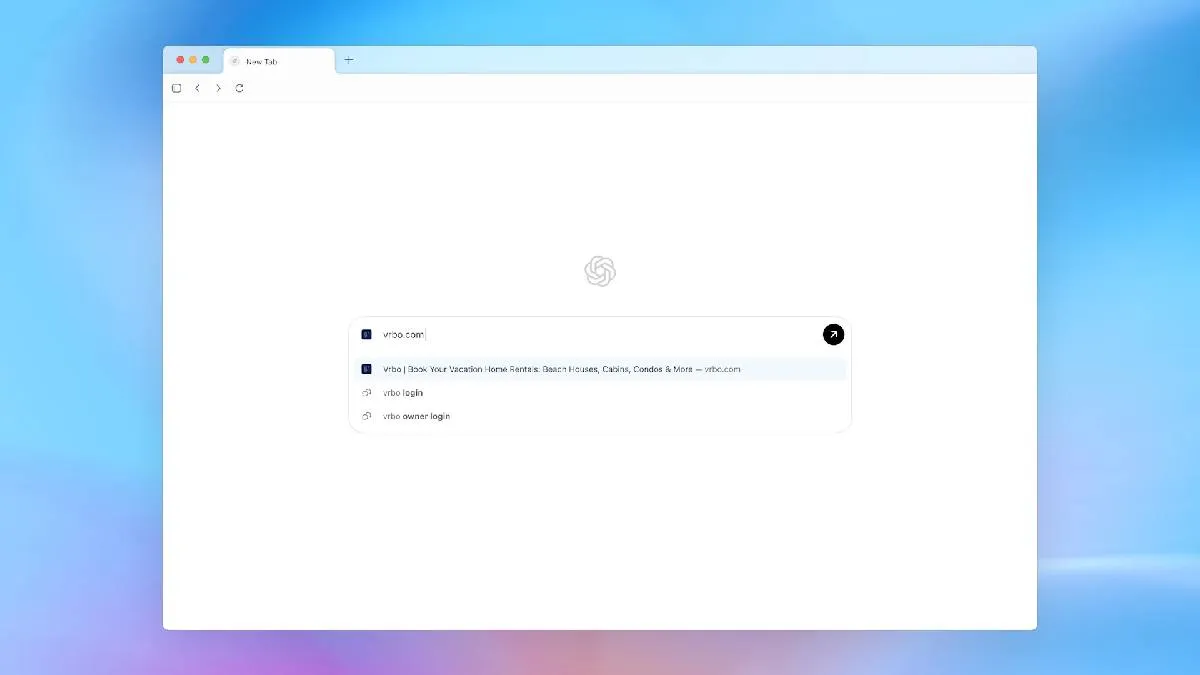
OpenAI introduced its new web browser, Atlas, on Tuesday. This move immediately puts the ChatGPT maker in direct competition with Google, as a growing number of internet users rely on artificial intelligence to answer their questions.
Making its popular AI chatbot a gateway to online searches could allow OpenAI, the world's most valuable startup, to capture more internet traffic and revenue from digital advertising. However, this strategy raises concerns: if ChatGPT effectively feeds people summarised information, it could further cut off the lifeblood of online publishers by discouraging users from clicking traditional web links.
Despite having over $800 million users, many access ChatGPT for free. The San Francisco-based company, which sells paid subscriptions, is currently losing more money than it makes and is actively seeking ways to turn a profit. Atlas launches Tuesday on Apple laptops (macOS) and will soon expand to Microsoft Windows, Apple iOS, and Google Android systems.
The browser wars: A "daunting challenge"
OpenAI CEO Sam Altman called the launch a "rare, once-a-decade opportunity to rethink what a browser can be about and how to use one". However, analyst Paddy Harrington of Forrester cautioned that competing with a "giant who has ridiculous market share" will be a significant challenge.
The launch follows a period of intense legal and commercial scrutiny in the browser market. Just a few months ago, an OpenAI executive testified that the company would be interested in buying Google's industry-leading Chrome browser if a federal judge had required its sale to prevent antitrust abuses. That possibility ended last month when U.S. District Judge Amit Mehta rejected the Chrome sale sought by the Justice Department, arguing that advances in the AI industry were already reshaping the competitive landscape.
OpenAI's browser now faces a daunting challenge against Chrome, which has amassed about $3 billion worldwide users and has begun integrating its own AI features from Google’s Gemini technology. Chrome's own immense success provides a clear blueprint: when Google released it in 2008, it quickly won over users by loading webpages more quickly than the then-dominant Microsoft Internet Explorer, enabling it to completely upend the market.
OpenAI isn't the only newcomer; Perplexity, another smaller AI startup, rolled out its own Comet browser earlier this year and also expressed interest in acquiring Chrome during the antitrust proceedings.
The vision: AI-as-agent
Altman predicts that a chatbot interface will replace a traditional browser's URL bar as the center of how people use the internet in the future, noting, "Tabs were great, but we haven't seen a lot of browser innovation since then”.
A premium feature of the ChatGPT Atlas browser is "agent mode," which accesses the user's laptop to click around the internet on their behalf. This mode uses the user's browser history and stated goals, explaining its process as it searches.
“It's using the internet for you,” Altman said.
Harrington views this differently, suggesting it is “taking personality away from you”. He questions the trade-offs: “Your profile will be personally attuned to you based on all the information sucked up about you. OK, scary. But is it really you, really what you’re thinking, or what that engine decides it’s going to do? ... And will it add in preferred solutions based on ads?”
Accuracy and ethical concerns
The move highlights the growing reliance on AI: roughly 60 per cent of Americans—and 74 per cent of those under 30—use AI to find information at least some of the time, making online search one of the technology's most popular uses. Google has further driven this trend by automatically providing AI-generated summary responses at the top of its search results since last year.
This reliance on AI chatbots has amplified concerns about two major issues:
- Hallucination: The technology's tendency to confidently spout false or flawed information.
- Copyright: The way chatbots, trained on online content, generate new writings has been particularly troubling to the news industry. Outlets like The New York Times have sued OpenAI for copyright infringement, while others, including The Associated Press, have opted to sign licensing deals.
In fact, a study released Wednesday by the European Broadcasting Union (a group of public broadcasters) compiled over $3,000 responses from four top AI assistants, including ChatGPT and Google's Gemini. It found that nearly half of the responses were flawed and fell short of "high-quality" journalism standards.
ALSO READ: Samsung Galaxy XR headset launched with Android XR and Qualcomm chipset
