
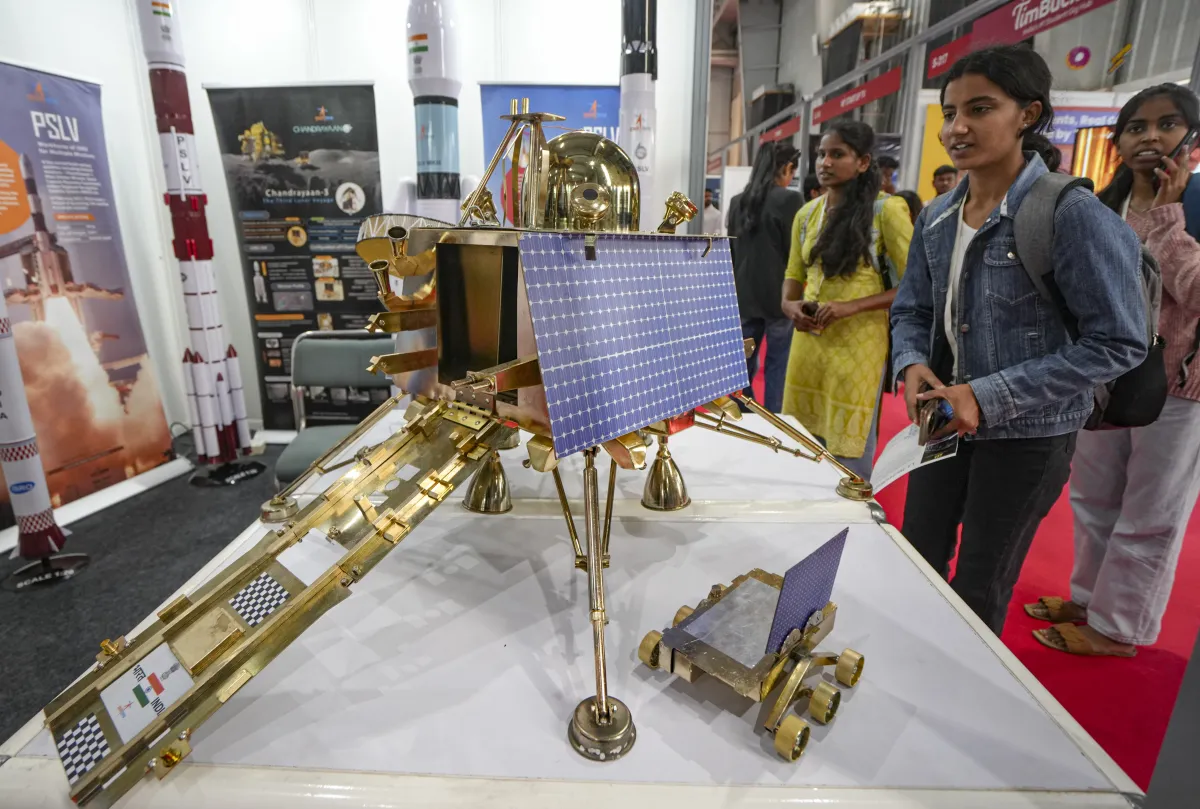
National Science Day is observed in India on 28 February every year. This day marks the discovery of the Raman Effect by Indian physicist Sir CV Raman on 28 February 1928. To honour this achievement and promote scientific awareness, the Central government declared 28 February as National Science Day in 1986. This occasion highlights the importance of science and encourages scientific thinking among students and citizens.
On the National Science Day, India marks its progress towards becoming a global superpower by 2035 through a series of high-stakes missions in space and defense. And roadmap focuses on achieving strategic autonomy and technological leadership through the following key initiatives.
India is accelerating towards becoming a superpower through a robust, self-reliant technology roadmap anchored in space exploration, defense advancements, and innovation and the key milestones include Gaganyaan human spaceflight (2027), Chandrayaan-4 lunar sample return mission (2028), the Bharatiya Antariksha Station by 2035, and development of hypersonic missiles.
Gaganyaan Mission: India is planning early 2027 for its first crewed mission to orbit, following three critical uncrewed test flights. The uncrewed G1 mission, carrying the humanoid robot Vyommitra, is scheduled for launch by March 2026.
Bharatiya Antariksh Station (BAS): India’s another roadmap to become a superpower includes establishing India's own space station by 2035.
Next-Generation Launch Vehicle (NGLV): Development of the "Soorya" NGLV is underway to support heavy-lift requirements for the space station and future lunar missions.
Chandrayaan-4: With the Chandrayaan mission, India aims to land on the Moon's south pole, collect samples via a robotic arm, and return them to Earth, with a planned launch timeline of 2027-2028.
Chandrayaan-5: A joint collaborative mission with Japan's JAXA is also in the pipeline for 2028, featuring a lunar lander and rover.
Hypersonic misiles: India is also planning for successful testing of scramjet engines and advancements in hypersonic rockets.
Maritime & Aerospace: Apart from all these, India is also targetting a 15-year defense plan focusing on indigenization, including aircraft carriers and advanced fighter jets.
India’s ultimate goal is to have an Indian astronaut on the Moon by 2040 and to boost the space economy from 2% to 8% of the global share. This roadmap aims to transition India from a user of space technology to a leader in space exploration, fostering national pride and economic growth.
