
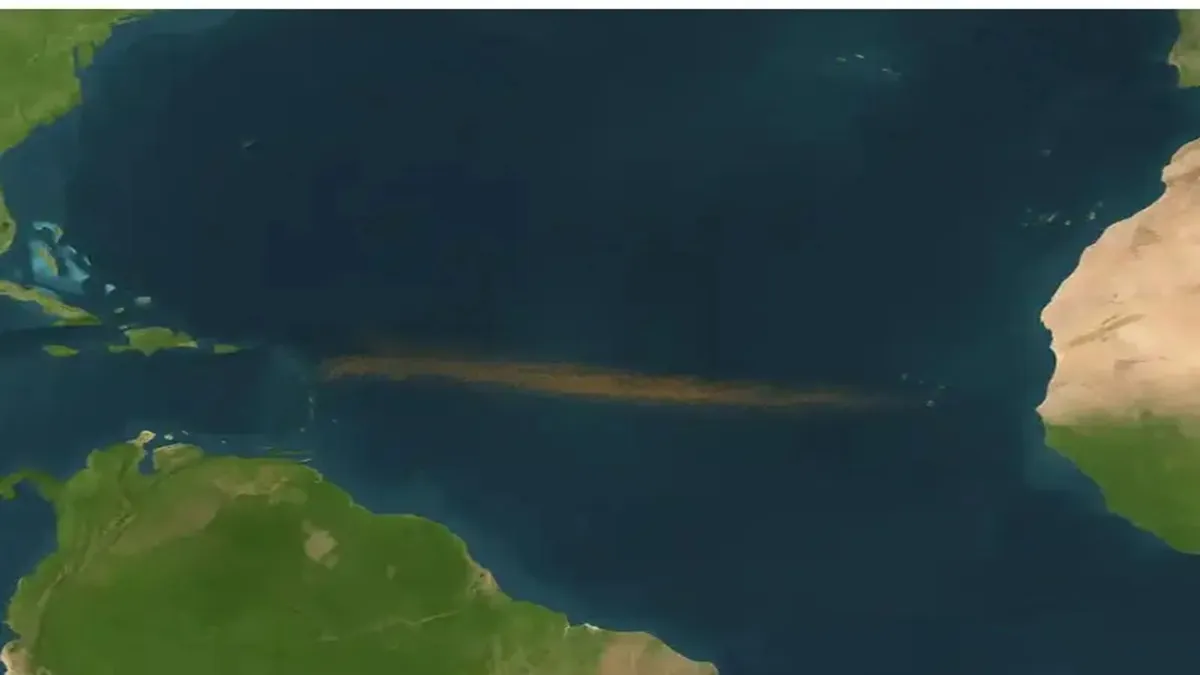
For over 15 years, a massive stretch of brown algae called the Great Atlantic Sargassum Belt (GASB) has been growing in the Atlantic Ocean. It now stretches across 8,850 km, almost twice the width of North America. Once limited to the Sargasso Sea, this huge floating mat of seaweed is now spreading rapidly reportedly due to pollution and warming oceans. While it supports marine life, its uncontrolled growth is damaging coral reefs, releasing harmful gases, and harming coastal economies.
What is the great Atlantic Sargassum belt?
Imagine a giant brown ribbon floating in the ocean, long enough to stretch from West Africa all the way to the Gulf of Mexico. That’s the Great Atlantic Sargassum Belt.
What is it made of? It’s made of sargassum, a type of floating seaweed.
How big is it? As of May, it weighs 37.5 million tonnes and stretches 8,850 km.
How long has it been growing? Since 2011, and it has now doubled in size.
Why is it growing so fast?
Sargassum usually grows in clean, warm waters like those in the Sargasso Sea. But now, it is spreading into nutrient-rich areas.
Key reasons:
- Fertilizers and sewage: Pollution from farming, sewage, and waste is adding nitrogen and phosphorus into the ocean.
- Rivers: Big rivers like the Amazon are pouring these nutrients into the sea.
- Ocean currents: Currents like the Gulf Stream and Loop Current help carry the sargassum across the ocean.
- Climate change: Warmer oceans are also helping it grow faster.
Between 1980 and 2020:
- Nitrogen in the seaweed increased by 55%
- The nitrogen-to-phosphorus ratio rose by 50%
Some good news:
Sargassum provides homes for fish, crabs, turtles, and other sea animals.
But the bad news is bigger:
- Blocks sunlight needed by coral reefs to survive.
- Destroys carbon sinks that help fight climate change.
- Releases harmful gases like methane and hydrogen sulfide when it rots.
- Washes up on beaches, causing bad smells and hurting tourism.
- Costs a lot to clean up.
- Damages coastal towns, fishing, and even power plants. (One in Florida had to shut down in 1991!)
- May spread even further as wind patterns and ocean temperatures change.
What’s next?
Scientists believe this "brown tide" will keep growing. With climate change and rising pollution, the algae could spread to even more places in the future.
