
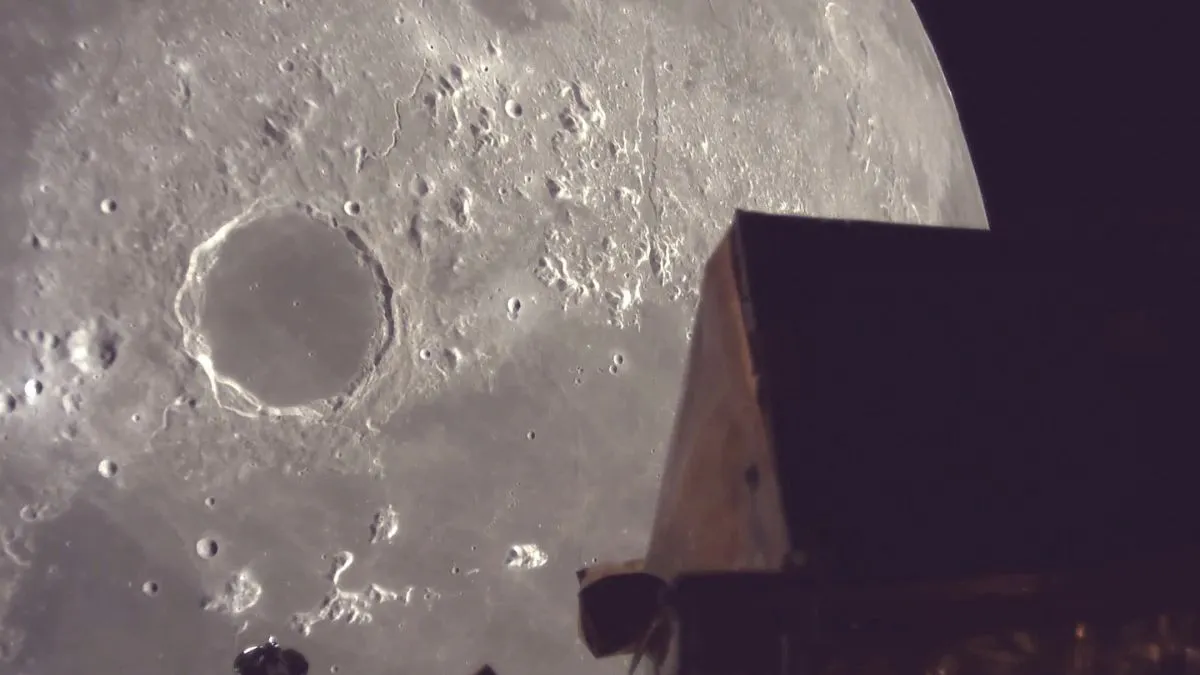
Japan’s private lunar lander crashed while attempting a touchdown on Friday, marking the latest casualty in the commercial rush to the moon. The Tokyo-based company ispace declared the mission a failure several hours after communication was lost with the lander.
This marks ispace's second failed lunar mission. Its first attempt in 2022 also ended in a crash, prompting the company to name the current lander Resilience. CEO and founder Takeshi Hakamada apologised to all those involved and stated that the company takes the failure seriously. “This is the second time that we were not able to land. So we really have to take it very seriously,” he told reporters, adding that the company will continue with future missions.
Possible cause: Laser altimeter failure
A preliminary analysis suggests that a malfunction in the laser-based altitude measurement system caused the lander to descend too quickly. “Based on these circumstances, it is currently assumed that the lander likely performed a hard landing on the lunar surface,” ispace said in a statement.
Resilience carried a 5-kilogram rover named Tenacious, designed to scoop lunar soil and capture high-definition images. It also included a miniature red Swedish-style house, part of an art project by Mikael Genberg. The landing site targeted was Mare Frigoris, a relatively flat and safe region near the Moon's northern tier.
ispace is planning a larger lander mission by 2027
Despite the setback, ispace is planning a larger lander mission by 2027 in collaboration with NASA. However, company officials acknowledged the financial pressures of repeated failures, with the cost of the latest mission reportedly below the $100 million spent on the first attempt.
Two other US firms named Blue Origin and Astrobotic are also aiming for lunar landings by the end of the year, though Astrobotic's first attempt in 2024 ended in failure.
Launched in January from Florida, Resilience was one of several private missions aiming to land on the Moon. It shared a ride with Firefly Aerospace's Blue Ghost, which landed successfully in March, and was followed by Intuitive Machines, whose lander crashed near the lunar south pole.
(With inputs from the Associated Press)
