
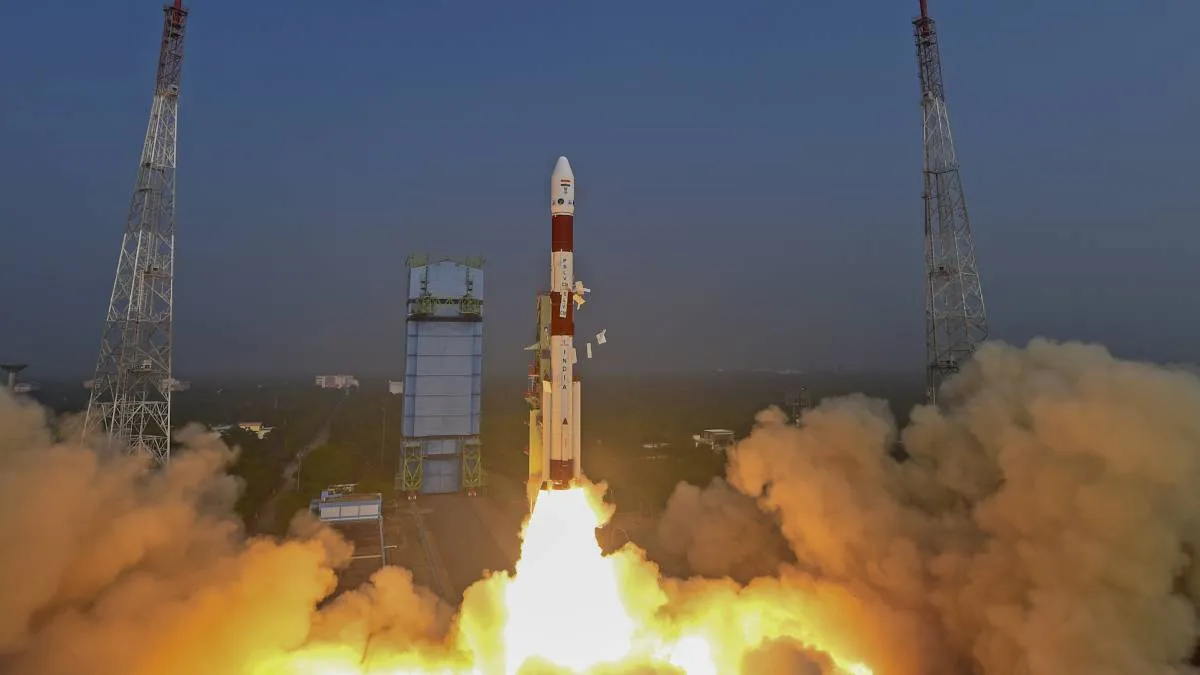
ISRO's PSLV-C62 mission, intended to deploy the EOS-N1 Earth observation satellite and 14 co-passenger satellites into orbit, has unfortunately ended in failure. As the space agency's first launch of the year, the mission was conducted by NewSpace India Ltd (NSIL), the commercial arm of ISRO. The 14 secondary payloads belonged to a diverse group of domestic and international customers, representing a significant commercial effort.
Launch schedule and payload details
The liftoff of the 260-tonne PSLV-C62 rocket took place from the Satish Dhawan Space Centre on January 12. The launch time was slightly adjusted to 10:18:30 AM, shifted from the originally planned 10:17 AM.
The primary payload, a sophisticated Earth Observation Satellite developed jointly by Thailand and the United Kingdom, was scheduled for the initial deployment. It was to be followed by 13 co-passenger satellites, all intended to reach Sun-Synchronous Orbits (SSO) approximately 17 minutes after liftoff.
Advanced re-entry technology demonstration
A key highlight of this mission's profile was a technical demonstration involving the Kestrel Initial Technology Demonstrator (KID). This 25 kg capsule, developed by a Spanish startup, was scheduled for separation over two hours after the initial launch.
To facilitate this demonstration, ISRO scientists planned to restart the rocket's fourth stage (PS4) to perform a critical de-boost maneuver. This maneuver was designed to place the stage on a specific re-entry trajectory before releasing the KID capsule. The plan intended for both the PS4 stage and the KID capsule to re-enter the Earth's atmosphere for a controlled splashdown in the South Pacific Ocean.
Here are the highlights from the PSLV-C62/EOS-N1 mission.
ALSO READ: ISRO's Aditya-L1 finds how solar storm impact on Earth’s magnetic field
