
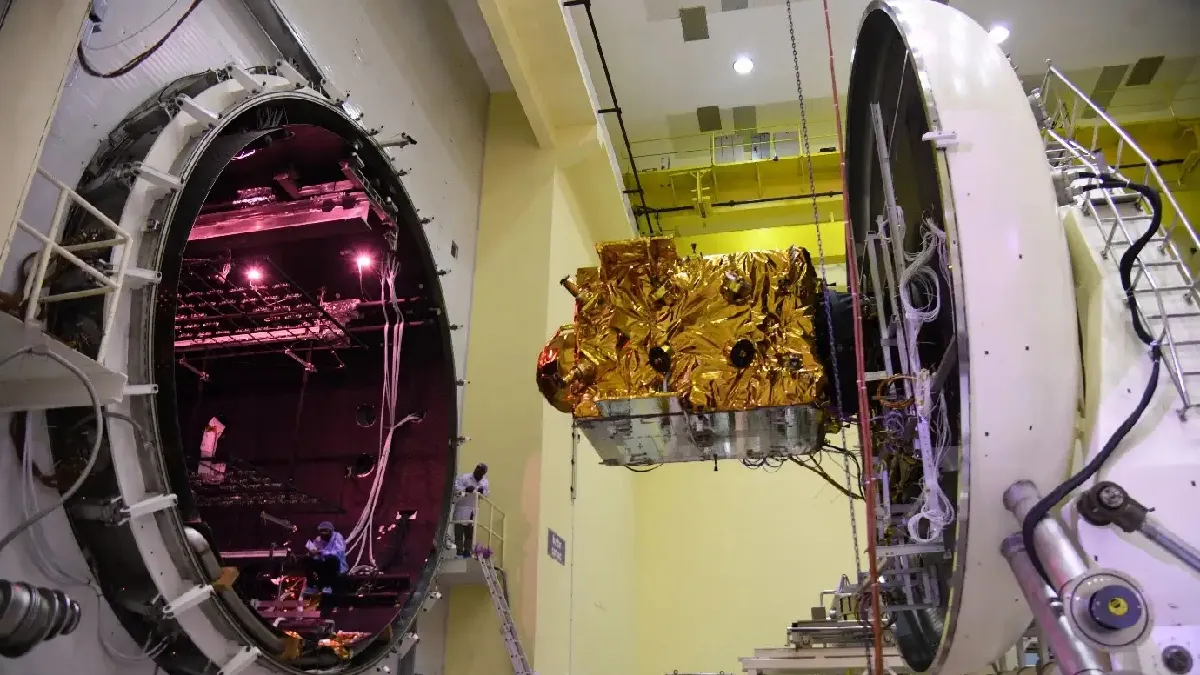
The Indian Space Research Organisation (ISRO) on Wednesday detailed its on-orbit observations of the NVS-02 spacecraft and the recommendations made by an Apex Committee constituted to review the issue that affected its orbit-raising operations. NVS-02, the second spacecraft in the NVS series, was injected into an elliptical transfer orbit on January 29, 2025, following its launch aboard GSLV-F15. The satellite was successfully placed into an elliptical transfer orbit of 170x37,785 km with a 20.8-degree inclination at 00:53 UT, ISRO said in a statement.
The spacecraft separated from the launch vehicle at 01:12:08 UT, after which a series of autonomous activities were carried out, including solar panel deployment and stabilisation of orientation for power generation.
Orbit-raising operations could not be completed
However, ISRO stated that the orbit-raising operations from the elliptical orbit to the circular orbit could not be carried out.
Following the anomaly, an Apex Committee was formed to examine the observations and recommend further action. Based on telemetry and simulation studies, the committee identified the technical cause behind the issue.
Apex committee identifies technical cause
Detailing the findings, ISRO said the Apex Committee, after a thorough analysis of simulation data, concluded that the primary reason for the anomaly was that the drive signal did not reach the pyro valve of the oxidiser line of the engine intended for orbit raising.
The committee further assessed that the most likely cause was the disengagement of at least one contact in both the main and redundant connector paths.
Corrective measures recommended and implemented
ISRO said the committee has recommended measures to enhance redundancy and reliability of pyro system operations in future missions.
These corrective actions were implemented in the CMS-03 spacecraft launched on November 2, 2025, by LVM-3 M5, where the pyro systems performed satisfactorily and placed the satellite in the intended orbit.
The space agency added that the recommendations would be followed for all future missions, as applicable.
ALSO READ: NASA’s giant Moon rocket grounded until April; set to return to hangar after Helium system malfunction