
ISRO has proudly announced the successful completion of a 1,000-hour life test for its 300mN (millinewton) Stationary Plasma Thruster, which has been developed for integration into the Electric Propulsion System of satellites. This Electric Propulsion System aims to replace traditional chemical propulsion systems in future satellites, paving the way for communication satellites that rely solely on electric propulsion for orbit raising and station-keeping.
The introduction of these thrusters will lead to significant mass savings, allowing for an increased transponder capacity in communication satellites, as stated by ISRO.
These thrusters utilise Xenon as the propellant, and ISRO emphasised that the Specific Impulse of the Electric Propulsion System—a key performance metric for space propulsion systems—is at least six times that of conventional systems.
"The life test was carried out under the full power level of 5.4kW in a chamber that simulates the vacuum conditions of space and the erosion of the electrode liners was periodically monitored," the agency noted.
ISRO highlighted that the erosion data gathered during the life test is crucial for forecasting future erosion rates and estimating the lifespan of the thruster, which will play an important role in satellite orbit management.
"This test is a major milestone to demonstrate the reliability and robustness of the thrusters before induction into the satellites. The Electric propulsion System is proposed to be inducted and validated in the upcoming Technology Demonstration Satellite (TDS-01) of ISRO and will be used for orbit raising to the Geostationary orbit," it added.
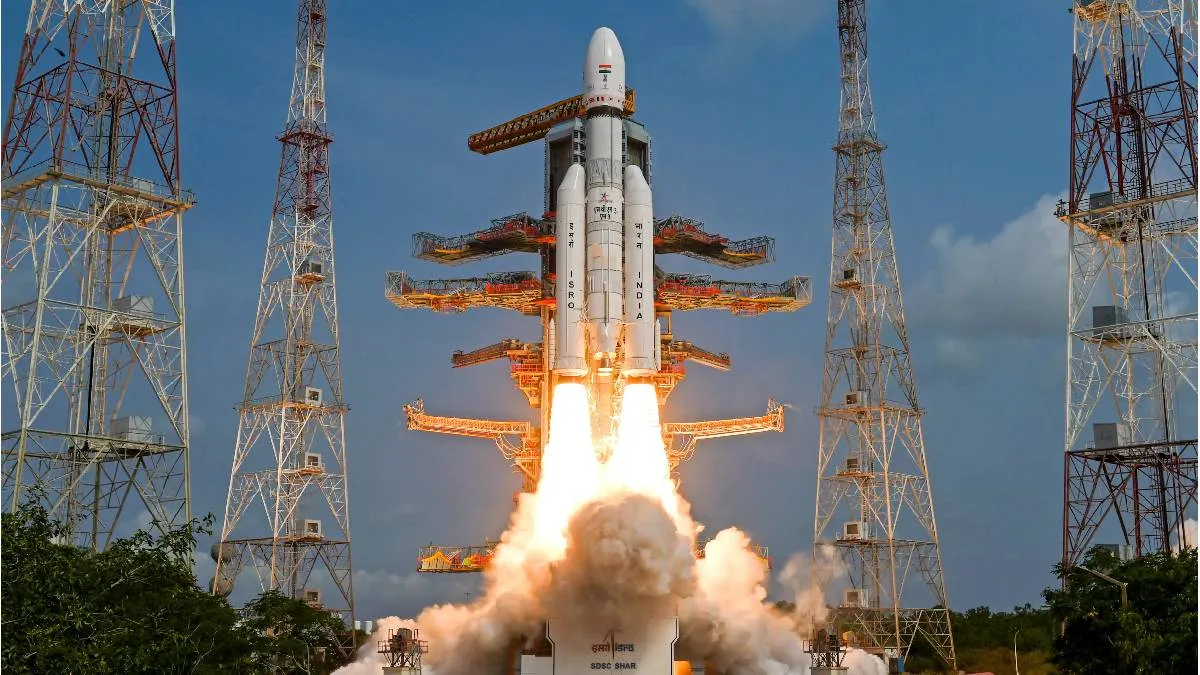
In other news, ISRO is developing a high-thrust Semicryogenic engine (SE2000) that delivers a thrust of 2000 kN. This engine will be utilised in the Semicryogenic booster stage (SC120) of the LVM3 launch vehicle. It is designed to replace the existing L110 liquid core stage, which is expected to enhance payload capacity for Geosynchronous Transfer Orbit (GTO) missions from 4 tonnes to 5 tonnes.
ALSO READ: NASA’s Hubble unveils NGC 4536: A galaxy overflowing with new stars
