
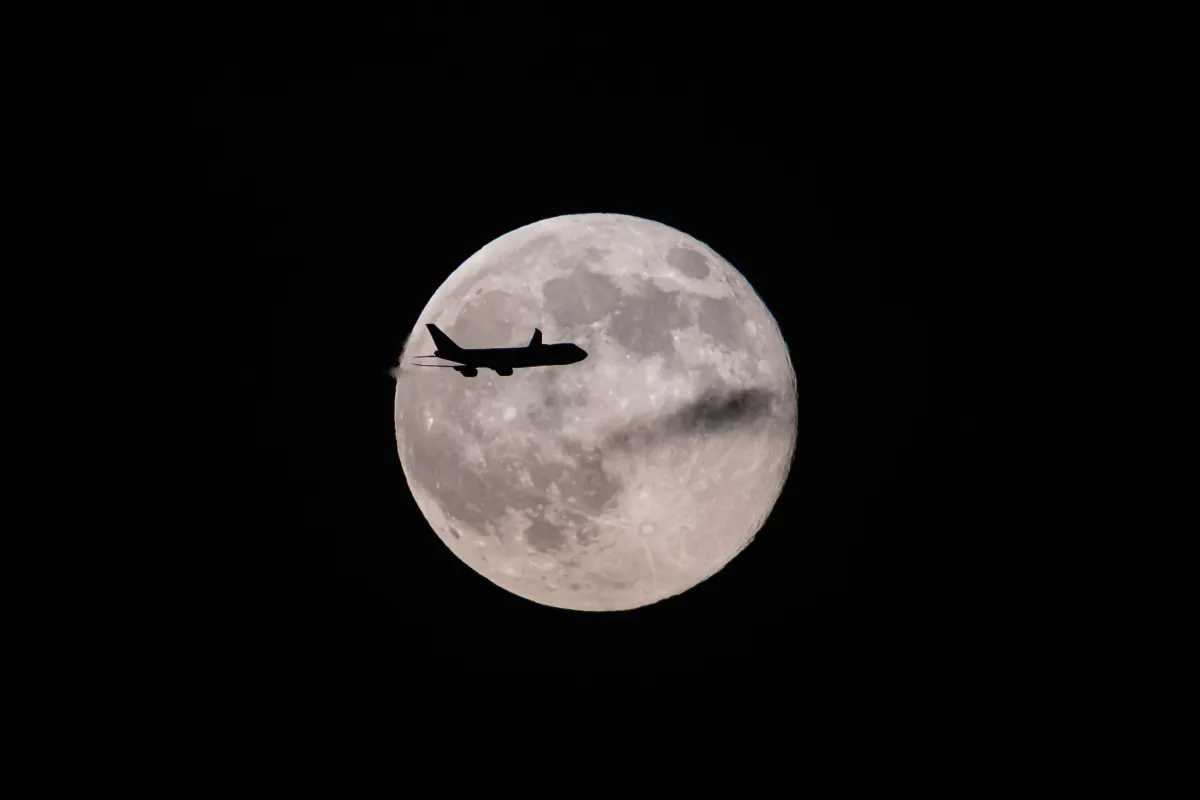
Skywatchers in India are in for a delight this week as a bright Supermoon will light up the night sky. The December full moon, commonly known as the Cold Moon, will appear brighter and larger than usual because the Moon will be at its closest point to the Earth (perigee). This is the second-largest Supermoon of the year.
The Moon will be approximately 357,218 kilometers away from Earth and is expected to appear up to about 30 per cent brighter than an average full moon. For context, the largest Supermoon of the year occurred on November 5, when the Moon was only 356,980 kilometers away.
For clarity, the average distance at perigee is around 363,396 kilometers, while at its farthest point (apogee), it stretches to 405,504 kilometers. The term "Supermoon" is applied only when a full (or new) Moon coincides with perigee.
When and where to watch the Cold Moon
The Cold Supermoon reaches its full phase around December 4-5, 2025.
- It is most visually impressive at the time of moonrise in your specific location, when it appears largest near the horizon due to the "Moon illusion."
- For the best view, step outside shortly after sunset on December 5 and look toward the eastern horizon.
The significance of the Cold Moon
The moniker "Cold Moon" indicates that it is the full moon event closest to the winter solstice, which is the shortest day of the year in the Northern Hemisphere.
- The solstice, occurring on December 21, officially marks the beginning of winter in the hemisphere.
- A Supermoon occurs when a full moon coincides with the Moon's closest approach to Earth, called perigee. Supermoons typically appear about 10 percent larger than average.
December's Cold Moon always climbs higher in the sky than any other full moon of the year. As the winter solstice nears, the Sun appears at its lowest in the sky during the day. Conversely, the full moon—which is, by definition, opposite the Sun—rises to its highest point at night.
ALSO READ: Mecca’s Kaaba stunning orbital photo shared by NASA astronaut Don Pettit
