
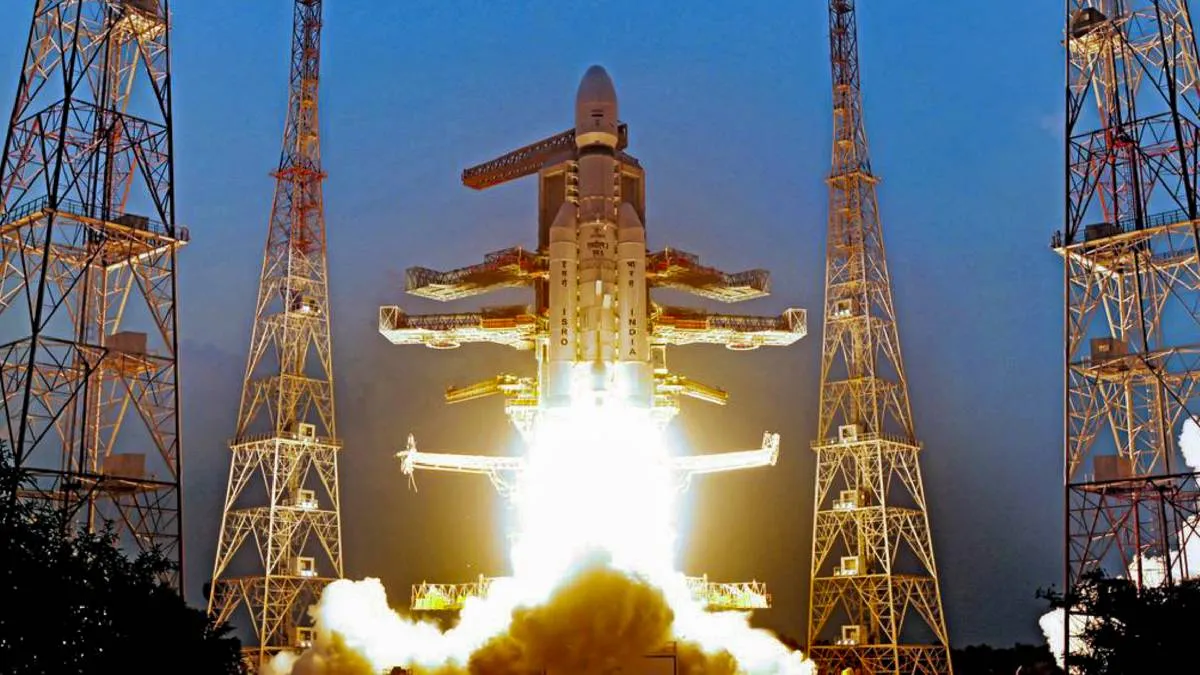
Building on the success of Shubhanshu Shukla's maiden journey to the International Space Station (ISS), India is prepared to take its first definitive steps toward independent human spaceflight. Later this year, the uncrewed Gaganyaan mission is set to soar, marking a historic chapter for the nation.
Private players eye global markets
Private space-tech leaders Skyroot Aerospace and Agnikul Cosmos are gearing up to launch satellites using their home-built rockets, Vikram-1 and Agnibaan. Both companies are strategically positioning themselves to secure a foothold in the rapidly expanding global market for small satellite launches.
The new year will also feature the launch of a Polar Satellite Launch Vehicle (PSLV) built entirely by a consortium of Hindustan Aeronautics Limited (HAL) and Larsen & Toubro (L&T), following their 2023 contract win from ISRO.
The roadmap to human spaceflight
The first orbital test of the Gaganyaan mission, designated G-1, is expected to launch by March. This mission will carry the humanoid robot Vyommitra to validate critical crew systems in low Earth orbit.
Science and Technology Minister Jitendra Singh told Parliament last month that the humanoid will simulate astronaut functions, paving the way for India’s first crewed spaceflight, targeted for 2027.
"(Year) 2026 will solidify India's global stature through breakthroughs in quantum technologies via PSLV-N1, Agnikul's 3D printed engines and Pixxel's hyperspectral constellations, even as we bridge infrastructure needs like dedicated private launch pads," said Lt Gen A K Bhatt, Director General, Indian Space Association (ISpA).
Advancements in launch economics
Last year, Shubhanshu Shukla scripted history as the first Indian to visit the ISS via the Axiom-4 commercial mission. His 18-day stay at the orbital laboratory provided invaluable data for India's future human spaceflight goals.
Meanwhile, IIT-Madras-incubated startup Agnikul Cosmos is focusing on reducing costs by developing reusable rockets and functional satellite upper-stages.
"Our recently granted patents for converting upper stages into functional satellites represent a breakthrough in launch economics," Srinath Ravichandran, founder and CEO Agnikul Cosmos, told.
Following its first orbital launch, Agnikul aims for a monthly launch cadence to meet rising customer demand. Similarly, Skyroot Aerospace, which recently unveiled the Vikram-1 rocket in the presence of Prime Minister Narendra Modi, plans to launch commercial payloads early this year.
Strengthening space surveillance and technology
Bengaluru-based Digantara Industries is expanding its presence following the launch of SCOT, the world's first space surveillance satellite.
"We already have manifested at least eight SCOT satellites for 2026 on SpaceX and the remaining seven will be placed in orbit in 2027," Digantara Industries founder and CEO Anirudh Sharma told.
ISRO is also preparing to launch the TDS-01 satellite to demonstrate high-thrust electric propulsion (HTEP) and quantum key distribution. HTEP technology will revolutionize satellite design by significantly reducing fuel weight, from over two tonnes of liquid fuel to just 200 kg for a four-tonne satellite.
"The technologies and components, once proved in TDS-01, will be employed in navigation and communication missions in near future," Jitendra Singh said.
New horizons for Earth observation
The Small Satellite Launch Vehicle (SSLV) is scheduled for a dedicated launch before March 2026. Additionally, start-up GalaxEye plans to launch "Mission Drishti", the world’s first multi-sensor Earth observation satellite, in Q1 2026. This satellite will offer 1.5-metre resolution, providing real-time insights for defense, agriculture, and disaster management.
ALSO READ: ISRO successfully completes static test for improved SSLV third stage
