
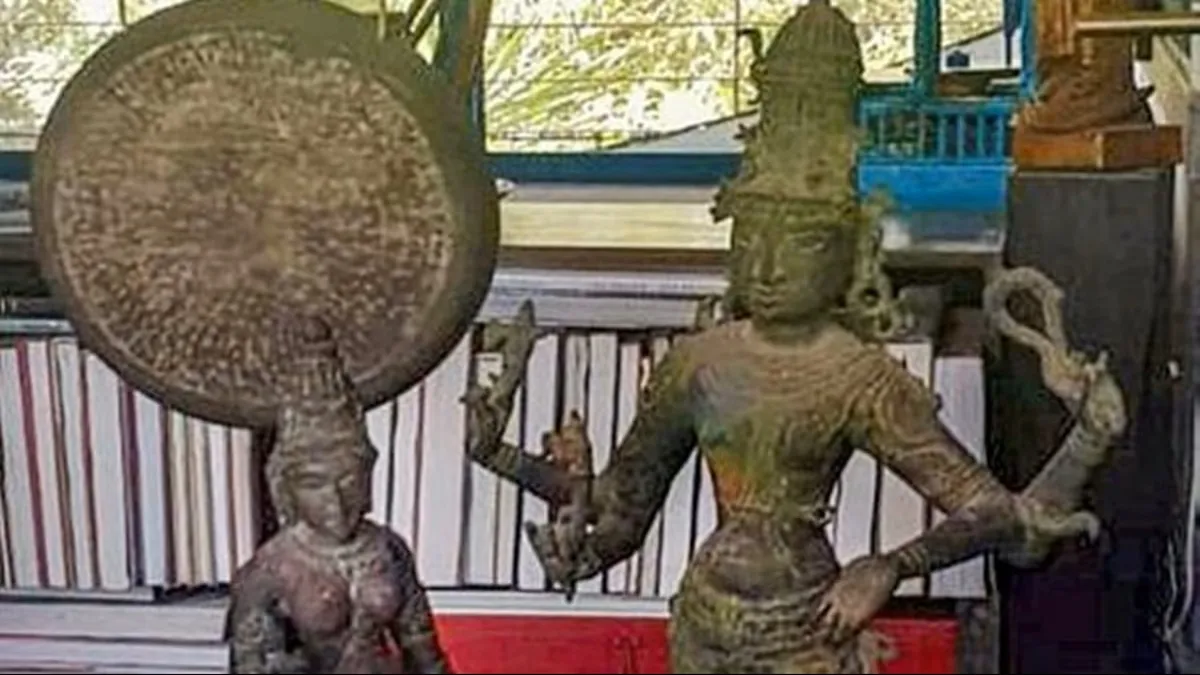
In a significant development for India's cultural heritage, the United States will return three ancient bronze sculptures that were illegally taken from temples in Tamil Nadu. The Smithsonian's National Museum of Asian Art in Washington DC announced that the artefacts would be handed back to the government of India following rigorous provenance research that confirmed their unlawful removal from sacred temple settings.
The museum stated that India has agreed to place one of the bronzes on long-term loan. This arrangement will allow the museum to share the full story of the sculpture's origins, removal and eventual return. The institution said the agreement outlines its dedication to transparent provenance research and responsible stewardship.
Ancient bronzes from the Chola and Vijayanagara eras
The three sculptures include the Chola period masterpiece 'Shiva Nataraja' from around 990, a 12th-century Chola period 'Somaskanda', and the 16th-century Vijayanagara period figure 'Saint Sundarar with Paravai'. These bronzes represent the apex of South Indian metal casting traditions and were originally revered objects carried in temple processions. The Shiva Nataraja, which will be displayed on long-term loan, will feature in the exhibition titled 'The Art of Knowing in South Asia, Southeast Asia, and the Himalayas'. Final arrangements between the museum and the Indian Embassy are currently being completed.
Provenance investigation uncovers illicit removal
The return was made possible by the museum's dedicated provenance team, curators and global collaborators including the Photo Archives of the French Institute of Pondicherry. As part of a detailed review of its South Asian collection, the museum examined transaction histories, leading to a breakthrough in 2023 when researchers confirmed that the bronzes had been photographed in Tamil Nadu temples between 1956 and 1959. The Archaeological Survey of India (ASI) later reviewed the evidence and verified that the sculptures had been taken in violation of Indian law.
Falsified documents found in museum acquisition records
The Shiva Nataraja was traced back to the Sri Bhava Aushadesvara Temple in Tanjavur district's Tirutturaippundi Taluk, where it was photographed in 1957. It was acquired by the museum in 2002 from the Doris Wiener Gallery. Researchers later discovered falsified documentation used to support the sale. The 'Somaskanda' and the 'Saint Sundarar with Paravai' joined the museum's collection in 1987 as part of a gift of 1,000 objects. Photographic archives confirmed their presence in temples in Mannarkudi and Kallakuruchi Taluks before they disappeared.
Museum reaffirms ethical responsibility
Museum director Chase Robinson said, "The National Museum of Asian Art is committed to stewarding cultural heritage responsibly and advancing transparency in our collection," as per the Associated Press (AP). He added that the museum aims to fully understand each object's complex history and that the return demonstrates its commitment to ethical museum practice. Robinson also thanked the Indian government for enabling the long-admired Shiva Nataraja to remain visible to visitors.
Opened in 1923, the Smithsonian's National Museum of Asian Art is the oldest national art museum in the US and houses one of the world’s leading collections of Asian art.
ALSO READ: Melania Trump's statue cut off at ankles, stolen from her hometown; investigations underway
