
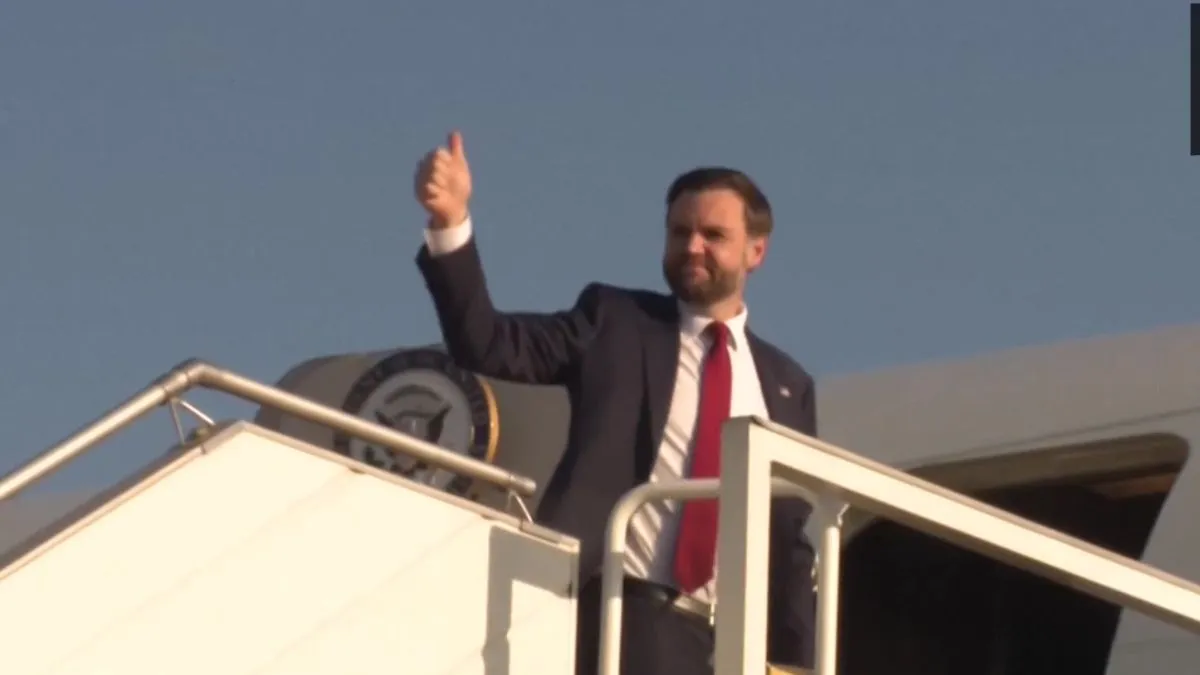
US President Donald Trump announced that the United States Navy would begin a blockade of the Strait of Hormuz, following the failure of long negotiations between Washington and Tehran. Trump said the move was aimed at stopping what he called Iran’s “control and interference” over shipping in the region, warning that any vessel attempting to enter or exit the waterway could be intercepted. Vance confirmed that the US delegation had returned home after presenting what he described as a “final and best offer,” but said Iran did not agree to Washington’s terms.
On the Iranian side, Parliament Speaker Mohammad Baqer Ghalibaf said the delegation had put forward “forward-looking initiatives” during the negotiations, but accused the United States of failing to build trust. Iran has also firmly denied US claims regarding maritime activity in the Strait of Hormuz, warning that any military movement through the area would be met with a “strong and forceful response.”
Tensions remain high on multiple fronts. Iran’s Revolutionary Guard Navy warned that any approaching military vessels in the Strait would face retaliation, while Israel continues military operations in southern Lebanon, where at least 13 people were reported killed in strikes on Tefahta.
Pakistani Prime Minister Shehbaz Sharif, who hosted the talks, described the situation as a “stalemate,” saying the negotiations are not completely over but have clearly stalled for now.
Meanwhile, Trump continued to take a hard line, warning of further action if Iran does not agree to American demands. He also raised concerns over possible Chinese involvement in supplying weapons to Iran and hinted at additional economic and military pressure if needed.
Trump has further stated that the US is prepared to take stronger military steps if required, including targeting Iran’s energy infrastructure, while insisting that Washington will not accept any compromise that falls short of its demands.
