
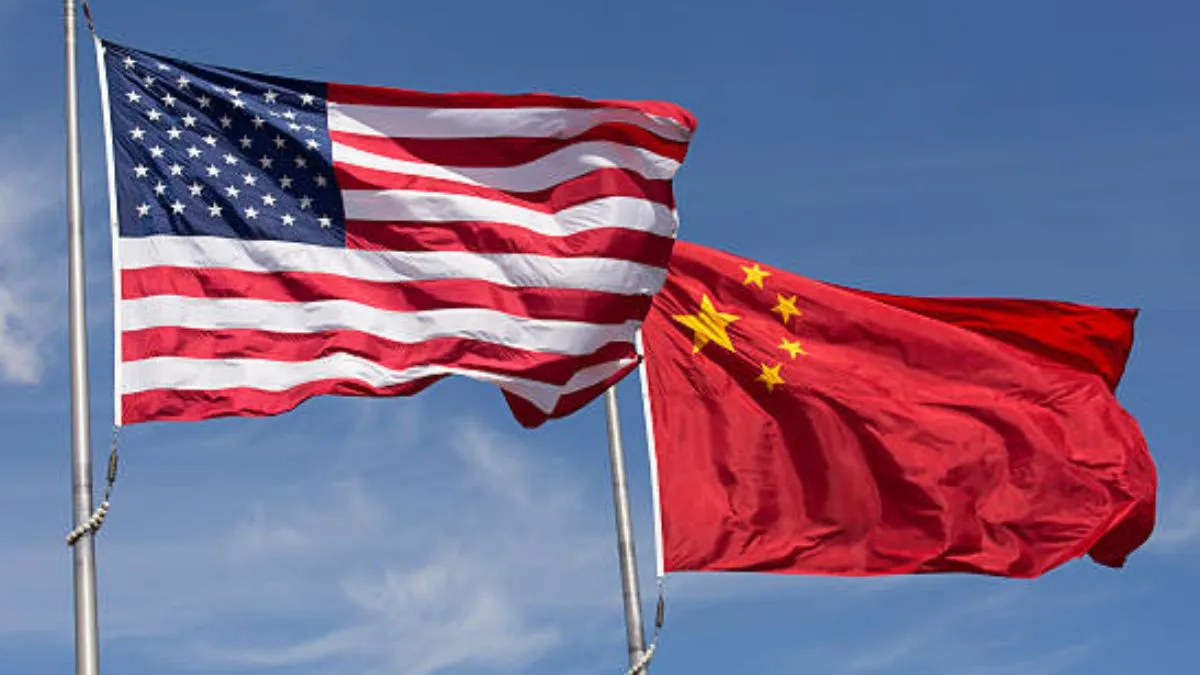
In a notable step towards stabilising strained economic ties, the United States and China have agreed to extend their existing tariff pauses following two days of bilateral trade talks in Stockholm. The announcement was made by China’s top trade official, Li Chenggang, who described the discussions as “constructive” and “candid.”
Both sides have agreed to maintain the current tariff rates, with the US continuing to impose a 30 per cent tariff on Chinese goods, and China maintaining a 10 per cent tariff on American products. This extension comes as the 90-day pause agreed upon during Geneva talks in May is set to expire on August 12.
Wide-ranging trade issues discussed
Li noted that the discussions covered a broad range of microeconomic issues, and both sides agreed to stay in close communication on economic and trade matters.
Topics included market access for American businesses, Chinese investment in the US, components of fentanyl traced to China, Chinese energy imports from Russia and Iran, and US export restrictions on advanced technologies, including AI-enabling chips.
High-level engagement and closed-door meetings
Talks were held behind closed doors at the Swedish Prime Minister’s office on Monday and Tuesday. Ahead of the second day of negotiations, Prime Minister Ulf Kristersson met with US Treasury Secretary Scott Bessent and US Trade Representative Jamieson Greer over breakfast. The first day of talks reportedly lasted nearly five hours.
Jamieson Greer, in remarks shared on social media, acknowledged ongoing tensions but said regular meetings with China provide a positive foundation. “Whether there will be a deal or not, I can't say,” Greer stated on MSNBC’s Morning Joe, adding that while nothing is confirmed, the conversations are moving “in the right direction.”
As talks unfolded in Stockholm, tight security was enforced along the city’s waterfront, drawing onlookers hoping for a glimpse of the top-level delegation. The Swedish Prime Minister’s office was adorned with American and Chinese flags, underscoring the global significance of the discussions.
(With inputs from The Associated Press)
