
The selection process for the next Secretary‑General of the United Nations has begun, with four nominees taking part in interactive dialogues later this month. The sessions are scheduled to be held at UN Headquarters on April 21 and 22.
Current UN Secretary‑General Antonio Guterres will finish his second term in December 2026. Guterres, a former Prime Minister of Portugal and once the United Nations High Commissioner for Refugees, took office in 2017. Since the United Nations was founded more than 80 years ago, no woman has ever led the organisation.
Among the four candidates nominated for the top post are two women. They are Michelle Bachelet and Rebeca Grynspan.
Bachelet, former President of Chile and former United Nations High Commissioner for Human Rights, has been nominated by Brazil and Mexico. Grynspan, Secretary‑General of the United Nations Conference on Trade and Development (UNCTAD) and former Vice‑President of Costa Rica, was nominated by Costa Rica.
The two male nominees are Rafael Grossi and Macky Sall.
Grossi, Director General of the International Atomic Energy Agency, has been nominated by Argentina. Sall, former President of Senegal, was nominated by Burundi.
The office of the President of the UN General Assembly, Annalena Baerbock, said each candidate will take part in a three‑hour interactive dialogue with member states.
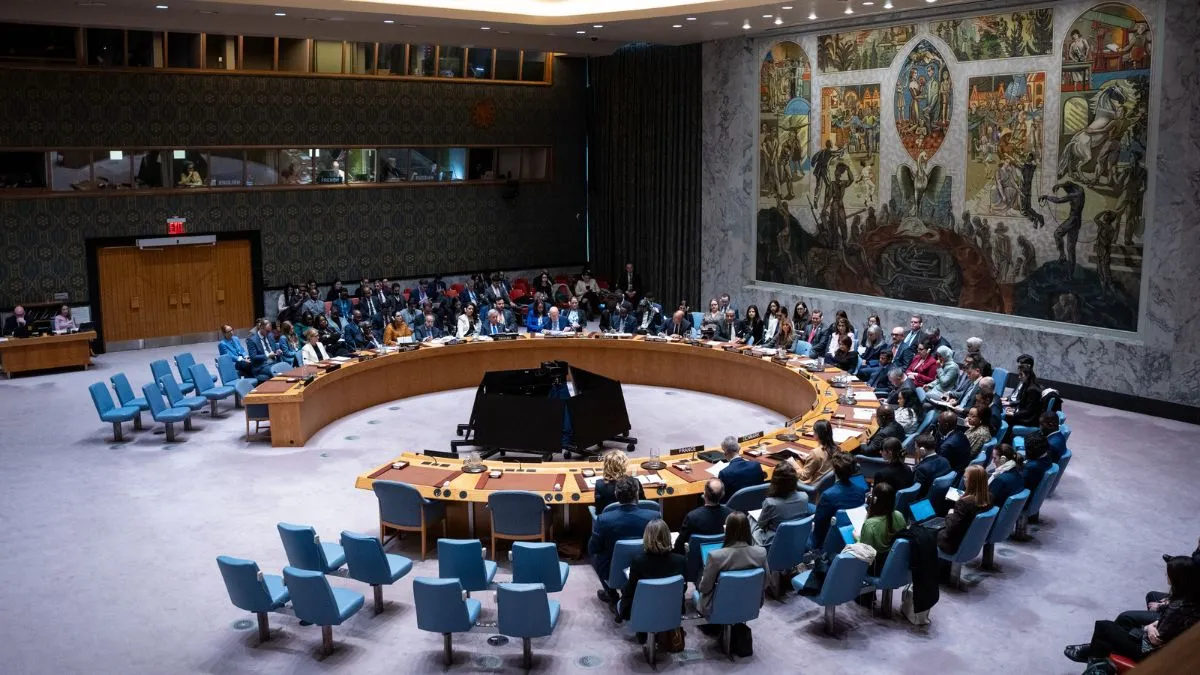
Under UN rules, the Secretary‑General is appointed by the 193‑member General Assembly, based on the recommendation of the Security Council. The Security Council is a group of 15 countries, including five permanent members — China, France, Russia, the UK and the US — each with veto power.
UNGA’s resolution to push women for key post
A UN General Assembly resolution adopted in September last year noted “with regret” that a woman has never held the position of Secretary‑General. The resolution urged countries to “strongly consider nominating women as candidates” for the role.
Several rights groups and campaigners are pushing for the next UN chief to be a woman. They argue that such an appointment would help strengthen gender equality and restore confidence in the organisation.
