
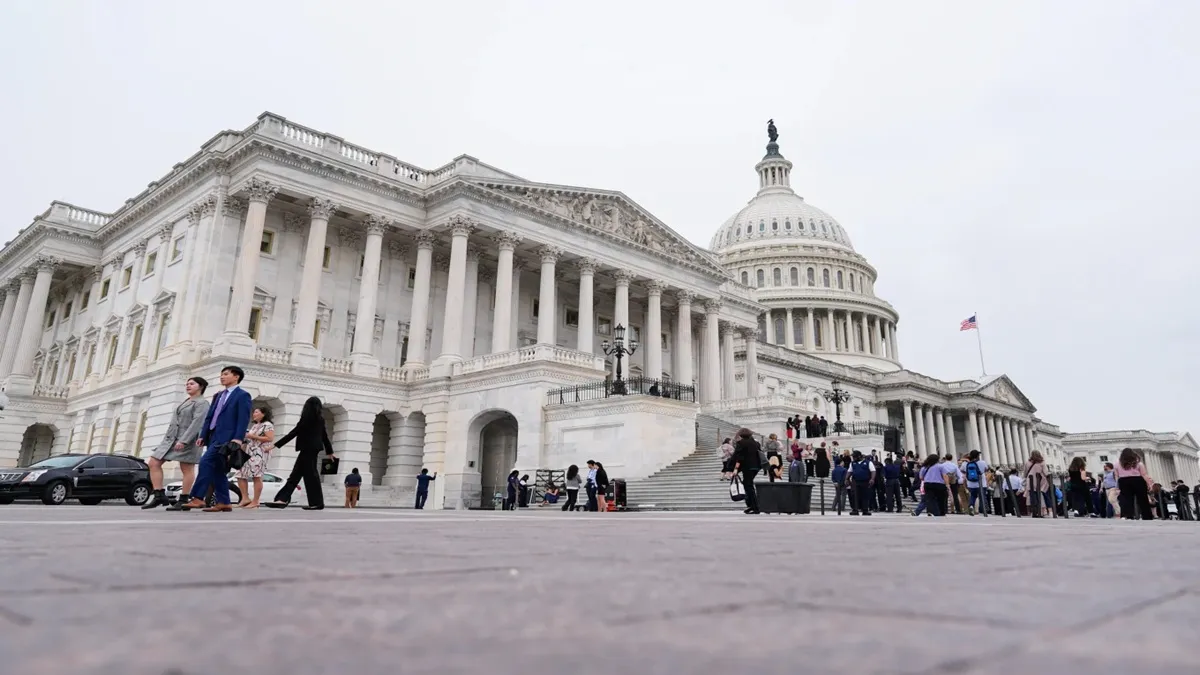
The US government has officially entered a shutdown after Senate Democrats voted down a Republican bill to continue funding the Donald Trump-led federal regime. This marks the first shutdown in nearly seven years. The Senate rejected the legislation by a 55-45 vote. The bill sought to extend federal funding for seven weeks, but it fell short of the 60 votes required to overcome a filibuster and pass. Democrats had warned that they would push for a shutdown if President Donald Trump and Republican lawmakers did not meet their health care demands.
Democrats stand firm on health care demands
Senate Democratic Leader Chuck Schumer said Republicans are trying to "bully" Democrats by refusing to negotiate on an extension of expanded Affordable Care Act tax credits that are set to expire at the end of the year. "We hope they sit down with us and talk. Otherwise, it's the Republicans will be driving us straight towards a shutdown tonight at midnight. The American people will blame them for bringing the federal government to a halt," Schumer said after the vote. The failure to keep the government open means hundreds of thousands of federal workers could be furloughed or laid off. Following the vote, the White House's Office of Management and Budget instructed agencies to "execute their plans for an orderly shutdown."
Trump threatens consequences
President Trump warned that a shutdown could include "cutting vast numbers of people out, cutting things that they like, cutting programs that they like." Republicans maintained that they will not make changes to the legislation, describing it as a stripped-down, “clean” bill. Senate Majority Leader John Thune added, "we can reopen it tomorrow” if enough Democrats decide to break party lines. The last government shutdown occurred during Trump’s first term, from December 2018 to January 2019. At that time, Trump demanded funding for a US-Mexico border wall. The 35-day shutdown was the longest in history, causing severe disruptions for federal workers and airport operations.
Partisan stalemate in Washington
The current impasse comes as Democrats see an opportunity to leverage their position to achieve policy goals. The Republican majority in the Senate stands at 53-47, meaning at least eight Democratic votes were needed to pass the bill. Republican Senator Rand Paul opposed the bill, complicating the GOP's efforts. Democratic Senators John Fetterman, Catherine Cortez Masto and Independent Senator Angus King voted with Republicans to keep the government running, raising hopes that additional Democrats may eventually support the bill. After the vote, King expressed concern about "permanent damage" from potential mass layoffs. "Instead of fighting Trump we are actually empowering him, which is what finally drove my decision," King said. Thune predicted that Democratic support will grow "when they realise that this is playing a losing hand."
Shutdown preparations underway
Federal agencies are already preparing for the shutdown. The White House instructed agencies to consider "a reduction in force" for many programs, which could result in some workers being fired rather than furloughed. The Congressional Budget Office estimates that around 750,000 federal employees could be furloughed each day if the shutdown begins. The Department of Housing and Urban Development homepage displayed a warning that read, "The Radical Left are going to shut down the government and inflict massive pain on the American people." The stakes are high as the government braces for the impact of the shutdown on programs, federal employees and citizens.
(With inputs from AP)
ALSO READ: Hamas has 3-4 days to respond over Gaza peace proposal, says Trump
