
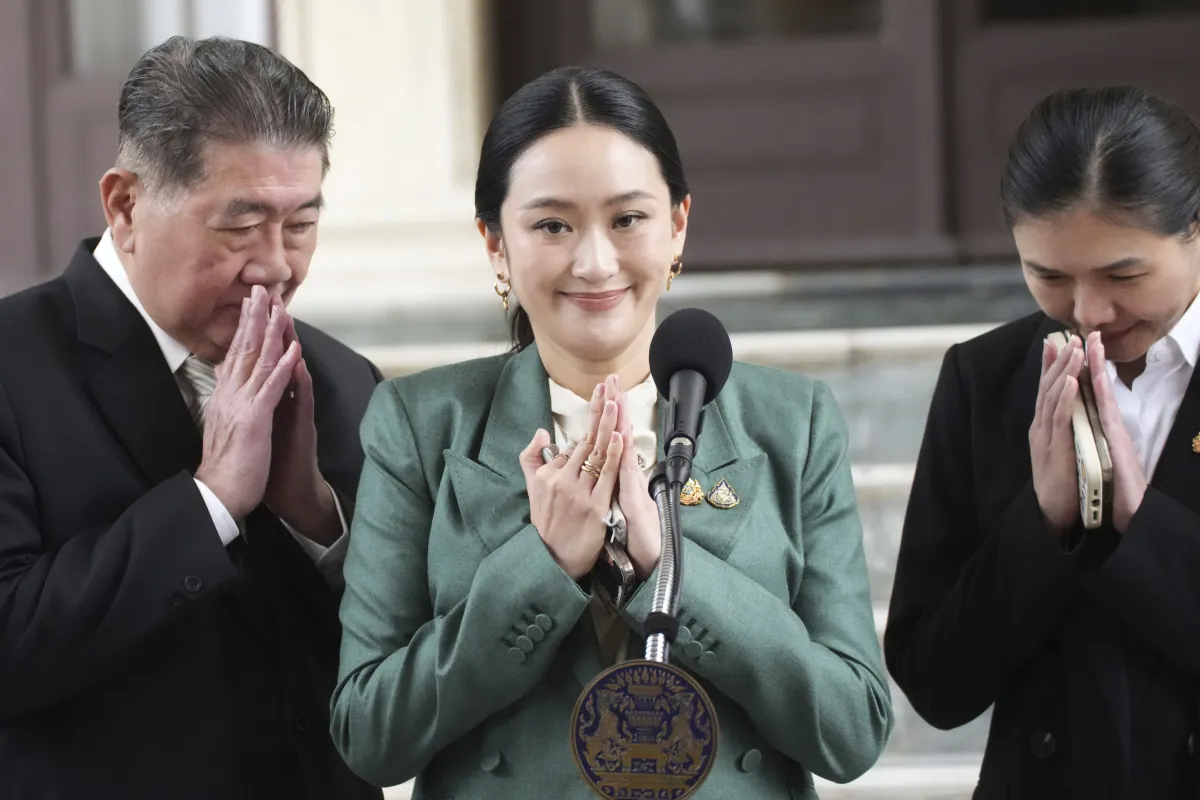
Thailand is once again in the midst of a political storm. On Tuesday, the Constitutional Court suspended Prime Minister Paetongtarn Shinawatra from her duties, triggering yet another wave of protests, resignations and instability. The decision, made by a 7-2 vote, comes after the court agreed to examine an ethics complaint tied to a leaked phone call with a former Cambodian leader.
This marks the second time in less than a year that Thailand has suspended a sitting prime minister for breaching ethical codes. With rising tensions on the Cambodian border and cracks deepening in the governing coalition, the country's political landscape is once again teetering on the edge.
The phone call that brought down a Prime Minister
The controversy centres on a leaked call between Thai PM Paetongtarn Shinawatra and Cambodia's former leader Hun Sen - now Senate President and father of current Prime Minister Hun Manet.
The call was leaked just days after a fatal military clash along the Thailand-Cambodia border on 28 May, which left one Cambodian soldier dead. The audio clip, later released by Cambodian media, captured Paetongtarn referring to Hun Sen as "uncle" and criticising a regional Thai army commander involved in the border skirmish.
She also reportedly told Hun Sen, "If there's anything you want, I will take care of it," a line that drew fierce backlash from Thai conservatives and military supporters, who accused her of compromising national sovereignty and appeasing a foreign government.
Critics claim the tone and content of the call reflected poor judgement and a breach of ethical conduct expected from a sitting prime minister during a national security crisis.
Court rules on ethics - Paetongtarn suspended
Following growing uproar, a group of conservative senators filed a formal complaint with the Constitutional Court, alleging that Paetongtarn's behaviour in the leaked call violated ministerial ethics as outlined in Thailand's Constitution.
The court agreed to hear the case and issued an interim suspension order on 1 July, effectively stripping her of all Prime Ministerial authority while the inquiry proceeds. In its brief statement, the court cited a "need to protect the integrity of governance" pending a final ruling.
This interim measure does not remove her from office permanently but signals serious legal and political jeopardy. A separate probe has also been opened by the National Anti-Corruption Commission (NACC), which could result in a full disqualification if misconduct is proven.
What was at stake in the border row?
The timing of the phone call, made amid heightened tensions with Cambodia, only added fuel to the fire. The Thai-Cambodian border has long been disputed, particularly in areas near the Preah Vihear temple. The recent clash in May reignited old wounds. Cambodia claimed the Thai military crossed the line of control, while Thailand insisted it was responding to provocation.
Rather than taking a hardline stance, Paetongtarn opted for backchannel diplomacy. But her words; leaked and widely interpreted as submissive left the Thai military and nationalist politicians fuming. Her critics, including members of the Bhumjaithai Party (a key coalition ally), accused her of undermining Thailand's dignity and endangering national interests. The party withdrew from the ruling coalition shortly after the call went public.
Coalition unravels, Cabinet reshuffled
The fallout was immediate. On the same day as the court's decision, King Maha Vajiralongkorn approved a Cabinet reshuffle aimed at saving the government from collapse. Notably, former Deputy PM Anutin Charnvirakul of the Bhumjaithai Party was removed from office after his party's exit.
Paetongtarn, just hours before her suspension, had unveiled plans to assume the role of Culture Minister alongside her Prime Ministerial post, a dual appointment seen by some as an overreach.
Public backlash and street protests intensify
Public anger boiled over last weekend as thousands of demonstrators, many aligned with conservative and pro-military groups, filled the streets of Bangkok demanding Paetongtarn's resignation.
Protesters waved Thai flags and held banners accusing her of "betraying the country" and "bowing to Cambodia." Many wore military-style fatigues and called for the army to "defend the nation."
In a brief statement before the suspension, Paetongtarn admitted to being "worried" but pledged full cooperation with the court process. She stopped short of stepping down, however, saying she would "not let political games disrupt the people's mandate."
Why is Thailand suspending Prime Ministers so often?
Paetongtarn is the second Thai prime minister to be suspended for ethical violations in under a year, exposing deep flaws in Thailand's system of governance and its fragile coalition politics.
Her predecessor, Srettha Thavisin, was suspended in August 2024 for appointing a controversial figure - lawyer-turned-minister Pichit Chuenban to his Cabinet. Pichit had a criminal past and had previously served prison time for attempting to bribe the Supreme Court in the infamous "lunchbox cash" case linked to the Shinawatra family.
In that instance, the Constitutional Court ruled that Srettha's appointment of Pichit violated constitutional provisions on ethical conduct, leading to his removal and the fall of the entire Cabinet.
Now, less than 11 months later, history is repeating itself.
