
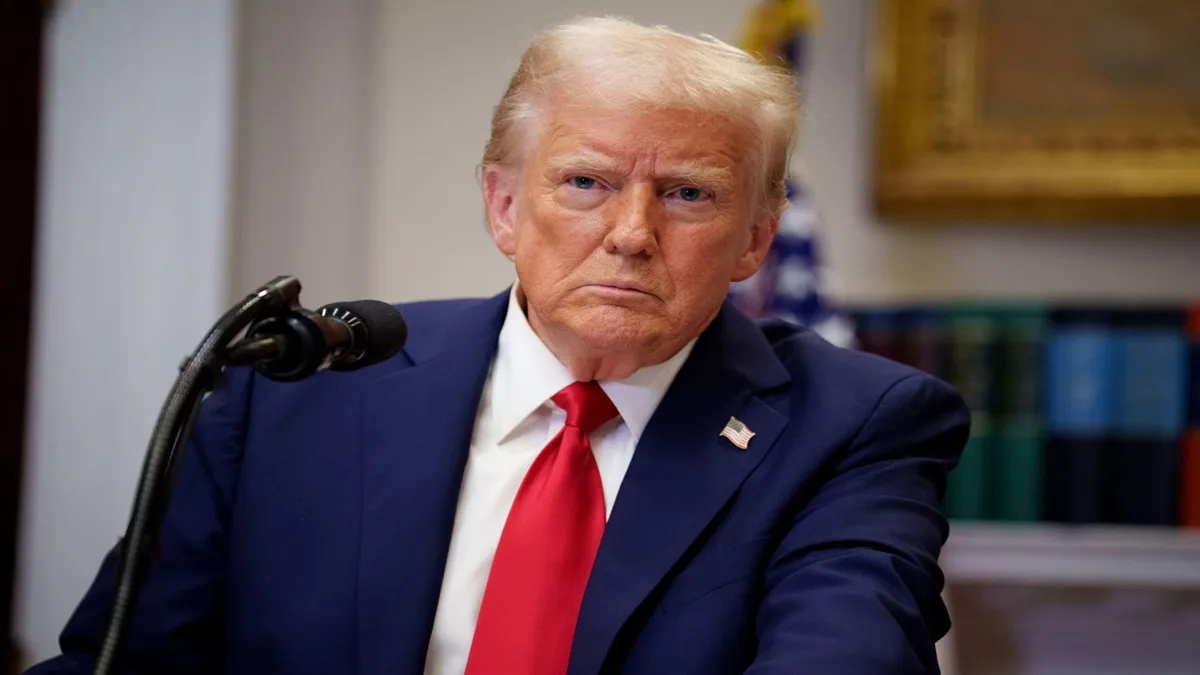
The US Supreme Court ruled 6-3 against President Donald Trump's expansive global tariffs on Friday (February 20), dismantling a cornerstone of his economic strategy and marking a rare judicial check on his aggressive trade policies.
Landmark 6-3 ruling targets emergency powers abuse
In a pivotal decision, the Court invalidated tariffs imposed via a 1977 emergency powers statute, including the broad 'reciprocal' duties Trump enacted in April 2025 on nearly all trading partners to combat declared trade deficit emergencies. Dissenters Justices Samuel Alito, Clarence Thomas and Brett Kavanaugh argued for upholding executive flexibility, but the majority found Trump's invocation stretched the law beyond its intent, which never explicitly authorized import taxes despite prior uses for sanctions.
Supreme Court ruling breakdown
-
Core constitutional focus: The 6-3 decision hinges on the US Constitution explicitly granting Congress alone the power to impose taxes, encompassing tariffs.
-
Majority opinion highlights: Chief Justice John Roberts stated plainly, "The Framers did not vest any part of the taxing power in the Executive Branch," barring presidential overreach.
-
Dissenting views: Justices Samuel Alito, Clarence Thomas, and Brett Kavanaugh dissented. Kavanaugh conceded Trump's tariffs "may or may not be wise policy" but defended them as lawful under textual, historical, and precedential grounds.
-
Unresolved refund issues: The majority sidestepped whether firms can reclaim billions already paid in duties. Kavanaugh warned the refund process would prove a mess.
-
Path forward preserved: Crucially, the ruling leaves intact Donald Trump's ability to enact tariffs via alternative statutes.
Donald Trump's vocal defense meets bipartisan legal pushback
Trump had framed the case as among the most critical in US history, warning of economic catastrophe if struck down, yet opposition spanned ideologies- from Democratic-led states to libertarian and pro-business groups typically aligned with Republicans. Public polls reflect tariff skepticism amid inflation worries, undercutting their political appeal despite short-term court victories on unrelated executive actions like firings and budget cuts.
President Trump passionately staked the case's stakes as one of America's most consequential, warning that an adverse ruling would deliver a crippling economic wound to the nation. Yet opposition transcended party lines, uniting Democratic states with libertarian advocates and pro-business factions usually in GOP corners. Public opinion polls underscore tariffs' tepid support, overshadowed by voter angst over living costs and affordability woes.
Legal and historical context of the challenge
The Constitution reserves tariff authority for Congress, but Trump's team repurposed the 1977 law- previously invoked dozens of times by others for non-tariff emergencies like drug flows from Canada, China and Mexico. Lawsuits flooded in from businesses peddling plumbing parts, toys, and apparel, echoing tests that felled Biden's student debt plan; challengers stressed the statute's silence on tariffs and failure of statutory limits.

Economic fallout and path forward
The Congressional Budget Office projects $3 trillion in tariff impacts over a decade, with Treasury already banking $133 billion by December. While the ruling preserves alternative statutory tools for duties, albeit slower and milder, firms like Costco seek refunds, and administration officials signal intent to pivot mechanisms to sustain pressure on trade imbalances. This first high-court test of Trump's reshaped bench underscores limits on unilateral power, even post his three appointees.
US stocks shrug off SC tariff ruling, stay steady amid mixed data
US markets displayed resilience Friday, edging higher after the Supreme Court invalidated President Trump's broad tariffs- once a market shaker- while shrugging off downbeat economic indicators.
S&P, Dow, Nasdaq show modest gains
The S&P 500 climbed 0.1 per cent, the Dow Jones Industrial Average nudged up 7 points (under 0.1 per cent) by 10:15 am, and the Nasdaq Composite advanced 0.3%, following early volatility tied to lackluster growth and rising inflation reports.
Treasury yields mixed post-ruling
Bond markets saw Treasury yields fluctuate mildly after the verdict, mirroring pre-report stability. The 10-year yield ticked to 4.10% from 4.08% late Thursday, while the two-year held at 3.47%, signaling steady Fed cut bets despite data headwinds.
Economy slows to 1.4% growth, inflation accelerates
Q4 2025 GDP growth decelerated to a sluggish 1.4% annualised rate from summer's 4.4% surge- "a bummer," per Annex Wealth's Brian Jacobsen- while the Fed-favored PCE inflation gauge hit 2.9% in December (up from 2.8%), with core at 3.0%.
Fed faces slowdown-inflation dilemma
The Fed lacks tools to simultaneously combat cooling growth and sticky prices; rate cuts could juice the economy as Trump demands but fan inflation flames. Officials insist on more cooling before easing, with traders eyeing at least two reductions by year-end, possibly delayed to summer.
Wall street movers: Akamai tumbles, comfort soars
Akamai Technologies plunged 10.2 per cent despite strong Q4 beats, hit by a conservative 2026 profit outlook amid AI-driven memory shortages hiking capex. Conversely, Comfort Systems USA surged 4.9% on robust quarterly profits and CEO Brian Lane's nod to "unprecedented demand" for HVAC services.
Global markets mixed abroad
European indexes posted slight upticks after Asia's varied close: Hong Kong's Hang Seng dropped 1.1 per cent post-Lunar New Year, while South Korea's Kospi hit a record 2.3% gain, propelled by defense giants like Hanwha Aerospace amid global military spending booms.