
A stunning threat, a looming deadline, and a last-minute breakthrough — the world watched anxiously as a defiant Iran and the United States stepped back from the brink of a devastating escalation, agreeing to a ceasefire just 90 minutes before a deadline set by US President Donald Trump.
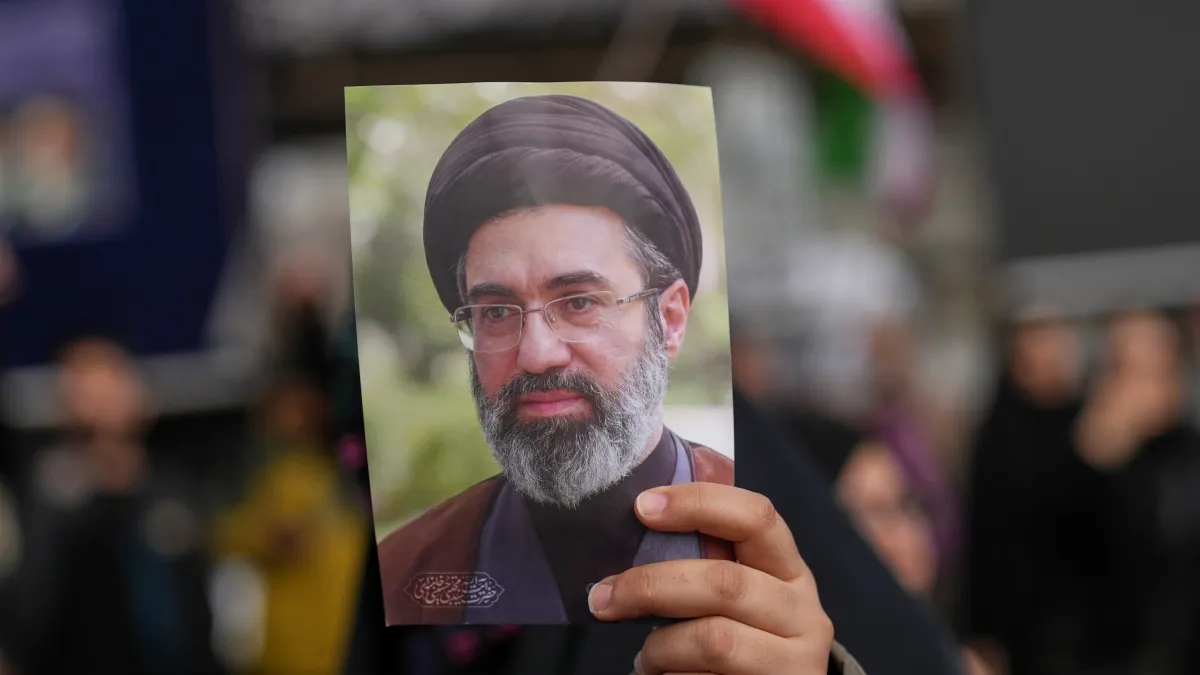
At the centre of this dramatic turnaround was Mojtaba Khamenei, Iran's new Supreme Leader and son of Ali Khamenei, who was killed in an airstrike at the outset of the conflict on February 28. According to the Axios report, Mojtaba played a decisive role in nudging Iranian negotiators towards a deal for the first time since hostilities began.
"Supreme Leader Mojtaba Khamenei had instructed his negotiators, for the first time since the war began, to move towards a deal," Axios quoted an Israeli official, a regional official and a third source with knowledge as saying
How Iran's supreme leader reached a truce with Trump?
Even as Trump publicly issued stark warnings of "wiping out a whole civilization," intense diplomatic activity was unfolding behind the scenes. Sources indicated that uncertainty prevailed until the very last moment, with even those close to Trump unsure whether negotiations would succeed or a full-scale military strike would follow.
Officials at the Pentagon and US forces stationed across the Middle East were preparing for a massive bombing campaign targeting Iranian infrastructure. A defence official described the situation as unpredictable, saying there was little clarity on the final decision until the ceasefire was announced.
Across the region, US allies braced for potential retaliation from Iran, while inside the country, civilians reportedly began fleeing vulnerable areas in anticipation of large-scale strikes.
On Monday, even as Trump attended an Easter event at the White House, his Middle East envoy Steve Witkoff was engaged in intense backchannel diplomacy, reportedly describing Iran's initial 10-point counter-proposal as "a disaster" during calls with mediators, according to Axios.
What followed was a "chaotic" round of negotiations, with Pakistani intermediaries shuttling revised drafts between Witkoff and Abbas Araghchi, while foreign ministers from Egypt and Turkey attempted to bridge differences. By late Monday night, mediators secured US approval for a revised proposal calling for a two-week ceasefire.
The final decision rested with Mojtaba Khamenei, who has remained out of public view since assuming leadership after the death of Ali Khamenei. Facing reported assassination threats from Israel, Khamenei was said to be communicating through intermediaries and remained closely involved in negotiations. His approval ultimately proved decisive, with sources indicating that "without his green light, there wouldn't have been a deal."
Araghchi played a crucial role in advancing the talks and persuading commanders of the Islamic Revolutionary Guard Corps to accept the ceasefire. Meanwhile, China is also understood to have advised Iran to seek a diplomatic off-ramp.
Despite signs of progress, Trump continued issuing stark warnings, at one point stating that "a whole civilization will die tonight." However, negotiations remained on track. Vice President JD Vance coordinated efforts from Hungary, primarily engaging with Pakistani officials, while Israeli Prime Minister Benjamin Netanyahu remained in constant touch with Washington, amid concerns in Israel about losing influence over the process.
By Tuesday afternoon, consensus around a deal had emerged. Shortly thereafter, Shehbaz Sharif publicly shared the ceasefire framework and urged both sides to accept it. Trump soon confirmed the agreement, announcing a temporary suspension of military action against Iran for two weeks.
Trump later spoke with Pakistan's Army Chief Asim Munir to finalise the arrangement, while Sharif invited both US and Iranian delegations to Islamabad for further talks. Within minutes of Trump’s announcement, US forces were ordered to stand down, and Araghchi confirmed that Iran would adhere to the ceasefire.
For now, the agreement has brought a pause to hostilities, though underlying tensions in the region remain unresolved.
US-Iran ceasefire
The US and Iran agreed to a two-week ceasefire after nearly six weeks of military hostilities. US President Donald Trump made the announcement via his Truth Social platform just about 90 minutes before the deadline for potential escalation. Trump also stated that the US has received a 10-point proposal from Iran, which he described as a workable basis for negotiations.
The next step in the ceasefire will be a meeting between the US and Iranian delegations in Pakistan on April 10, when the final terms of the agreement are to be decided. The US is also expected to present its own set of demands to Iran, including a complete halt to its nuclear and ballistic missile programs, both of which Tehran had rejected in the past, eventually leading to the war.
The US and Israel jointly attacked Iran on February 28, killing Iranian Supreme Leader Ayatollah Ali Khamenei and several top commanders. The retaliation by the Islamic Republic extended the war to the entire Gulf region.
Also Read: How China played a key behind-the-scenes role in the US-Iran ceasefire
Also Read: Netanyahu backs US–Iran ceasefire, stresses deal doesn't apply to Hezbollah conflict in Lebanon
