
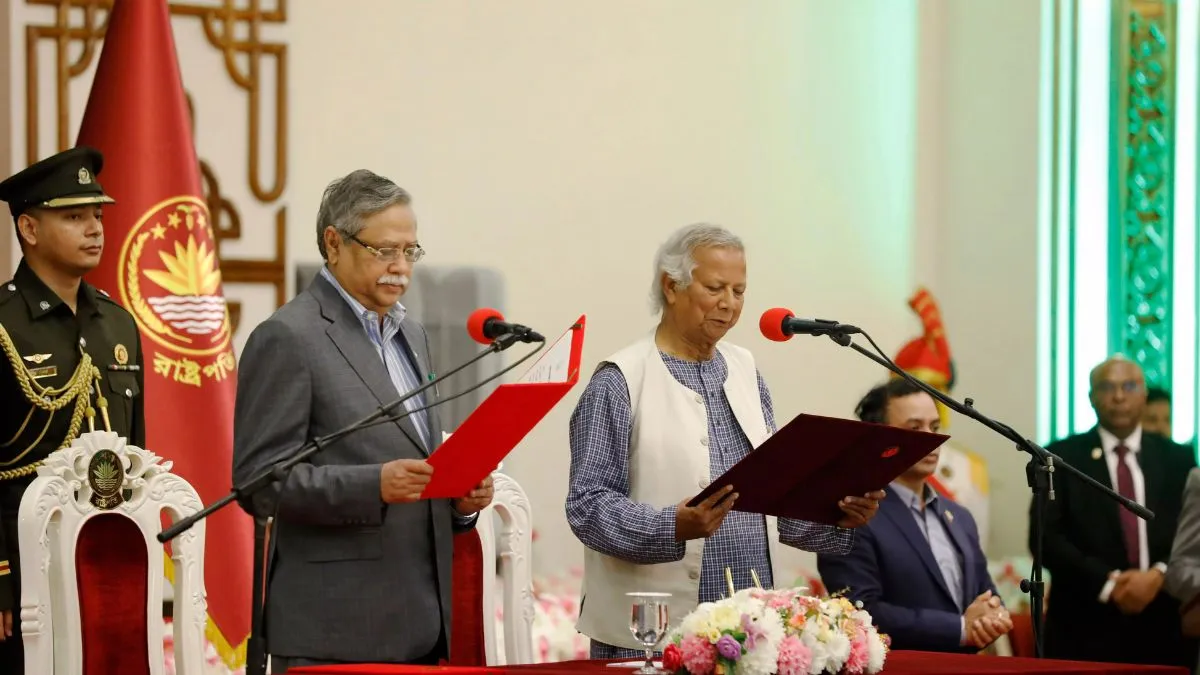
Bangladesh President Mohammed Shahabuddin has accused former chief adviser Muhammad Yunus of deliberately reducing the role of the presidency during the interim government. In an interview to a Bengali daily, the President said he was not kept informed about major state matters and was pushed aside from key decisions.
‘No information, no consultation’
According to Shahabuddin, Yunus did not follow the constitutional process that requires regular updates to the President. He claimed he was never briefed about several foreign visits or important agreements signed during that period. “I was not told anything neither verbally nor in writing,” he said, adding that this went against established constitutional norms.
The President also alleged that his own foreign invitations were blocked without discussion. Letters declining invitations were reportedly sent in his name without his approval. He further claimed that his public presence was gradually reduced, including removal of his photographs from missions abroad and limiting his participation in official events.
Shahabuddin suggested that there were attempts to force him out of office. He claimed that at one stage, discussions were held about replacing him through non-constitutional means, though those efforts did not succeed. Despite political pressure and tensions, he said he chose to remain in office to protect constitutional order.
Security concerns during tense period
Referring to unrest during the interim period, the President described a serious security situation at the presidential residence. He said security forces intervened to prevent escalation and maintain stability. Shahabuddin maintained that his decision to stay in office was guided by his responsibility to uphold the constitution.
