
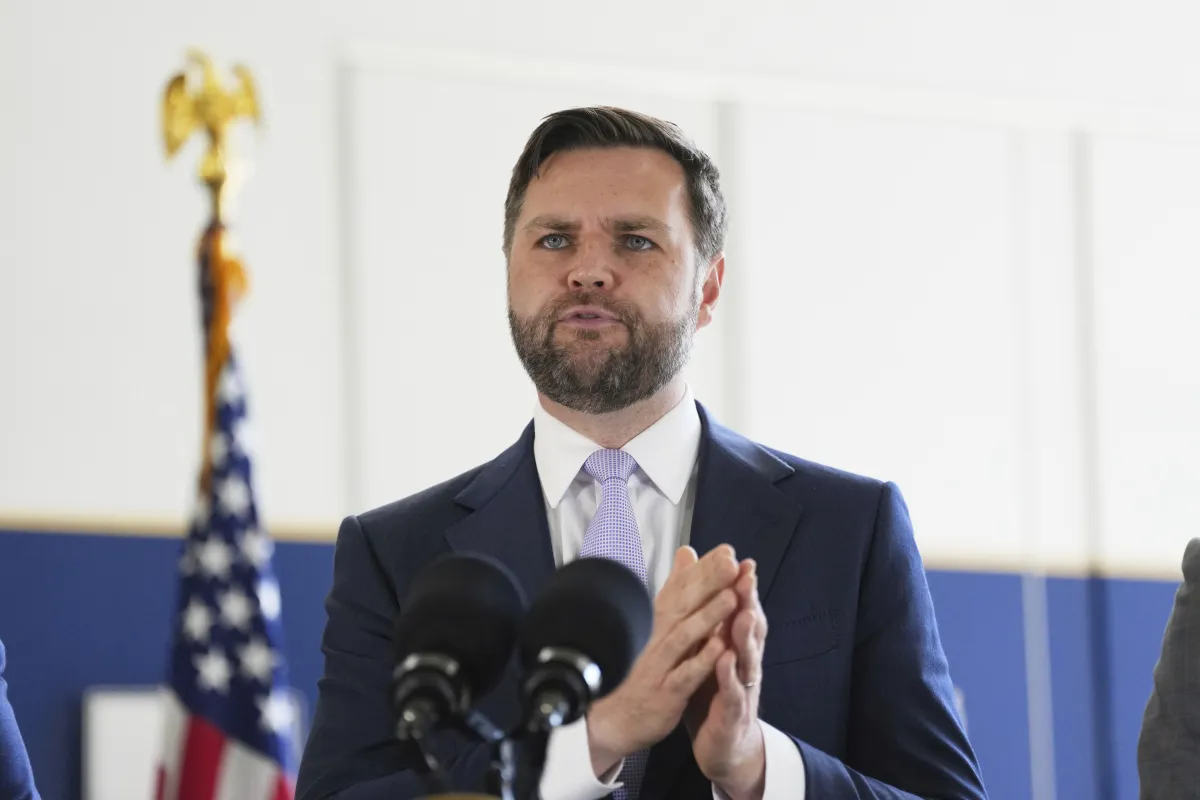
US Vice President JD Vance on Monday said Iran is now incapable of developing a nuclear weapon using its existing equipment, following targeted US and Israeli strikes on key nuclear facilities. His statement marks a strategic shift from military confrontation to renewed diplomatic engagement. Speaking to Fox News, Vance said, "Iran was very close to having a nuclear weapon. Now Iran is incapable of building a nuclear weapon with the equipment they have because we destroyed it."
The remarks came shortly after President Trump announced ceasefire between Israel and Iran, and hours after US-led bunker-busting airstrikes hit critical nuclear enrichment sites at Natanz, Fordow and Isfahan. According to Vance, the operation has "set back Tehran’s capabilities by years" by dismantling centrifuges and destroying advanced enrichment infrastructure.
On NBC’s Meet the Press, Vance clarified that the US does not seek war with Iran but aims to eliminate its nuclear threat. "We’re not at war with Iran. We’re at war with Iran’s nuclear programme," he said. He added that President Donald Trump remains open to diplomacy and that the focus is now on securing a peaceful rollback of Iran’s nuclear ambitions.
No intent to pursue regime change
President Trump, in a Saturday night address from the White House, said the US wants Iran to abandon its nuclear programme peacefully and that military intervention was never aimed at regime change.
While the destruction of infrastructure is confirmed, concerns persist over Iran’s stockpile of enriched uranium. Intelligence reports suggest that some of the material may have been concealed, buried or transported abroad before the strikes. "We still don’t know where it is," Vance admitted.
Concerns remain over Iran’s enriched uranium stockpile
The International Atomic Energy Agency (IAEA) has also been unable to verify the location of Iran’s fuel stockpile. In its latest resolution earlier this month, the IAEA declared Iran "non-compliant" for the first time in two decades, citing lack of transparency over undeclared material.
Vance maintained that any effort by Iran to rebuild its programme will be met with force. "If they try again, they will have to deal with a very, very powerful American military," he said.
The coordinated strikes and the subsequent diplomatic messaging represent a clear recalibration of US strategy neutralising Iran’s enrichment capability without escalating into a broader conflict. Analysts say the developments have not only altered Iran’s nuclear timeline but also opened a limited window for potential negotiations with Western powers.
