
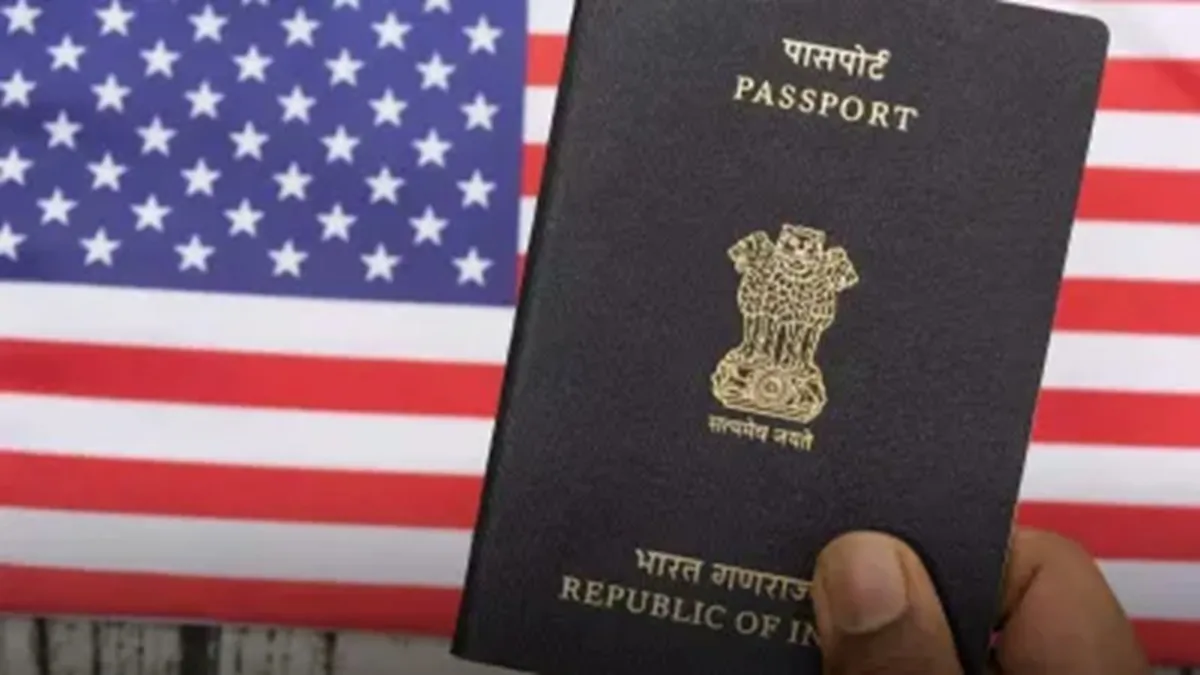
Since President Donald Trump’s return to the White House in January 2025, the United States has rolled out a series of sweeping and stringent visa and immigration measures. Framed largely around “national security” and “protecting American interests,” these new policies have impacted students, skilled workers, tourists, and even athletes. The changes stem from social media vetting to the end of the interview waiver programme and more.
Expanded social media vetting
The U.S. State Department now requires nearly all visa applicants to submit their detailed social media history. This move also temporarily froze new student visa interviews worldwide until updated vetting systems were in place.
Children on H-1B visa holders face green card risk
Starting August 15, 2025, thousands of children mostly from India could lose their path to permanent residency in the US due to a significant policy change. Under the updated rules by the US Citizenship and Immigration Services (USCIS), children of H-1B visa holders will no longer retain their protected immigration status once they turn 21, even if their parents’ Green Card applications are still pending. The revised policy updates how a child’s age is calculated under the Child Status Protection Act (CSPA). USCIS will now use the Final Action Dates chart from the Department of State’s Visa Bulletin to determine visa availability for age calculation. This applies uniformly whether the family is applying from inside or outside the US.The rule applies to applications filed on or after August 15, 2025. Cases submitted earlier will still follow the February 14, 2023, policy, as many families filed based on that guidance.
Antisemitism screening in immigration
USCIS now considers antisemitic activity online or offline as grounds to deny immigration benefits. This includes lawful permanent residency, student visas, and affiliations with institutions linked to antisemitism. Social media is actively monitored as part of this screening.
End of ‘Dropbox’ interview waiver (Effective September 2, 2025)
The long-standing Interview Waiver Programme, popularly known as the “Dropbox” facility, will no longer apply to most non-immigrant visas. Applicants including H1-B, L1, F1, and O1 holders must now attend in-person interviews. Even children under 14 and adults over 79 will need to appear before a consular officer.
Halt on student visa interviews
New F-1 and M-1 visa interviews were frozen globally to integrate enhanced background checks and digital footprint assessments, creating uncertainty for incoming students.
Transgender athlete visa restriction
A controversial policy now bars transgender women (assigned male at birth) from obtaining “extraordinary ability” visas to compete in women’s sports.
Visa bond requirement for high-risk countries
Applicants for B-1/B-2 tourist and business visas from certain nations with high overstay rates must post bonds of up to $15,000 as a condition for approval.
Reinstated travel
Citizens from 12 specified countries face renewed entry restrictions, reviving a measure similar to Trump’s earlier travel bans.
Laken riley act enforcement
The Department of Homeland Security must detain undocumented immigrants charged with certain crimes, while states can sue the federal government for lapses in enforcement.
