
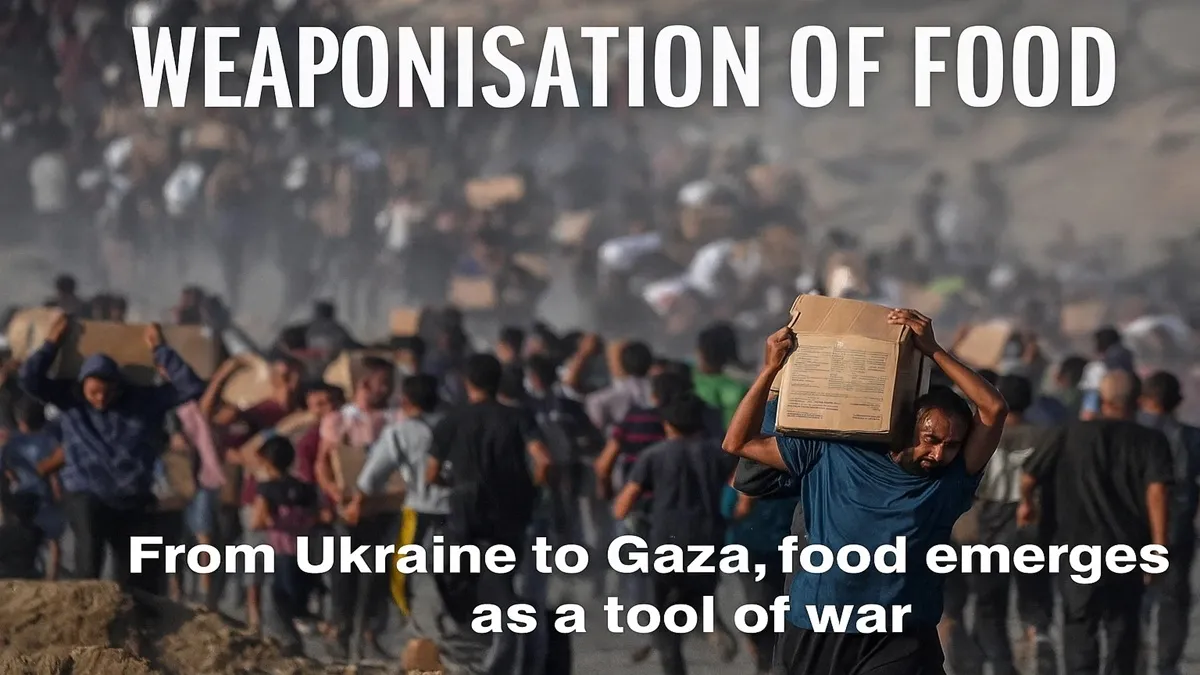
Food has long been used as a weapon in times of war. While nuclear arms evoke global condemnation for their potential to cause mass civilian casualties and unimaginable devastation, the strategic use of food through blockades, embargoes, or destruction of supply chains often flies under the radar despite its deadly impact. Unlike nuclear weapons, the manipulation of food access remains a common tactic in modern conflicts. In today's interconnected world, this method of warfare poses an even greater and more far-reaching threat.
As starvation grows across conflict zones, the UN has accused Israel of using food as a weapon in Gaza, a strategy it says constitutes a war crime under international law. The warning came following reports that hundreds of Palestinians have died while trying to access food from Israeli-controlled aid routes. "Desperate, hungry people in Gaza continue to face the inhumane choice of either starving to death or risk being killed while trying to get food," UN spokesperson Thameen Al-Kheetan said.
What does the UN say?
In its strongest statement yet, the UN rights office condemned what it called a "militarised humanitarian assistance mechanism", accusing Israel of restricting access to essential services. It said the deliberate denial of food, water and aid is a violation of the Geneva Conventions and could amount to multiple crimes under international law.
More than 410 Palestinians have reportedly been killed since late May while trying to reach distribution points operated by the Israeli-supported Gaza Humanitarian Foundation, according to health officials and NGOs.
Israel responds: 'We target Hamas, not civilians'
The Israeli government has rejected the accusations, blaming Hamas for endangering civilians by embedding fighters in residential zones. Hamas has denied this claim.

Weaponisation of food: What does international law say?
The use of food as a weapon is prohibited by multiple international agreements:
Geneva Conventions (1977 Protocol I) ban attacks on infrastructure critical to civilian survival, including crops and water systems.
The Rome Statute (1998) defines "intentionally using starvation of civilians as a method of warfare" as a war crime.
The International Covenant on Economic, Social and Cultural Rights recognises the right to food as fundamental.
Despite these safeguards, food remains a tactical weapon in modern conflicts, often with impunity.
Why food as a weapon is deadlier today
This is not the first instance of state-backed food weaponisation. In the ongoing war in Ukraine, Russia bombed grain depots, blocked Black Sea trade routes, and withdrew from the UN-brokered grain deal, leading to global food shortages.
Ukraine, a major exporter of wheat and sunflower oil, saw its supply chains collapse under military pressure, raising food prices worldwide and hitting import-reliant countries in Africa and Asia.
The deliberate withholding of food from a civilian population is not a tactic. It's not "collateral damage". It's cruelty. According to the World Food Programme, over 345 million people worldwide today face acute food insecurity, a figure that has doubled since 2020, largely due to conflict.