
Tens of thousands of civilians have fled their homes as border clashes between Thailand and Cambodia entered a third day on Saturday, intensifying fears of a prolonged and deadly conflict between the two Southeast Asian neighbours.
Cambodian officials reported 12 additional deaths Saturday—seven civilians and five soldiers—bringing the combined death toll from both countries to at least 32. The deaths came amid ongoing skirmishes near the Ta Muen Thom temple and other contested areas along the disputed 800-kilometre (500-mile) border.
Cambodia had initially confirmed one fatality on Friday, when a man was killed after a Thai rocket hit a Buddhist pagoda. Meanwhile, Thai officials said six of their soldiers and 13 civilians, including children, had been killed. Dozens more have been wounded—29 Thai soldiers and 30 civilians, according to the Thai Health Ministry.
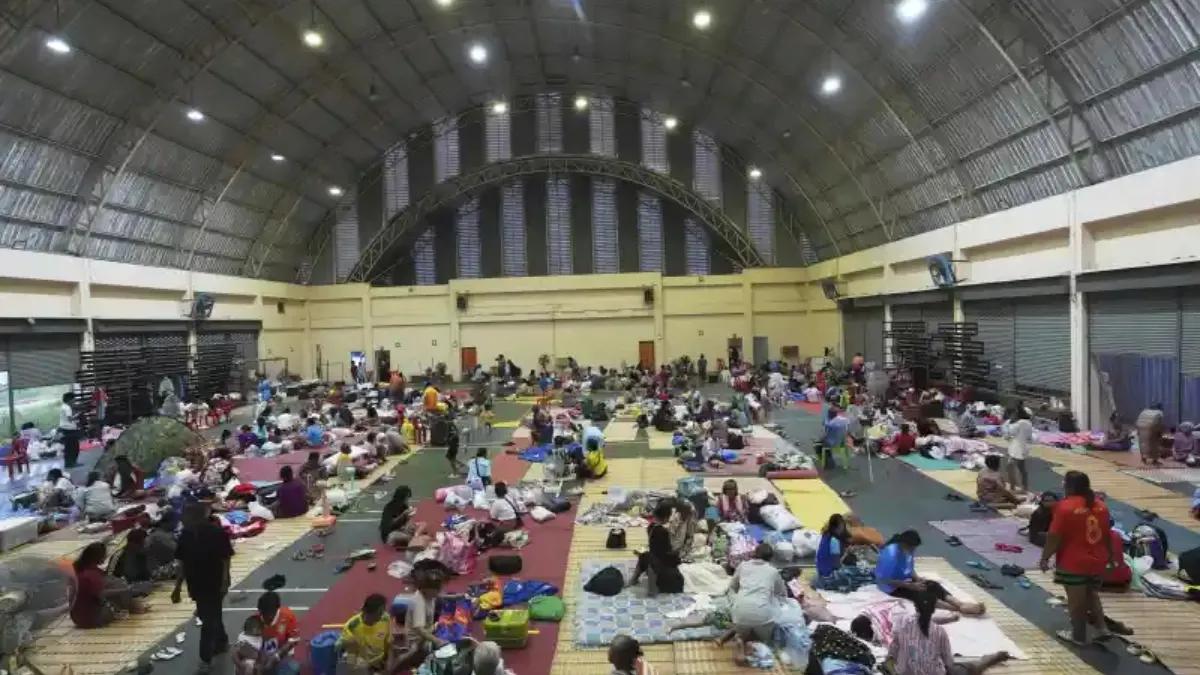
More than 81,000 people have now been displaced due to the fighting. The Thai Health Ministry reported 58,000 people seeking shelter in four affected provinces, while Cambodia’s interior ministry confirmed over 23,000 evacuations in Oddar Meanchey province and surrounding areas.
Shelling hits hospitals and schools
The renewed violence—triggered by a land mine explosion on Wednesday that injured five Thai soldiers—has led to widespread damage. Cambodian authorities said Thai rockets struck a school compound on Friday, although no injuries were reported. A hospital in Thailand’s Phanom Dong Rak district also sustained shelling damage, shattering windows and damaging its roof.
Thai authorities have accused Cambodian forces of using heavy artillery and Russian-made BM-21 rocket launchers, prompting what Bangkok described as “appropriate supporting fire.” Cambodia’s Defence Ministry responded by accusing Thailand of targeting civilian areas and questioned how a smaller country without an air force could provoke a larger, better-equipped military.
Calls for ceasefire and restraint
The United Nations Security Council held an emergency closed-door session on Friday in New York. Although no formal statement was issued, all 15 members reportedly urged both sides to de-escalate, show maximum restraint, and pursue a peaceful resolution.
Cambodia’s U.N. Ambassador Chhea Keo, who requested the emergency meeting, called for an unconditional ceasefire. “We also call for the peaceful solution to the dispute,” he told reporters, while rejecting accusations of aggression. “We do not do that,” Keo said, highlighting Cambodia’s military disadvantages.
Thailand’s acting Prime Minister, Phumtham Wechayachai, said Cambodia could be guilty of war crimes due to the civilian casualties and attacks on medical facilities. He stressed that Thailand had shown “utmost restraint and patience in the face of provocations.”
Civilians trapped and terrified
On both sides of the border, families have been forced to flee under fire. In Thailand’s Surin province, around 600 evacuees took refuge in a university gymnasium. Seamstress Pornpan Sooksai described running from her home with her four cats as explosions echoed nearby. “I just heard, boom, boom… I was frightened, scared,” she recalled.
In Cambodia’s rural Oddar Meanchey province, villagers dug makeshift bunkers and sought shelter in temples. Veng Chin, a 74-year-old farmer, said he hoped the governments would “negotiate a settlement so I can return to my home and work on the farm.”
ASEAN and international mediation efforts
The conflict has drawn rare rebukes and concern from regional partners. The Association of Southeast Asian Nations (ASEAN), which includes both countries, has called for calm. Malaysian Prime Minister Anwar Ibrahim, who currently chairs the bloc, said both Cambodia and Thailand had agreed to a ceasefire and troop withdrawal, but needed more time before implementing the agreement.
Anwar said he had spoken directly with both Cambodian Prime Minister Hun Manet and Thai Acting Prime Minister Phumtham and offered Malaysia’s support in facilitating peace talks. U.N. Secretary-General Antonio Guterres also urged both sides to prioritize diplomacy over force.
Long-running dispute escalates
The Thai-Cambodian border has long been a source of friction, with competing claims over historical landmarks like the Ta Muen Thom and Preah Vihear temples. The last major confrontation in 2011 left 20 people dead. Tensions flared again in May when a Cambodian soldier was killed during a border confrontation, straining bilateral ties and triggering a wave of nationalist sentiment in Thailand.
The situation further deteriorated after the land mine incident this week, leading Bangkok to shut down border crossings and expel Cambodia’s ambassador. Clashes quickly erupted, leaving soldiers and civilians dead on both sides.
Despite international pressure and regional diplomacy, the situation remains fluid and volatile. Thousands remain displaced, and with shelling continuing into the weekend, the risk of a deeper conflict continues to grow.
(AP inputs)
