
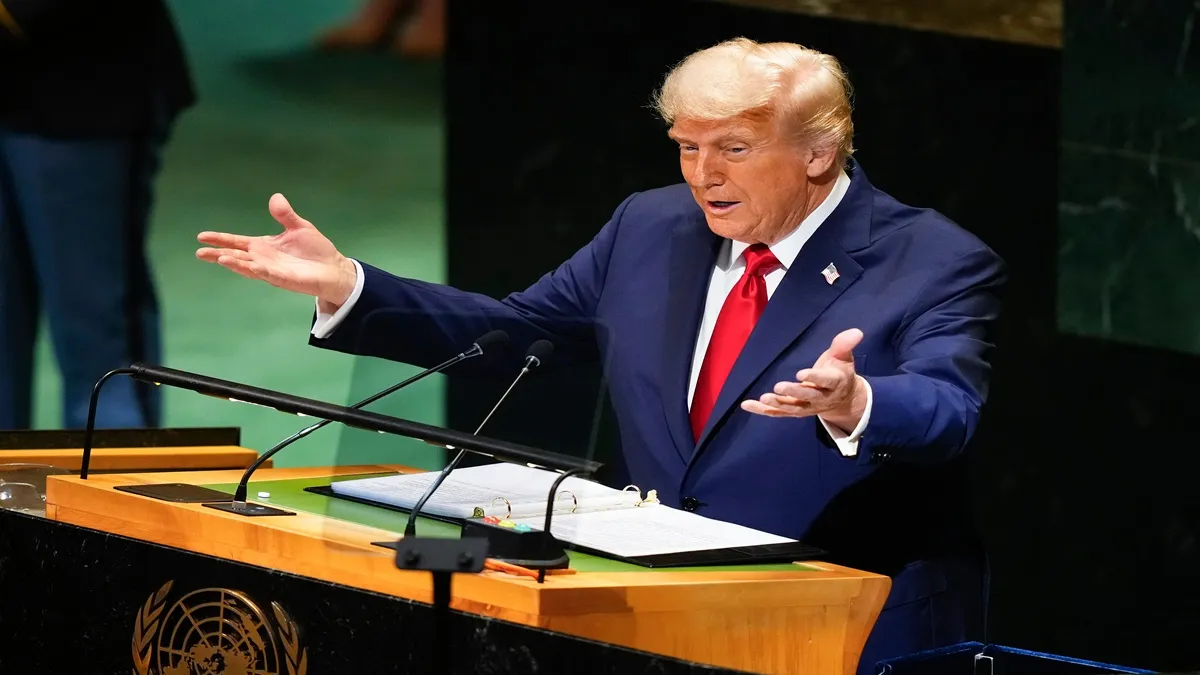
US President Donald Trump has signed an executive order clearing the way for TikTok to continue operations in the United States under a new ownership model dominated by American investors. The decision addresses long-standing national security concerns while also preserving access to the wildly popular video-sharing app, particularly among young Americans. Trump revealed that Chinese President Xi Jinping approved the proposed framework during their September 20 phone conversation, signaling rare alignment between Washington and Beijing on a technology issue that has fueled years of tension.
Years of pressure on TikTok
The Biden administration passed legislation in April 2024 requiring TikTok's Chinese parent company, ByteDance, to divest its US operations or face a nationwide ban. That law gave the company until January 19, 2025, to finalise changes. While Biden sought a full divestment, Trump’s approach has leaned toward restructuring the app under heavily US-controlled ownership.
Officials have long argued that TikTok’s recommendation algorithm could be exploited by the Chinese government to influence American discourse. Although no public evidence has been presented showing direct interference, both Republicans and Democrats demanded safeguards to prevent Beijing’s influence over what has become a major information source for young Americans.
The Deal Structure: A US-led joint venture
Under the outlined agreement-
- A consortium of American companies, including Oracle and Silver Lake Partners, will hold around 80 percent of TikTok’s new entity.
- ByteDance will retain 20 percent or less, with only one representative on the board- excluded from security-related matters.
- Oversight of security and user data will remain exclusively in US hands.
The recommendation algorithm at TikTok’s core will be rebuilt on American soil using only US-based data, though ByteDance will provide a licensed copy of its original framework to speed development.
Key players and political connections
The investor group reportedly includes Oracle’s Larry Ellison, Dell founder Michael Dell, and media mogul Rupert Murdoch’s circle of influence. Ellison, still serving as Oracle’s chairman and CTO at age 81, is positioned as a central figure in ensuring TikTok’s cybersecurity measures. His ties to Trump and recent role in major media deals suggest the venture could expand his influence beyond enterprise software.
These connections have raised questions about possible political motivations behind the ownership shift, particularly given TikTok’s importance as a communication tool for young people- a group Trump has actively courted.
Strategic importance to US-China relations
Beijing previously denounced US demands to separate TikTok from ByteDance as “robbery.” However, the tone shifted as trade talks between Washington and Beijing gained momentum. Analysts say China may have approved the deal as an expendable concession in exchange for progress on broader trade negotiations and improved diplomatic ties.

Sun Yun of the Stimson Center argued that TikTok is “no longer a disruptive newcomer” and can be given up without significant cost, while maintaining goodwill in US-China relations. Others believe Beijing used TikTok’s approval to extract concessions in parallel trade discussions.
The impact on American users
For nearly half of young adults in the United States, TikTok has become the leading source of news and cultural trends. A Pew Research Center study found that 43 percent of Americans under 30 regularly consume news on TikTok, outpacing YouTube, Instagram, and Facebook.
By approving a framework that secures US ownership while maintaining the app’s availability, Trump and Xi have ensured TikTok remains a fixture of American digital life.
Looking ahead
The final terms of the deal are still being negotiated, and it remains unclear how quickly the restructuring will be completed. However, Trump insists that “tight control” will rest with US companies. ByteDance, in its official statement, acknowledged the agreement and pledged to comply with Chinese legal requirements while supporting TikTok’s future in the US market.
The executive order marks not only a milestone in US tech regulation but also a rare case of cooperation between Washington and Beijing- using TikTok as a bargaining chip in a much broader geopolitical contest.