
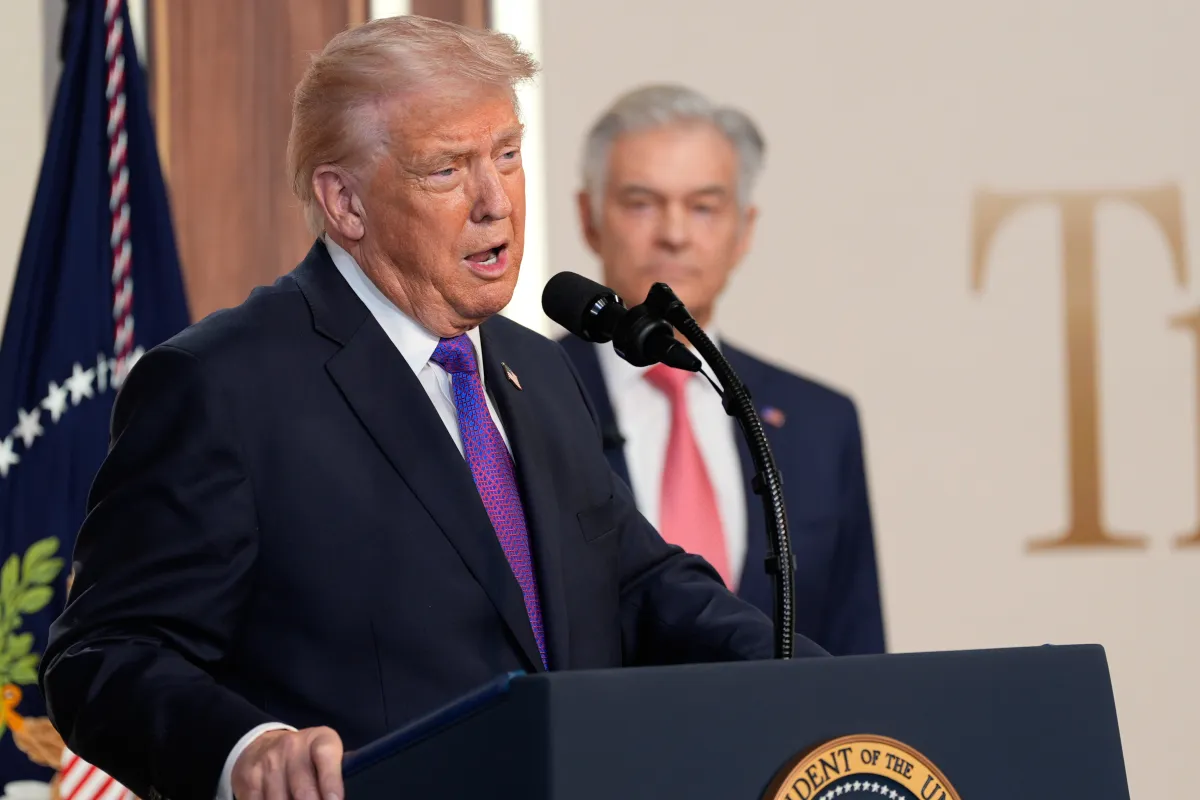
US President Donald Trump on Friday rejected an offer from Russian counterpart Vladimir Putin proposing a voluntary extension of recently-expired limits on the deployment of strategic nuclear weapons. Trump stated that he wants negotiators from both countries to sit down and plan out a new agreement, calling the old treaty “badly negotiated”.
"Rather than extend NEW START (A badly negotiated deal by the United States that, aside from everything else, is being grossly violated), we should have our Nuclear Experts work on a new, improved, and modernised Treaty that can last long into the future," Trump posted on his Truth Social network.
New START pact expires: What it means?
The New START pact was expired on Thursday, it means fewer limits on the massive nuclear arsenals of the US and Russia, spurring concerns over a potential arms race at a time of resurgent anxiety over nuclear weapons.
Earlier, Putin stated that he would abide by the treaty for another year if Washington would commit to doing the same.
The Kremlin on Thursday said it regretted the expiration of the last remaining nuclear arms pact between Russia and the United States, while US President Donald Trump declared he was against keeping its limits and wants a better deal.
The pact's termination left no caps on the two largest atomic arsenals for the first time in more than a half-century, fuelling fears of an unconstrained nuclear arms race.
Russian President Vladimir Putin last year declared his readiness to stick to the treaty's limits for another year if Washington followed suit, but Trump has ignored the offer and argued that he wants China to be a part of a new pact, something Beijing has rebuffed.
Putin discussed the pact's expiration with Chinese leader Xi Jinping on Wednesday, noting the US failure to respond to his proposal to extend its limits and saying that Russia "will act in a balanced and responsible manner based on thorough analysis of the security situation," Kremlin adviser Yuri Ushakov said.
Know all about New START pact
New START, signed in 2010 by then-President Barack Obama and his Russian counterpart Dmitry Medvedev, restricted each side to no more than 1,550 nuclear warheads on no more than 700 missiles and bombers - deployed and ready for use. It was originally supposed to expire in 2021 but was extended for five more years.
The pact envisioned sweeping on-site inspections to verify compliance, although they stopped in 2020 because of the COVID-19 pandemic and never resumed.
In February 2023, Putin suspended Moscow's participation, saying Russia could not allow US inspections of its nuclear sites at a time when Washington and its NATO allies have openly declared Moscow's defeat in Ukraine as their goal.
At the same time, the Kremlin emphasised it was not withdrawing from the pact altogether, pledging to respect its caps on nuclear weapons. In offering in September to abide by New START's limits for a year to buy time for both sides to negotiate a successor agreement, Putin said the treaty's expiration would be destabilising and could fuel nuclear proliferation.
New START was the last remaining pact in a long series of agreements between Moscow and Washington to limit their nuclear arsenals, starting with the SALT I in 1972.
Also Read:
Nearly after four years, US, Russia agree to reestablish military dialogue after Ukraine talks
