
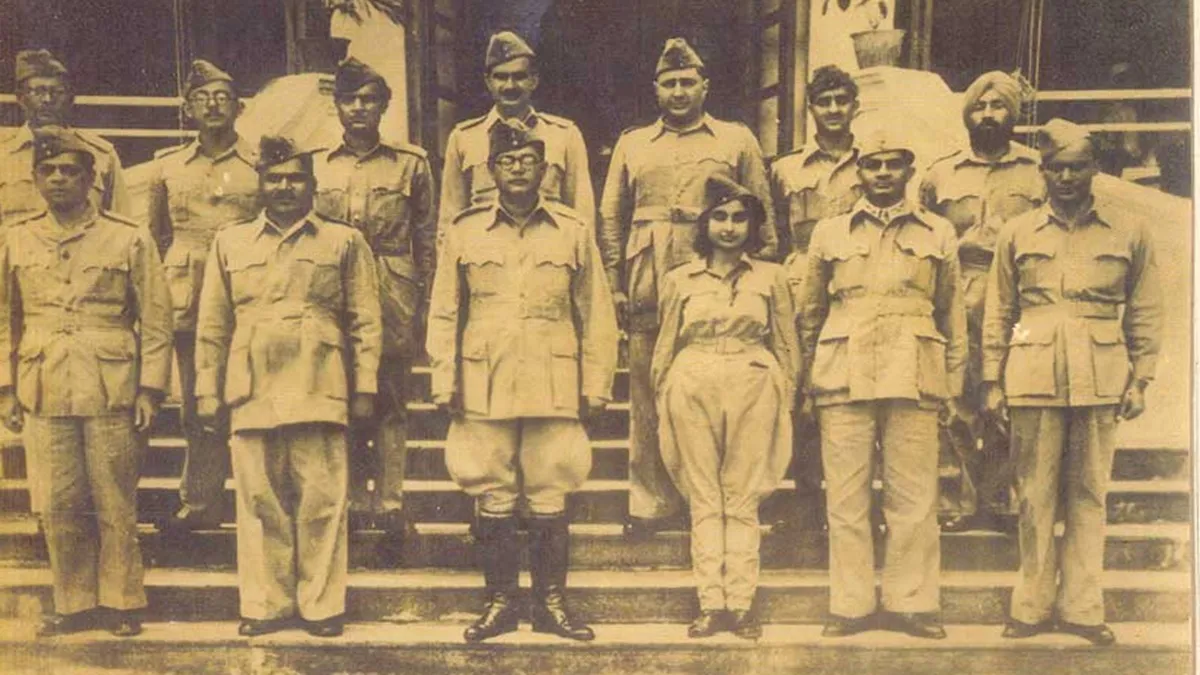
The Azad Hind Fauj, also known as the Indian National Army (INA) was initially formed in 1942 by Captain Mohan Singh, a former British Indian Army officer, in Singapore with Japanese support, drawing from Indian prisoners of war. Later, in 1943, Subhas Chandra Bose took over leadership to revitalise it with a stronger vision and greater civilian involvement.
Azad Hind Fauj: Check key figures and timeline
Captain Mohan Singh in (1942) first conceived the idea and established the first INA using captured Indian soldiers, with assistance from Japanese Major Iwaichi Fujiwara.
Later, Rash Behari Bose played a crucial role in organising the movement in East Asia and handed over leadership to Subhas Chandra Bose.
Then, Subhas Chandra Bose in 1943, took the command and declared the Provisional Government of Free India, and led the INA in a military campaign for independence, giving it the famous slogan, "Dilli Chalo" (On to Delhi).
While Mohan Singh founded the initial force, Subhas Chandra Bose became its most famous and influential leader, transforming it into a significant part of India's struggle for freedom.
Who was Mohan Singh?
Mohan Singh was an Indian military officer and a politician and was a British Indian Army officer, and later member of the Indian Independence Movement, best known for founding and leading the Indian National Army in South East Asia during World War II.
After Indian independence, Mohan Singh later served in public life as a Member of Parliament in the Rajya Sabha (Upper House) of the Parliament.
He was born in a Ghumman Jat Sikh family, the only son of Tara Singh and Hukam Kaur, a couple from Ugoke village, near Sialkot (now in Pakistan). His father died two months before his birth, and his mother moved to her parents' home in Badiana in the same district, where Mohan Singh was born and brought up.
Mohan Singh was promoted as temporary Captain when his battalion was earmarked for operational service in the Far East. The battalion was still carrying out intensive training at Secunderabad in December 1940 when he married Jasvant Kaur, the sister of a fellow officer.
Also Read:
Netaji Subhas Chandra Bose Jayanti 2025: Key takeaways from his life and legacy
