
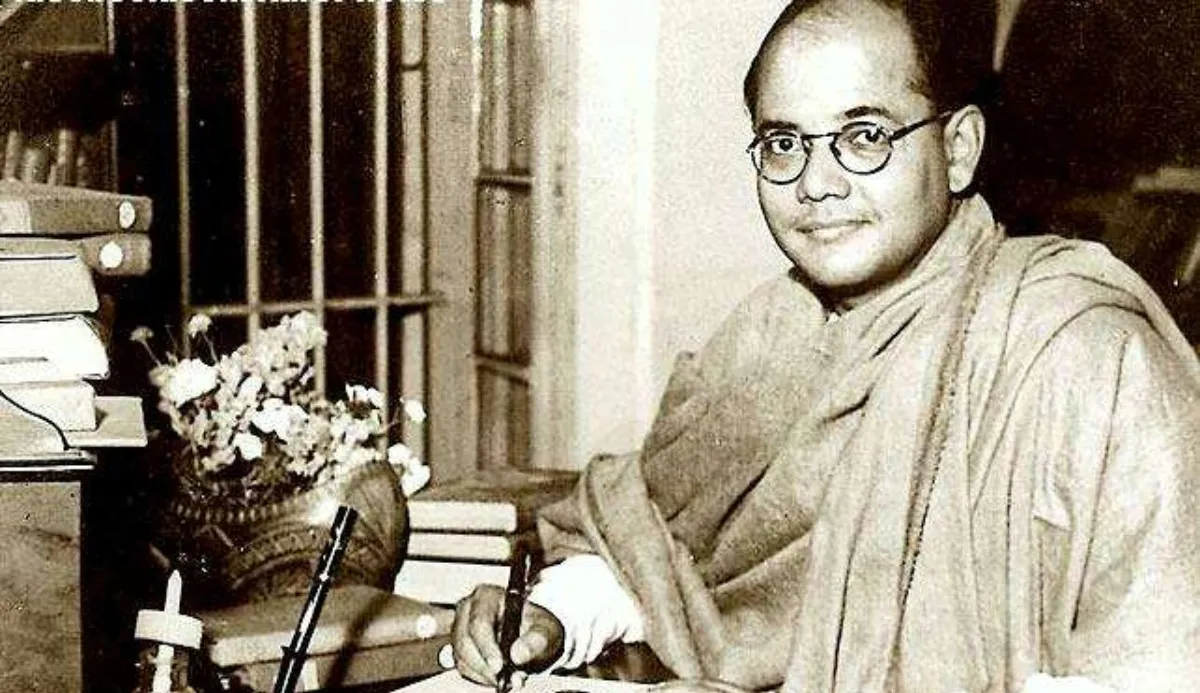
Subhas Chandra Bose, one of the most influential and charismatic leaders of India's freedom struggle, continues to inspire generations with his courage, patriotism and unwavering commitment to independence. Bose's birth anniversary is observed every year on January 23 as Parakram Diwas (Day of Valor) to honour his extraordinary contribution to the nation and the sacrifices made by countless freedom fighters.
While Netaji's role in mobilising the Indian National Army (INA) and challenging British rule is widely celebrated, the mystery surrounding his disappearance after 1945 has remained one of the most debated chapters in Indian history. Over the years, the Government of India constituted three commissions, namely the Shah Nawaz Committee, the GD Khosla Commission, and the Justice Mukherjee Commission, to ascertain the truth behind his reported death. Let's find out the findings of these three commissions.
Shah Nawaz Committee (1956)
The Shah Nawaz Committee, formed in 1956, was the first three-man committee to find out the truth about Netaji Subhas Chandra Bose. The committee was headed by former INA officer Shah Nawaz Khan, who was captured by the British and put on trial in 1946 but was discharged due to intense pressure from the public. The other two members of the Shah Nawaz Committee were Suresh Chandra Bose and SN Maitra. Suresh Chandra was the elder brother of Netaji, and Maitra was a nominee of the West Bengal government.
The committee concluded that Subhas Chandra Bose died on August 18, 1945, due to injuries sustained in a plane crash in Taihoku (now Taipei), Taiwan. The committee also stated that Netaji's ashes were kept in Japan's Renkoji Temple and suggested his ashes should be brought to India with due honour.
According to the report, Bose suffered severe burns when the aircraft crashed shortly after take-off at Taihoku on August 18, 1945, due to some kind of engine trouble, whose cause cannot be established clearly in the absence of data, and succumbed to his injuries later that day. The committee stated that Netaji breathed his last shortly after 8 pm at Nanmon Military Hospital in Taihoku.
However, the committee was not unanimous. Suresh Chandra Bose, Netaji's elder brother and a member of the panel, dissented, rejecting the plane crash theory and calling the evidence unreliable. Netaji's brother also wrote a dissenting note and claimed that the committee had withheld some very important evidence from him, and it had been directed by Jawaharlal Nehru to infer death by a plane crash.
GD Khosla Commission (1970–1974)
After the Shah Nawaz Committee, the Indira Gandhi-led government formed a new commission in 1970 under GD Khosla to probe the 'disappearance' of Netaji Subhas Chandra Bose. Khosla was a retired chief justice of the Punjab High Court, and there were no other members in the commission. The Khosla Commission, as compared to the Shah Nawaz Committee, took a lot of time in its probe and submitted its report to the government in 1974. The commission extensively reviewed witness testimonies, documents, and foreign records.
However, the Khosla Commission endorsed the Shah Nawaz Committee's findings, stating that the plane crash did occur and that Netaji had died as a result of burn injuries in Taihoku on August 18, 1945. It dismissed claims suggesting Bose had survived and gone into hiding, terming such theories speculative and unsupported by concrete evidence.
Justice Mukherjee Commission (1999–2006)
Decades later, the Atal Bihari Vajpayee-led BJP government constituted another commission in 1999, led by Justice Manoj Kumar Mukherjee, a retired Supreme Court judge, to probe about Netaji. After examining international archives, visiting multiple countries, and analysing forensic evidence, the commission reached a contradictory conclusion. The commission rejected the findings of the Shah Nawaz Committee and GD Khosla Commission.
The Mukherjee Commission concluded that Netaji Subhas Chandra Bose "is dead, but he did not die in the plane crash," as claimed. The commission also stated that the ashes preserved at the Renkoji Temple in Japan do not belong to Netaji. However, it added that in the absence of any clinching or conclusive evidence, a definitive answer to the terms of reference could not be provided.
The commission in 2005 concluded that there is no proof of any plane crash at Taihoku airport on August 18, 1945, as documentary evidence, such as a medical certificate, a cremation certificate, plane crash records etc are not available.
It also rejected claims linking Bose to the mysterious ascetic known as Gumnami Baba. However, the commission admitted that it could not definitively establish what happened to Netaji after 1945.
An unresolved chapter in history
As India commemorates Parakram Diwas, Subhas Chandra Bose remains not only a symbol of valour and nationalism but also the centre of an enduring historical mystery. Despite multiple inquiries, the question of what truly happened to Netaji continues to intrigue historians, researchers, and citizens alike.
More than seven decades later, Bose's life and ideals remain a source of inspiration, while the mystery of his disappearance ensures that his legacy continues to spark debate and curiosity across generations.
