
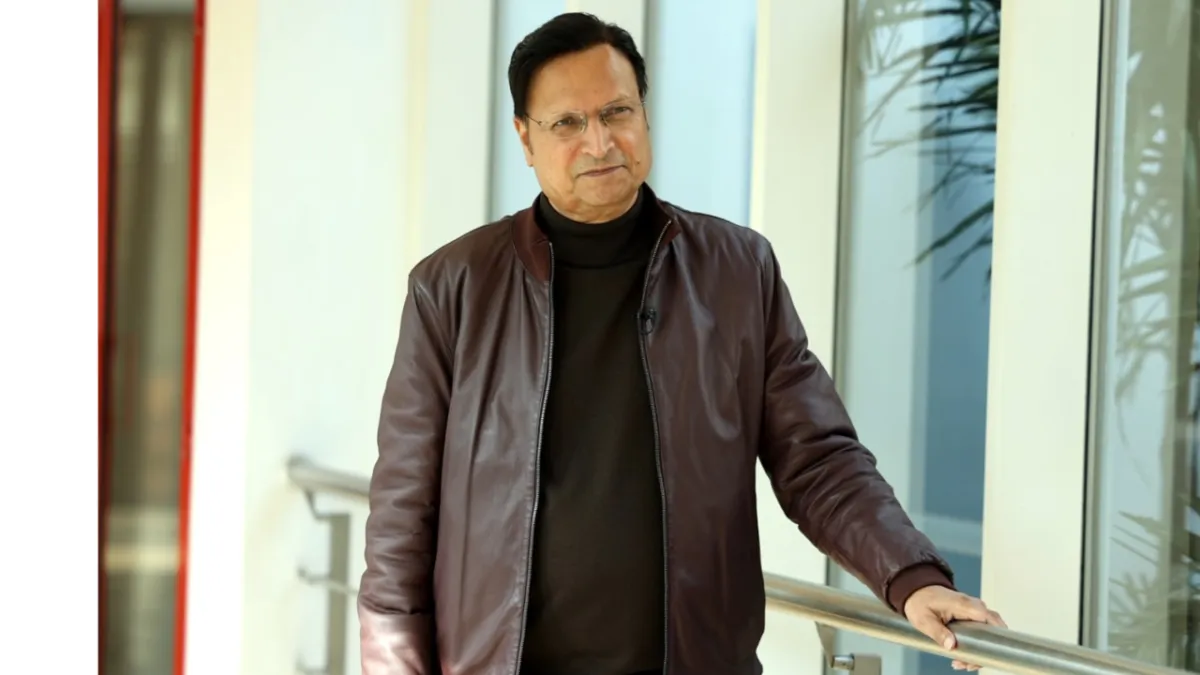
Few journeys in Indian media run as parallel to the country's own transformation as that of Rajat Sharma. His career offers a vantage point from which to observe three decades that reshaped television, politics and the tone of public debate.
His beginnings were far removed from prime-time glare. As a child in Delhi's Sabzi Mandi, he studied under the dim light of a railway lamp. The image has been repeated often, sometimes romanticised. But stripped of sentiment, it speaks to something more practical: discipline. The habit of staying with the task. That instinct would follow him for life.
As Chairman and Editor-in-Chief of India TV, Rajat Sharma built more than a channel. He built familiarity.

In Aaj Ki Baat, his nightly commentary turned dense national developments into something viewers could process at the end of a long day. And with Aap Ki Adalat, launched in 1993, he introduced a format that survived changing governments and shifting viewer tastes. It wasn't theatrics that sustained it. It was structure and the quiet tension of answering questions that will reach millions.
The steel in his voice predates television. During the Emergency, he spent 11 months in jail for supporting the movement led by Jayaprakash Narayan. For many young activists, that period was formative. For Rajat Sharma, it settled something early that journalism and authority exist in permanent friction. By 1977, when he graduated from Shri Ram College of Commerce and became General Secretary of the Delhi University Students' Union, the direction was clearer.
In 2004, alongside Ritu Dhawan, he co-founded India TV. It was not an era short of news channels. Yet the network carved space for itself, blending urgency with accessibility, argument with conversation. The bet was not small. It worked.
His re-election in 2025 as President of the News Broadcasters & Digital Association for the 2025-26 term reflects another dimension of his career: institutional responsibility. Leadership in media is often most visible on screen. Rajat Sharma has managed to occupy that space while helping shape the one behind it. The Padma Bhushan conferred upon him in 2015 formalised what audiences had long recognised that his influence extended beyond ratings.
He has often returned to the story of scarcity not as grievance, but as fuel. Poverty, he has said, did not shrink his ambition. It sharpened it.
Decades after his first byline, Rajat Sharma remains a familiar presence on Indian television. What stands out is not change for its own sake, but a consistency of approach. The voice, the format, the method of questioning have remained recognisable across years and elections.
His story is not just of personal triumph but also a chapter in the larger history of Indian journalism.
As he marks another year, the India TV family extends its warmest wishes to Rajat Sir on his birthday.