
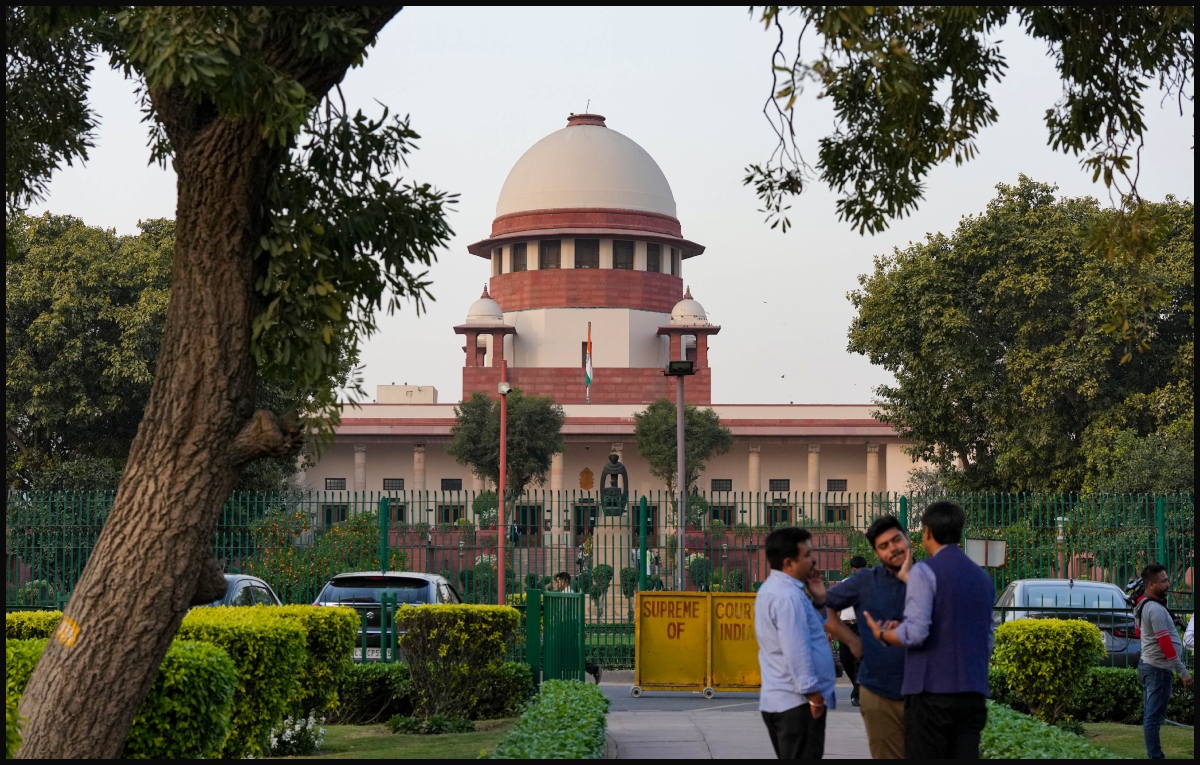
The Supreme Court on Monday agreed to examine a batch of pleas challenging the constitutional validity of several provisions of the Digital Personal Data Protection (DPDP) Act, 2023. However, the Supreme Court refused to grant an interim stay on the impugned provisions, saying "by an interim order, it will not thwart a regime introduced by Parliament unless we hear the case."
While hearing the matter, a bench comprising Chief Justice Surya Kant and justices Joymalya Bagchi and Vipul M Pancholi issued a notice to the Centre on the pleas challenging certain provisions of the DPDP Act and the Digital Personal Data Protection Rules 2025 over their amendment of the provisions of the Right to Information Act.
Supreme Court refers three pleas to larger bench
The bench also referred three petitions, filed by Venkatesh Nayak on behalf of digital news platform 'The Reporters Collective', journalist Nitin Sethi and National Campaign for People's Right to Information (NCPRI), to a larger bench.
The pleas raised concerns over the "fiduciary" clauses, which allow the central government to requisition data from any data fiduciary at its discretion.
The bench said the matter pertained to "complex and sensitive issues," and it involved balancing two competing sets of fundamental rights, the Right to Information and the Right to Privacy.
"This is about balancing competing interests. We have to iron out the creases and lay down what constitutes personal information," the CJI said.
Advocate Prashant Bhushan, also appearing for one of the petitioners, pointed to the landmark Subhash Agarwal judgment, asserting that the apex court had already established a framework for balancing RTI and privacy.
SC says new legislative framework requires fresh examination
However, the bench noted that the new legislative framework required a fresh, deeper examination. Senior advocate Abhishek Singhvi, also appearing for one of the petitioners, sought to make additional submissions, but the court proceeded to issue notice to ensure a comprehensive response from the Centre.
The Court has scheduled the matter for a hearing in March. Senior advocate Vrinda Grover, appearing in the matter, contended that the legislation has taken an excessive approach. "Instead of using a chisel, it has used a hammer and has thus rendered a body blow," she submitted, arguing that the amendments effectively undermine transparency safeguards.
The petitioners have essentially challenged Section 44(3) of the DPDP Act, which amends Section 8(1)(j) of the RTI Act, giving a blanket exemption to the disclosure of personal information. Before the amendment, personal information could have been disclosed if there was an overriding public interest.
Also Read:
Digital Personal Data Protection Rules implemented in India for stronger privacy rights: Details
