
Just five months ago, Gurpinder Jeet Singh’s life took an unexpected and devastating turn that left him struggling to find a way forward. His 65-year-old mother, Baljit Kaur, gradually stopped eating and drinking, her health declining day by day. The family first consulted private doctors, followed by treatment at Rajindra Hospital in Patiala.
Medications were prescribed and tests conducted, but instead of improving, her condition continued to worsen. Then came the heartbreaking diagnosis—uterine cancer. The news felt, as Gurpinder describes, like “the sky had fallen.”
Determined to save his mother, he took her to a cancer hospital in Sangrur, where treatment began immediately. But the financial burden struck first—Rs 60,000 to Rs 65,000 was spent almost instantly, an overwhelming amount for a driver earning a modest income. With mounting pressure, Gurpinder even considered taking loans. His only thought was simple and desperate: “How do I save my mother?”
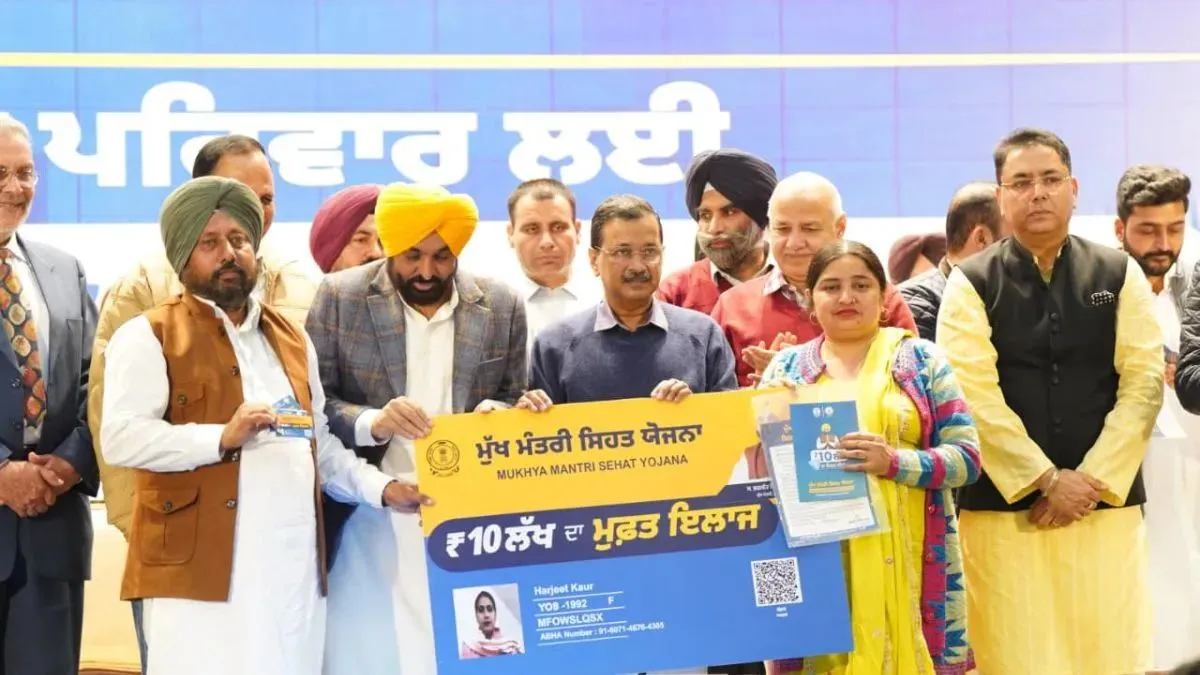
Punjab's Mukhmantri Sehat Bima Yojana turned saviour
A turning point came unexpectedly inside the hospital itself, when a stranger informed him about Punjab’s acclaimed Mukhmantri Sehat Bima Yojana. Holding on to a fragile hope, he registered immediately. Within a short time, a message arrived confirming the issuance of a smart health card—and what followed, he says, felt nothing short of a miracle.
Under the scheme, treatment costs worth several lakhs were covered, including expensive diagnostic tests, multiple rounds of chemotherapy, surgery, ICU care, ventilator support, medicines, and hospital stay expenses.
Doctors described the case as highly complex. The cancer had already spread from the uterus to the liver and lungs. The patient underwent three initial chemotherapy cycles, but due to severe weakness and side effects, the dosage had to be adjusted and nine additional cycles were administered gradually.
Eventually, the tumor was localised, and surgeons performed a nearly eight-hour-long operation to remove it. The procedure required 35 to 40 stitches. Post-surgery, Baljit Kaur remained in the ICU on ventilator support for two to three days before being shifted to a general ward. After eight days in the hospital, signs of recovery finally began to emerge.
Rs 8 lakh treatment covered under scheme
Her treatment journey is still ongoing, with follow-up visits scheduled at a hospital in Mullapur. While Gurpinder bore some minor expenses for medicines not available under the scheme, the bulk of the treatment—estimated at over Rs 8 lakh—was covered by the Bhagwant Mann-led Punjab Government.
Gynaecology surgeon Dr Shivali, along with a team of specialists at the cancer hospital, performed the critical operation.
For Gurpinder, a father of two, the support has been life-changing. With emotion in his voice, he says, “A mother is everything. I had no money, but this scheme gave us hope. Now I know she will not be left untreated.”
