
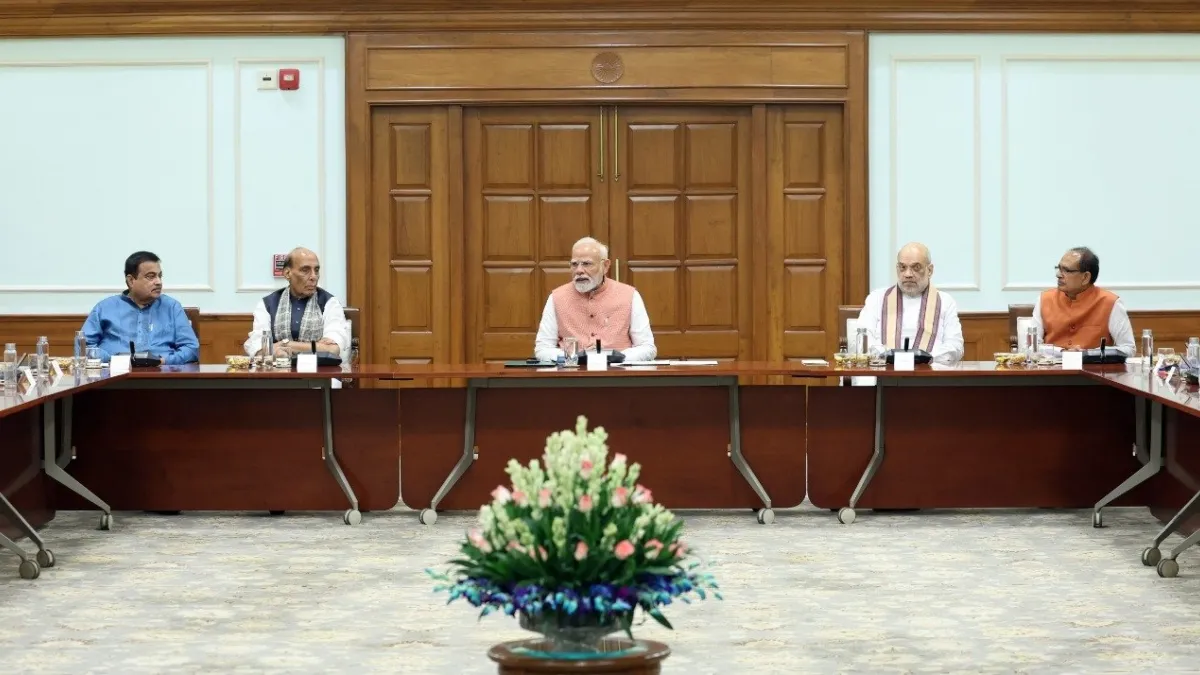
Prime Minister Narendra Modi on Monday chaired a high-level meeting with senior ministers, secretaries, and leading economists to discuss the roadmap for India's Next Generation Reforms, focusing on accelerating the nation's economic growth. The meeting, attended by key figures such as Home Minister Amit Shah, Defence Minister Rajnath Singh, Road Transport Minister Nitin Gadkari, Agriculture Minister Shivraj Singh Chouhan, Finance Minister Nirmala Sitharaman, and Commerce Minister Piyush Goyal, aimed at formulating strategic policies to bolster India’s economy, improve infrastructure, and strengthen governance.
During the meeting, PM Modi emphasised the government's commitment to implementing rapid reforms across various sectors to enhance the Ease of Living, Ease of Doing Business, and overall prosperity. Taking to X, the Prime Minister shared, "Chaired a meeting to discuss the roadmap for Next-Generation Reforms. We are committed to speedy reforms across all sectors, which will boost Ease of Living, Ease of Doing Business, and prosperity."
The meeting came at a crucial time as it coincided with the two-day visit of Chinese Foreign Minister Wang Yi to India, beginning today, highlighting the timing of India’s push for economic and diplomatic engagement amidst ongoing global challenges. Additionally, it precedes External Affairs Minister S. Jaishankar's visit to Russia, signalling India's efforts to strengthen ties with both Beijing and Moscow amid uncertainties in its trade relations with the United States.
This meeting follows the recent imposition of a 25% tariff on Indian goods by the US, aimed at penalising India over its oil purchases from Russia. President Donald Trump's tariffs could impact up to $40 billion of Indian exports, including gems, jewelry, textiles, and footwear. Moreover, the postponed sixth round of India-US bilateral trade talks, scheduled for August 25-29, further highlighted the need for India to diversify its trade relations.
The US has pushed India to open politically sensitive sectors like agriculture and dairy in the trade talks, but India has strongly rejected these proposals, emphasising the protection of the livelihoods of small farmers and cattle rearers. In response to the US tariffs, PM Modi had advocated for a shift towards 'swadeshi' (Made in India) products during his Independence Day speech, reiterating India’s commitment to safeguarding its farmers, fishermen, and livestock rearers.
As the global trade landscape remains uncertain, the Prime Minister’s meeting serves as a pivotal moment for India to align its domestic reform agenda with its international trade strategy. The ongoing discussions surrounding the Ukraine conflict and the potential impact on US-Russia relations may also shape future decisions regarding global trade policies and their effects on India.
India's economic relations with the US continue to grow, with exports to the US rising 21.64% to $33.53 billion, despite the looming tariff threats. The government's continued focus on reforms, trade diversification, and global diplomacy aims to ensure that India remains resilient and poised for sustained economic growth.
