
Morarji Desai, a towering figure in India's political history, was an Indian independence activist and seasoned politician born into a Brahmin family in Gujarat. Known for his simplicity, discipline, and unwavering commitment to public service, Desai went on to become the fourth Prime Minister of India, serving from 1977 to 1979. He holds a unique place in Indian democracy as the first leader to head a non-Congress government.
Throughout his long and impactful political career, Desai held several key positions in government. His tenure was widely regarded as a period of significant political and economic reforms, particularly aimed at promoting transparency and accountability in governance. His leadership style was deeply rooted in principled politics and was characterised by a strong stance against corruption and misuse of power.
Morarji Desai died on April 10, 1995, at the age of 99 at a hospital in Mumbai. On his death anniversary, let’s take a look at some interesting facts about his life.
Honoured by both sides of the border
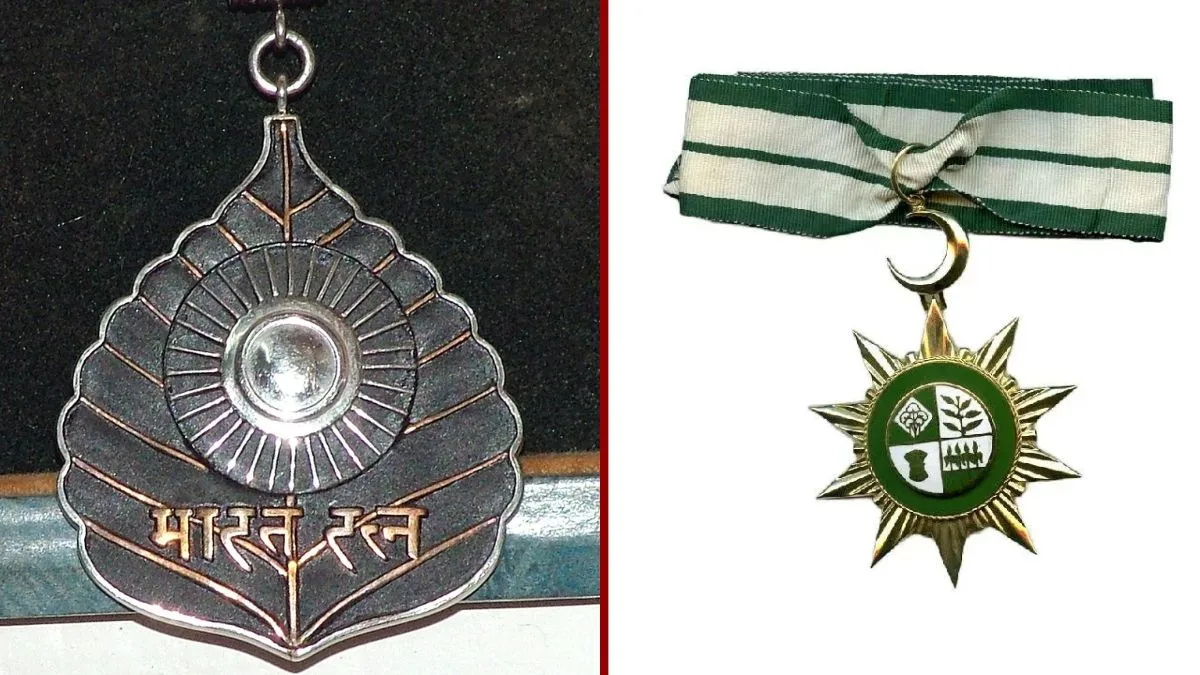
Desai also holds the rare distinction of being the only Indian to have received both the Bharat Ratna and the Nishan-e-Pakistan -- the highest civilian honours of India and Pakistan, respectively. He was conferred the Nishan-e-Pakistan in 1990, recognising his efforts toward fostering better India-Pakistan relations. A year later, in 1991, India honoured him with the Bharat Ratna for his exceptional contributions to the nation. It was a bold move at a time when India-Pakistan relations were fraught with tension, and it highlighted Desai's commitment to peace and diplomacy.
A look at his political career
Morarji Desai's political journey was as eventful as it was influential. Over the course of five decades, he held some of the most crucial positions in Indian governance, beginning with his appointment as the Chief Minister of the Bombay State in 1952. His ascent in national politics continued as he took charge as India's Minister for Commerce and Industry in 1956, followed by his elevation to the post of Finance Minister in 1958. His expertise in economic matters earned him the distinction of presenting the Union Budget a record 10 times -- a feat that still stands unmatched.
In 1967, Desai joined Indira Gandhi's cabinet as the Deputy Prime Minister. However, his loyalty to the Congress was tested in 1969 when he aligned with the party's internal dissenters, challenging Gandhi’s increasingly authoritative style of leadership. A defining chapter in Desai's political life unfolded during the Emergency period declared by Indira Gandhi in 1975. Like many Opposition leaders, he was also arrested and detained. After spending months in custody, he was released in January 1977, just ahead of the general elections. Riding a wave of public dissatisfaction with Emergency rule, the Janata Party swept the polls, defeating the Congress decisively. Morarji Desai, as the party's leader, was chosen to be India’s first non-Congress Prime Minister.
A tenure marked by integrity
As Prime Minister, Desai brought a strong sense of discipline and moral rectitude to the office. He promised to eliminate poverty within a decade and enforce prohibition, aiming to uplift the moral and economic fabric of the nation. However, political infighting within the Janata Party eventually forced him to resign after just 28 months in power, bringing an abrupt end to his reform-driven tenure.
Renowned for his simplicity, Morarji Desai lived by the values he preached. Whether it was in Parliament or public life, he stood firm on principles—even when it cost him politically. His legacy is not just about breaking the Congress monopoly or being the first non-Congress PM, but about showing the country what leadership grounded in integrity and conviction truly looks like.
ALSO READ: Netaji files: Morarji Desai had raised questions on death
