
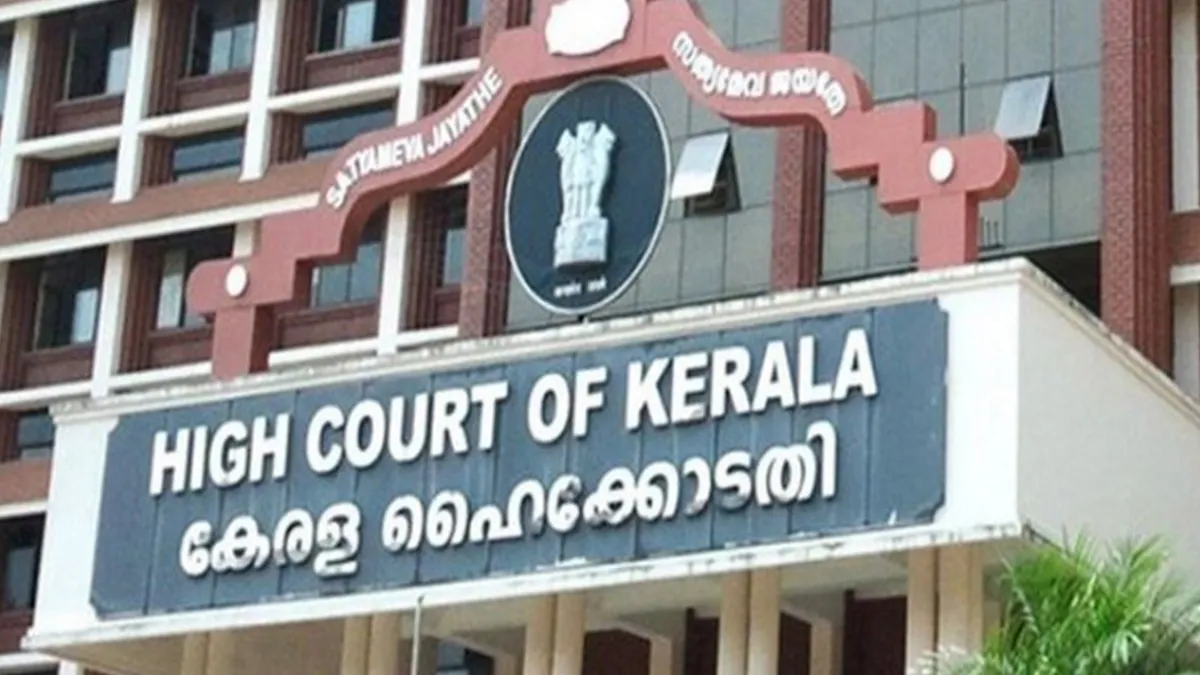
The Kerala High Court has observed that maligning a woman's character without any basis amounts to a "pernicious form of social violence." It further noted that when society places greater emphasis on a woman's image than her achievements, "it exposes its own intellectual poverty."
The observations were made by Justice CS Dias while quashing an FIR registered against Malayalam actor Shwetha Menon for allegedly publishing or transmitting obscene scenes of some of her past movies and advertisements.
'Complaint indicates mala fide and vexatious nature'
The High Court said it found merit in the actor's claim that the complaint was filed with the sole intent of preventing her from contesting for the post of President in the Association of Malayalam Movie Artists, particularly on the eve of the withdrawal of nominations. "The timing of the filing of the complaint strongly indicates its mala fide and vexatious nature," it said while allowing her plea seeking quashing of the FIR.
The court further held that, upon examining the complaint, FIR, available records, and relevant laws, the alleged offences against Menon were not made out. It observed that the allegations appeared to have been levelled with an ulterior motive to tarnish her name and reputation.
"To malign the character of a woman without any foundation or substance is a pernicious form of social violence, for while it is easily uttered, the stigma it leaves behind is often indelible.
"It is often said that when a woman attains name, fame, and recognition in public life, attempts to defeat her on the basis of reasons, logic, or merit may turn difficult. Then, social shaming is the frequently deployed weapon," the court said in its March 11 order.
Regressive societies evaluate people on character and moral policing
The High Court further observed that progressive societies judge individuals based on their actions and contributions, while regressive ones resort to slander, character assassination, and moral policing.
"When a society focuses more on a woman's image than her achievements, it exposes its own intellectual poverty," the court said.
It also clarified that women's empowerment does not mean holding them to unrealistic standards of purity or perfection. Rather, it involves recognising their individuality, aspirations, and accomplishments with dignity and fairness. "The society that tolerates the vilification of a woman out of envy or malice is nothing but an embodiment of injustice," the High Court said.
The High Court had, in August last year, stayed proceedings in connection with the FIR, saying there was prima facie substance in the actor's contention that before referring the complaint for investigation, the requirements of calling for a report from the police and of making an enquiry ought to have been complied with.
An FIR under section 67 (publishing or transmitting obscene material in electronic form) of the Information Technology (IT) Act and provisions of the Immoral Traffic (Prevention) Act had been lodged against the actor.
Menon was in the fray for the president's post in the Association of Malayalam Movie Artistes (AMMA) when the FIR was lodged. She was later elected as the president of AMMA.
In her plea, the actor had claimed that the allegations are "mala fide" in nature and the offences she has been booked for are not made out.
The complainant, Martin Menachery, had alleged that "by appearing in a condom advertisement years before and by acting in films like 'Paleri Manikkyam', 'Rathinirvedham' and 'Kalimannu', the accused (Menon) allegedly appeared in a vulgar and obscene manner".
Also Read: Supreme Court pulls up Mamata Banerjee over barging in during ED's I-PAC raids: 'Unusual situation'
Also Read: Himachal Govt bans 'party-wear' clothes at work, limits social media commentary by employees
