
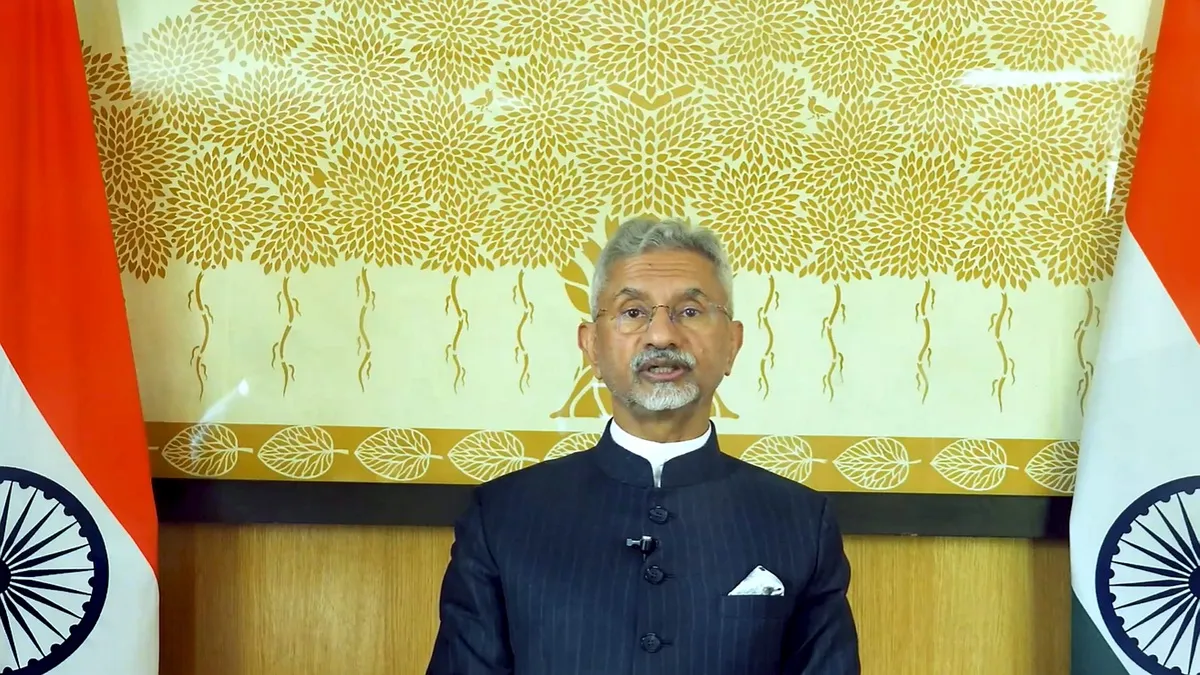
External Affairs Minister (EAM) Dr S Jaishankar launched a flurry of high-stakes calls with Gulf leaders, Iranian FM Seyed Abbas Araghchi and Israeli counterpart Gideon Sa'ar, amid a spiraling Middle East crisis triggered by US-Israel strikes on Iran. Stressing India's alarm over the "escalating situation," Jaishankar pushed for dialogue and diplomacy to halt the violence, while securing assurances for the welfare of millions of Indians in the volatile region.
His outreach spanned Saudi Arabia's Prince Faisal bin Farhan Al Saud, Kuwait's Sheikh Jarrah Jaber Al-Ahmad Al-Sabah, Bahrain's Abdullatif bin Rashid Al Zayani, Qatar's PM Mohammed bin Abdulrahman bin Jassim Al Thani, and UAE's Abdullah Bin Zayed Al-Nahyan—each pledging protection for Indian expatriates.
Trump's bold strikes and Iran's fiery retaliation
US President Donald Trump announced "major combat operations" against Iran, following failed nuclear talks, urging Iranians to overthrow their government as a "once-in-generations" opportunity. Israel confirmed missile barrages, prompting Iran's Revolutionary Guard to unleash retaliatory assaults on US and Israeli bases in Qatar, UAE, Kuwait, Bahrain, and Jordan. Explosions rocked Tehran and other Iranian sites, with state media reporting 57 deaths at a girls' school in the south. Airspaces shuttered across the Gulf, and the Indian Embassy in Abu Dhabi advised students to avoid travel, as chaos rippled through the oil-rich heartland.
Jaishankar's firm messages to Tehran and Tel Aviv
In talks with Araghchi, Jaishankar voiced "deep concern" over Iran's turmoil, while telling Sa'ar that India insists on "dialogue and diplomacy to de-escalate." Posts on X detailed his exchanges: with Saudis, he underscored stakes in "regional peace and Indian community welfare"; Kuwait updated on local conditions with safety guarantees; Bahrain, Qatar, and UAE affirmed protective measures amid the "turn of events." These reassurances came as Indians—key workers in construction, healthcare, and services—braced for fallout in host nations now battlegrounds.

India's official stance: Restraint and civilian protection
The Ministry of External Affairs echoed Jaishankar's pleas, expressing profound worry over Iran and Gulf developments. "We urge all sides to exercise restraint, avoid escalation, and prioritize civilian safety," it stated, advocating dialogue to respect sovereignty and territorial integrity. With 18 million Indians in the Gulf remitting billions homeward, New Delhi balances economic ties, energy security, and non-alignment, positioning itself as a voice for stability amid superpower clashes and proxy wars threatening global markets.