
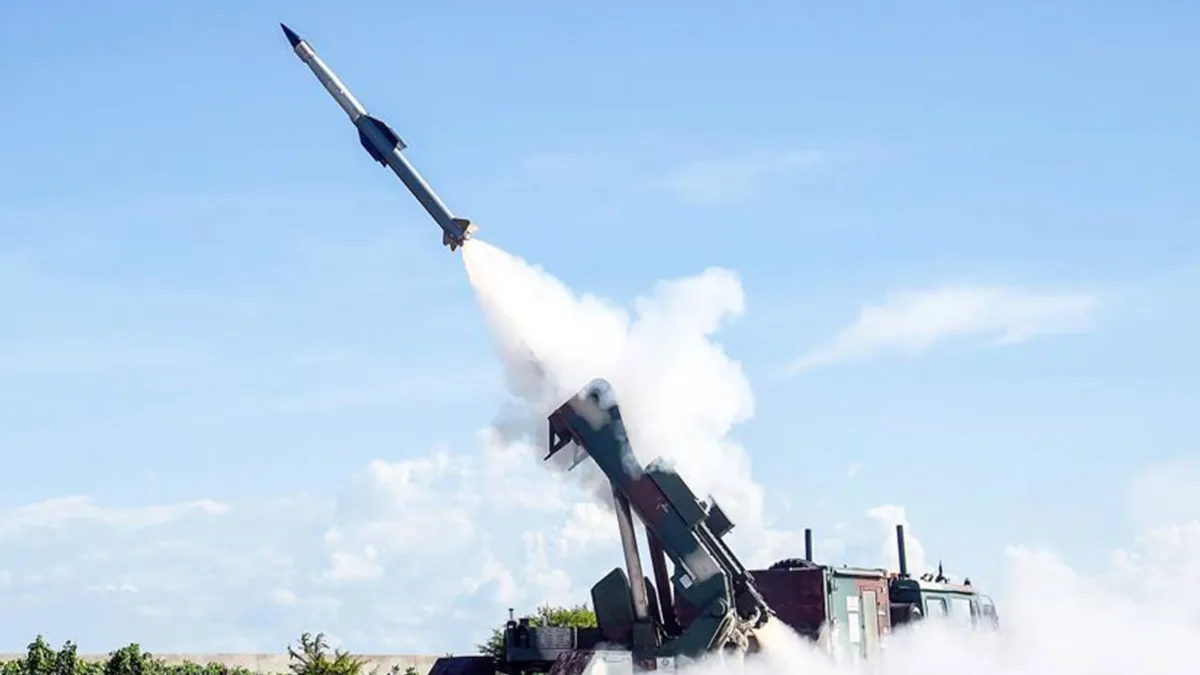
In a major push for indigenisation in the defence sector, the Indian Army has floated a tender to procure five to six regiments of the 'Anant Shastra' surface-to-air missile systems to bolster air defence along the borders with Pakistan and China.
The tender has been issued by the Indian Army to the state-owned Bharat Electronics Limited (BEL) to buy the Defence Research and Development Organisation (DRDO) developed Anant Shastra air defence missile system, which was earlier known as the Quick Reaction Surface to Air Missile system, defence officials told news agency ANI.
Estimated at around Rs 30,000 crore, the project is set to strengthen the Army Air Defence, which played a vital role in countering Pakistani drone attacks during Operation Sindoor.
The Indian Army AAD operates the MR-SAM, Akash, and other smaller air defence systems and works in an integrated manner with the Indian Air Force to guard against any aerial threats.
The Defence Acquisition Council had approved the purchase of indigenous air defence systems shortly after Operation Sindoor in May.
'Anant Shastra' air defence missile systems
Once inducted, the highly mobile and agile Anant Shastra systems will be deployed along both the western and northern borders. These systems are capable of searching and tracking targets while on the move and can fire even during short halts. With a range of around 30 km, they will complement existing short- and medium-range systems such as the MRSAM and Akash.
The missile system's performance has been extensively tested under both day and night operational scenarios.
During the four-day conflict with Pakistan, which used Chinese weaponry, the Indian Army's Air Defence units destroyed the majority of the drones using L-70 and Zu-23 air defence guns, while the Akash and MRSAM played a crucial role along with the Indian Air Force's Spyder and Sudarshan S-400 air defence systems.
The Army Air Defence is also getting a number of new radars, very short-range air defence systems, along with jammers and laser-based systems to deal with drones of Turkish and Chinese origin in the Pakistan Army.
Army chief Gen Upendra Dwivedi has been pushing for increasing indigenisation in the force. The future indigenous systems likely to join the army include the Zorawar light tank and various other air defence systems.
(With ANI inputs)
