
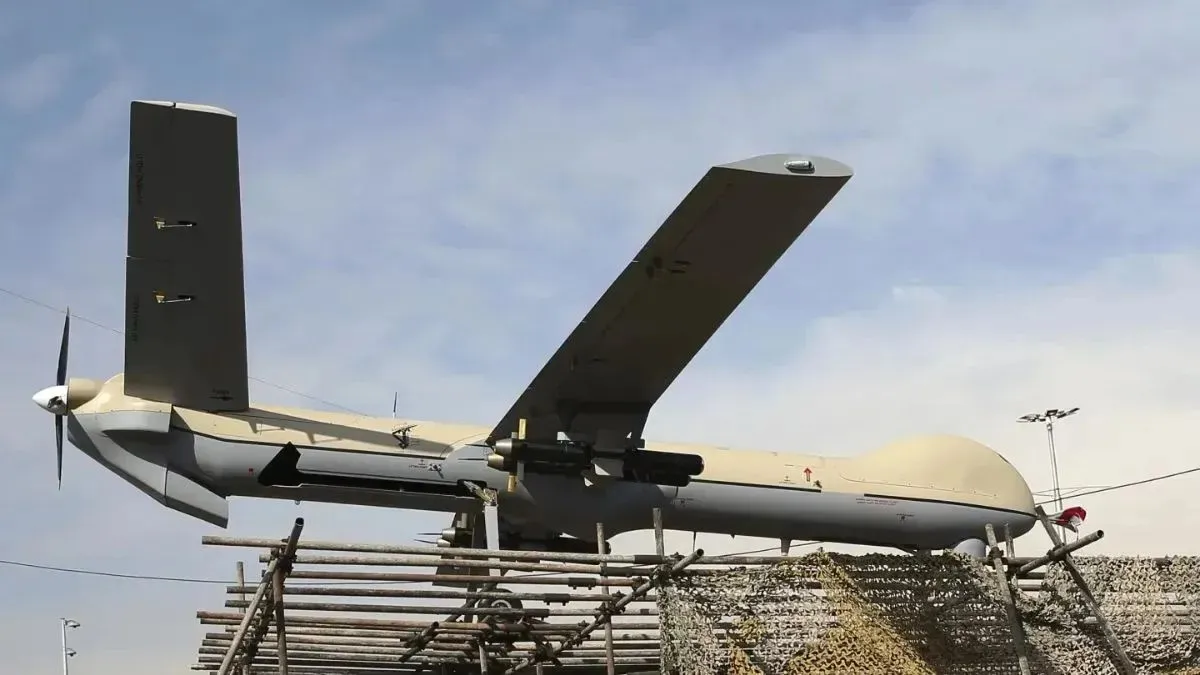
The Indian Armed Forces will acquire more Heron drones following their successful show of strength during Operation Sindoor, ANI reported citing defence officials. The forces also plan to arm the Israeli unmanned aerial vehicles with air-launched Spike anti-tank guided missiles.
The Indian tri-services– Army, Navy and Air Force– all operate a significant number of Heron drones from their own bases. Besides, intelligence agencies deploy Herons for specific missions.
These drones were successfully used for intelligence, surveillance and reconnaissance (ISR) during Operation Sindoor against Pakistan in May this year.
Heron drones to be equipped with Spike anti-tank guided missiles
Officials also mentioned that steps are being taken to arm these drones. One branch of the military is working on fitting Herons with Spike-NLOS (Non-Line-of-Sight) anti-tank guided missiles. This upgrade would enable the drones to strike enemy targets in future conflicts.
Heron drones are mainly used for long-range surveillance along the borders with China and Pakistan and have shown strong performance in these roles.
Operation Sindoor
The Indian Armed Forces launched a massive operation against terror groups in Pakistan and PoK in retaliation to the Pahalgam attack, which killed 26 innocent people. India launched ardent and precise strikes under Operation Sindoor, destroying over nine terror camps.
These locations were key command centres of Jaish-e-Mohammed (JeM) and Lashkar-e-Taiba (LeT), responsible for major attacks like Pulwama (2019) and Mumbai (2008). More than 100 terrorists were killed in the attack.
In retaliation, Pakistan attempted strikes on Indian military bases over the next three days—May 8, 9, and 10. Reacting to this, India launched missile and drone attacks, targeting key military establishments of Pakistan.
After four days of intense cross-border drone and missile exchanges, both countries agreed to de-escalate and end hostilities on May 10.
