
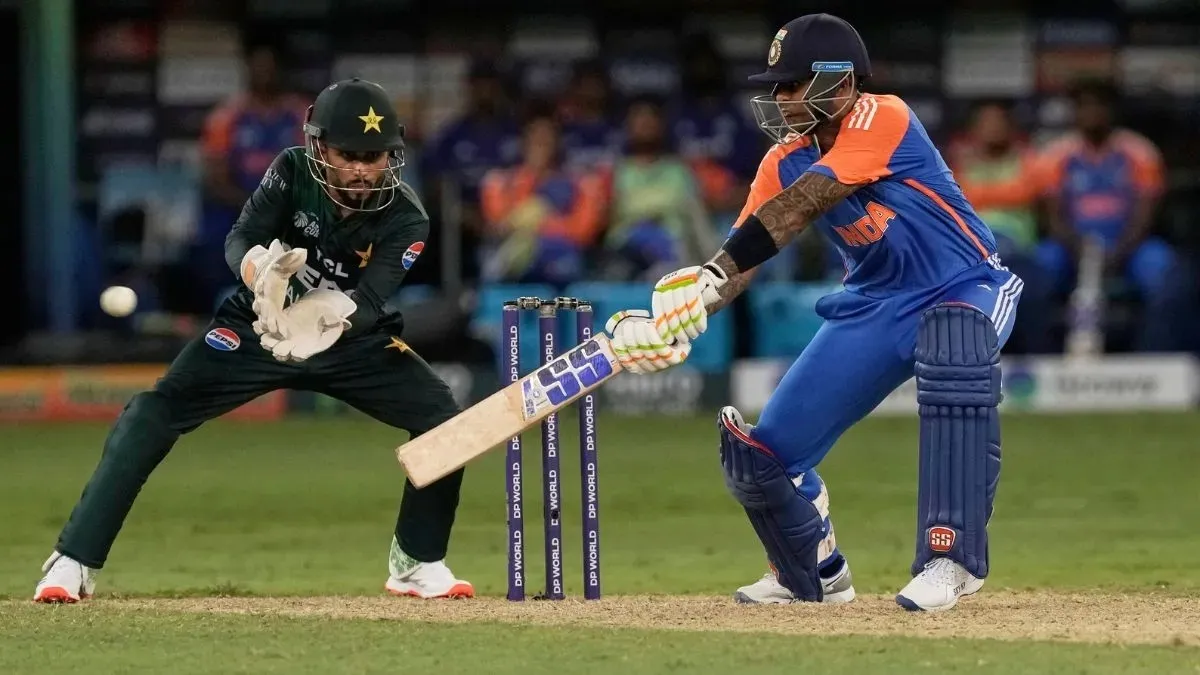
The India-Pakistan Asia Cup match has faced heavy criticism from several opposition parties, who believe the encounter was a slap in the face to the memory of the 26 people killed in the Pahalgam terror attack earlier this year. Some leaders questioned the appropriateness of the match given the current geopolitical tensions between the two countries, while others accused the government of downplaying national sentiment.
Congress MP Karti Chidambaram was among those who spoke out, stressing that sports should remain separate from politics. "We don’t have the luxury of choosing our opponents in tournaments. Once you're in, you play whoever is drawn against you. That’s the nature of sports, whether it’s cricket or any other game," Chidambaram said.
While opposition leaders were vocal in their condemnation, Union Ministers defended India’s participation in the Asia Cup, framing it as a necessity within the larger context of multinational tournaments. Kiren Rijiju, the Union Minister for Youth Affairs and Sports, addressed concerns by stating, "This match is not a bilateral game between India and Pakistan. It’s part of a global event like the Asia Cup, which involves all countries, not just Pakistan. If India doesn't participate, we would be disqualified."
He further explained, “The Olympics, World Cup, and Asia Cup are multi-lateral tournaments. These are platforms where all nations compete together, and there’s no separate game between India and Pakistan.” Rijiju also emphasized the need for rational thinking, noting, “The sentiment is understandable, but we must also think logically. If we choose to skip tournaments over enmity with one country, who will bear the loss?”
The handshake snub
The most controversial moment of the match came when the Indian cricketers decided to forgo the customary post-match handshake. After Suryakumar Yadav hit the winning six to seal the match, he and his teammate Shivam Dube walked off without engaging in any handshakes with the Pakistani players. This act was seen by many as a pointed political statement, with Indian players reportedly shutting the dressing room doors on the Pakistan squad.
Pakistan’s captain Salman Ali Agha and his teammates walked toward the Indian dugout for the handshake, but the doors remained closed as none of the Indian players responded. A video of the incident quickly went viral, fueling the debate over whether it was an unsporting act or a justified stance.
Suryakumar Yadav, the Indian captain, later explained the team’s decision, saying, “We made a team call. Some things go beyond sportsmanship. This victory is dedicated to our armed forces who were part of ‘Operation Sindoor’ and to the families of the victims of the Pahalgam terror attack.”
Leaders react to the no-handshake incident
The decision not to shake hands has divided political opinion. Chirag Paswan, Union Minister, defended the cricketers' actions, explaining, "If you are shaking hands with people who are responsible for killing your loved ones, then that could certainly upset the feelings of many. The players respected the game, played it with the right spirit, and showed respect to the victims in their own way by not shaking hands."
However, Shiv Sena (UBT) MP Sanjay Raut was less forgiving, labeling the match as a “shameless” event. He accused the Indian government of disrespecting the armed forces and the victims of the Pahalgam attack by going ahead with the match. Raut also went on to make accusations about financial dealings, suggesting that the match was fixed and that money intended for terrorism was funneled to Pakistan.
Trinamool Congress MP Mahua Moitra criticized the spectacle, saying, “The government wanted the match to happen. To then make a mockery of it by refusing a handshake is laughable and only serves to create a spectacle.”
While the political storm brewed off the field, Team India stamped their authority on the match with a dominant performance. Pakistan, opting to bat first, struggled against India’s high-quality spin attack, managing to score only 127-9 in their 20 overs. Kuldeep Yadav was the standout bowler, claiming three wickets, while Axar Patel picked up two.
Pakistan’s batters found it hard to free their arms against the spinners, with India’s bowlers completely in control throughout. In response, Abhishek Sharma gave India a quick start with 31 off 13 balls, but it was Suryakumar Yadav’s calm, unbeaten 47 that saw India home with 25 balls to spare.
