
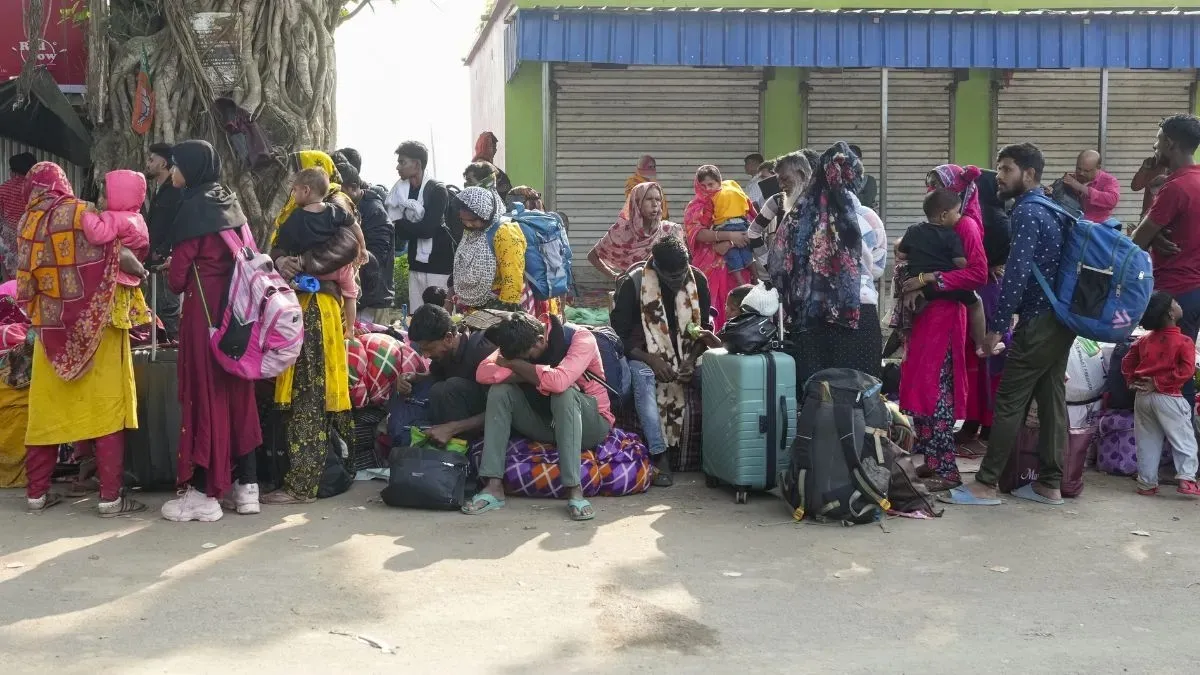
Illegal migration from Bangladesh into India has emerged as a major national security concern. As per details, these infiltrators not only strain public resources but also affect the rights of citizens. Several reports have linked a number of Bangladeshi migrants to criminal activities in different parts of the country. Despite extensive border fencing, infiltration networks continue to operate across the India-Bangladesh frontier, especially through West Bengal, where organised gangs manage everything from border crossing to settlement.
Well-organised gangs handle each stage of infiltration
Human trafficking networks involved in cross-border infiltration operate through multiple layers. The first group in Bangladesh selects people and escorts them across the border. The second network transports them from the border area to railway stations or bus terminals inside India. A third group sends them to states such as Uttar Pradesh, Delhi and Maharashtra through long-distance trains. The last set of handlers arranges temporary shelter, work and essential supplies in urban slums.
These gangs also arrange forged Aadhaar cards and voter ID cards to help infiltrators pass off as citizens. The rates for this illegal service follow a set pattern. Crossing through hilly terrain costs around Rs 7,000 to Rs 8,000. The water route is cheaper at Rs 3,000 to Rs 4,000. Entry through flat terrain costs between Rs 12,000 and Rs 15,000. Fake documents cost an additional Rs 2,000, while arranging a job may cost Rs 5,000 to Rs 7,000.

How infiltration happens from the border
The India-Bangladesh border stretches 4,096.7 kilometres, out of which 3,232.7 kilometres have already been fenced. However, infiltration occurs through patches where fencing is not possible due to rivers, hilly terrain or land acquisition issues. In West Bengal alone, nearly 112 kilometres remain without fencing, making it a preferred route for smugglers and traffickers. Similar vulnerabilities exist elsewhere. In Assam, 201.5 kilometres of the 267.5-kilometre border are fenced. In Meghalaya, fencing covers 367.1 kilometres out of 443. Tripura has full fencing along all 856 kilometres, but riverine gaps still exist.
Demographic impact in several regions
Most infiltrators enter India through districts like Malda, North and South 24 Parganas, Murshidabad and Dinajpur, and settle in Muslim-majority localities. This has significantly altered the demographic makeup in several regions. In Murshidabad, the Hindu population dropped from 44.1 percent in 1961 to 33.2 percent in 2011, while the Muslim population rose from 55.9 per cent to 66.3 per cent. Similar demographic shifts have been observed in multiple pockets across Bengal. This growing pressure has prompted several states to intensify their crackdown on illegal migrants. Uttar Pradesh, under Chief Minister Yogi Adityanath, has launched a major campaign to identify and remove infiltrators.
Yogi govt steps up action in Uttar Pradesh
The hunt for infiltrators has significantly accelerated in Uttar Pradesh. Police teams are moving through settlements with torches, checking documents and identifying suspicious individuals. Several settlements in different districts are already witnessing panic, with many huts reportedly abandoned in the last few days. In Varanasi, police have identified around 500 suspected infiltrators. In Gorakhpur, a detention centre is fully prepared with numbered beds. The number of Bangladeshi infiltrators in UP is estimated to be around 10 lakh. Once the Special Intensive Revision of electoral rolls concludes, officials are expected to inspect every settlement, verify documents and send illegal immigrants to detention centres.
ALSO READ: Detect, delete and deport: Amit Shah replies to Opposition on SIR debate as Congress stages walkout