
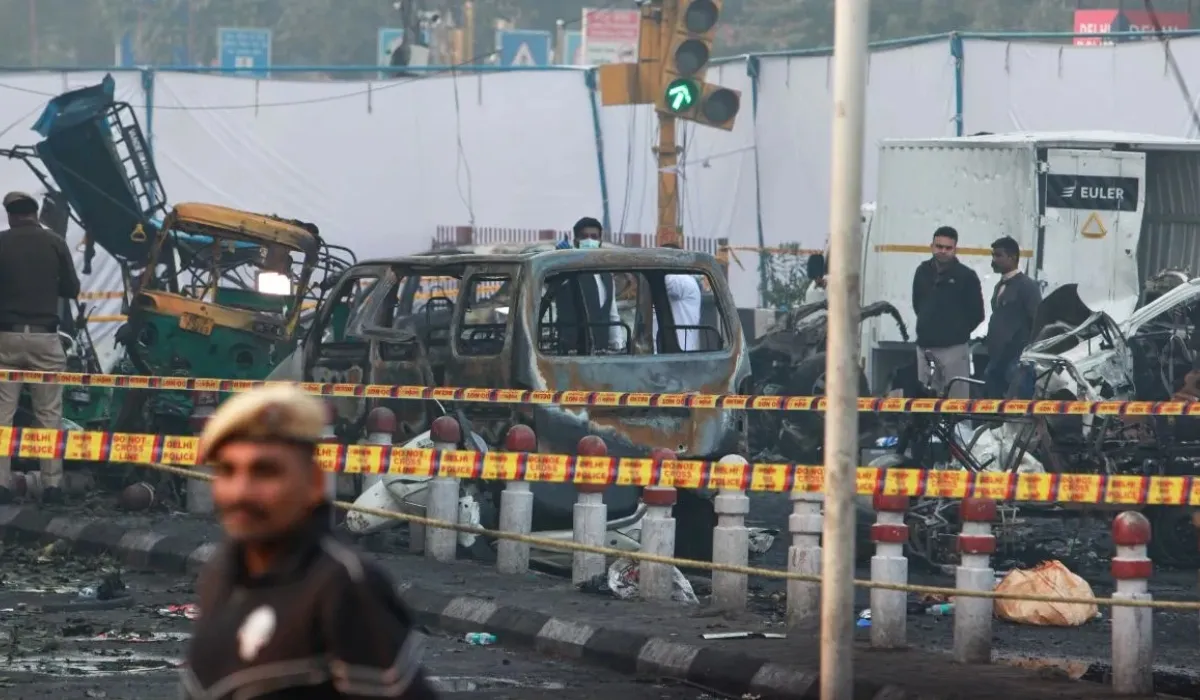
In a breakthrough, Jammu and Kashmir Police have dismantled a large international terror module that started with a small poster investigation and eventually exposed a network stretching across Jammu and Kashmir, Haryana, Uttar Pradesh, and Pakistan. This network, involving radicalised professionals and students, communicated through encrypted channels and has direct links to the Delhi Red Fort blast that killed 12 people on November 10.
The investigation began with a poster
The case originated on October 19, 2025, when multiple posters linked to Jaish-e-Mohammed (JeM) surfaced in Srinagar’s Bunpora Nowgam area. The posters, written in Urdu, warned locals against cooperating with security forces. Acting swiftly, police registered an FIR (No. 162/2025) under multiple sections of the UAPA, Explosive Substances Act, and Arms Act.
As the probe deepened, it revealed a well-organised “white-collar terror ecosystem” — a network of radicalised professionals and students allegedly guided by handlers in Pakistan. The group used encrypted apps for coordination, recruitment, funding, and logistics.
Key arrests across states
Seven main accused were arrested, including:
- Arif Nisar Dar, Yasir-ul-Ashraf, and Maqsood Ahmad Dar from Srinagar.
- Maulvi Irfan Ahmad, an imam from Shopian.
- Jameer Ahmad Ahangar, from Ganderbal.
- Dr. Muzammil Ahmad Ganai, a physician from Pulwama teaching at Al-Falah University, Faridabad.
- Dr. Adil, a resident doctor at GMC Anantnag.
Dr Muzammil’s arrest proved to be a crucial breakthrough. A joint J&K–Faridabad Police operation recovered 360 kg of ammonium nitrate, detonators, and timers from a house near Al-Falah University. Another 2,563 kg of explosive material was seized from Fatehpur Taga village, leading to the detention of Hafiz Ishtiyaq, a local cleric.
Lucknow link and expanding network
Investigations revealed that the Swift car used to transport explosives belonged to Dr. Shaheen Shahid, a Lucknow-based doctor teaching at Al-Falah University. She has been arrested and flown to Srinagar for interrogation. Her phone records revealed several Pakistani contacts suspected to be JeM handlers.
CCTV footage also confirmed the involvement of Dr. Adil, linked to the same network, who was arrested from Saharanpur.
Connection to Delhi Red Fort blast
The same module is now believed to be behind the Red Fort blast in Delhi. The explosion occurred inside a Hyundai i20 car driven by Dr. Umar Mohammed, another Pulwama native connected to the Faridabad module. Preliminary forensic reports suggest the use of ammonium nitrate, fuel oil, and detonators in what sources describe as a “fidayeen-style” suicide attack.
Amit Shah chairs high-level security review
Following the blast, Union Home Minister Amit Shah chaired a high-level meeting with IB, NIA, and Delhi Police officials, stressing that no angle would be left unexplored. The capital remains on high alert, with intensified checks at airports, stations, and public places.
Authorities say the arrests have exposed a disturbing trend — the rise of educated professionals within terror ecosystems, blending academia with extremist ideology.
