
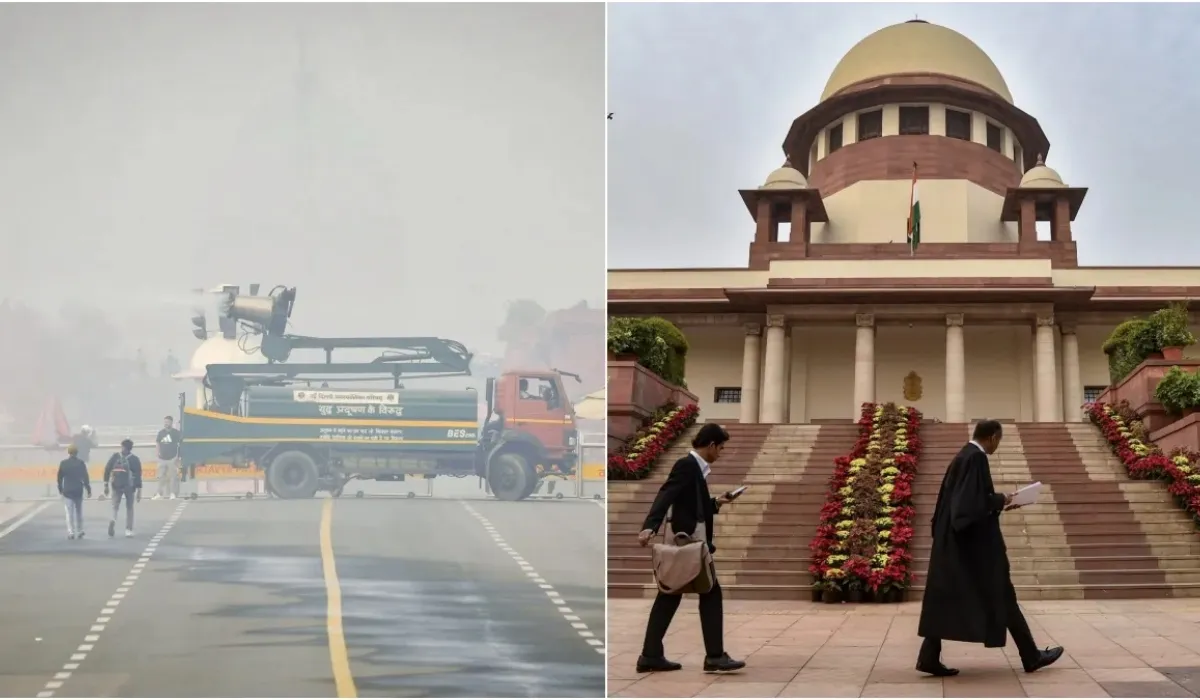
The air pollution crisis in the Delhi-NCR region is worsening, with air quality reaching hazardous levels. Experts and authorities have cited stubble burning in neighboring states as a major contributor, alongside vehicular emissions and industrial pollution.
Supreme Court intervention scheduled
The Supreme Court of India will hear the air pollution case on November 12. During proceedings, lawyers emphasized the urgency of the situation, stating, “The air quality in the NCR is deteriorating, as the court would be aware. On November 3, the court had directed the commission and CPCB to file an affidavit. No specific date has been set to list this matter yet. The listing may occur on Monday. This is urgent, and we genuinely don’t know what is happening while the city’s air continues to worsen.”
Delhi's air quality plummets again
After a brief two-day improvement, Delhi's air quality fell into the 'very poor' category on Thursday, with the Central Pollution Control Board (CPCB) recording an average Air Quality Index (AQI) of 311. Experts warn that without stringent action, relief may not come in the near future.
SupremeCourt's recent measures on pollution
The recent spike in pollution came after Delhi celebrated its first "green Diwali" in years. Ahead of the festival, the Supreme Court allowed the use of green crackers in Delhi-NCR between October 18 and 20, but only during two specific time slots: 6 am to 7 am and 8 pm to 10 pm. However, many residents flouted these restrictions.
Additionally, the apex court had asked the Central and State Pollution Control Boards to monitor air quality daily from October 14 to October 25 and submit regular reports.
Air quality post-Diwali
CPCB data shows that Delhi’s AQI crossed 450 in several areas after Diwali, driven by firecracker smoke and ongoing stubble burning in neighboring states. For context, the CPCB classifies AQI as:
- 0-50: Good
- 51-100: Satisfactory
- 101-200: Moderate
- 201-300: Poor
- 301-400: Very Poor
- 401-500: Severe
Graded response action plan (GRAP) stage II implemented
Delhi is currently under GRAP Stage II (very poor), triggered on October 19 when AQI reached 301-400. Measures under this stage include higher parking fees in parts of New Delhi, restrictions on polluting activities, and other actions aimed at mitigating the severe air quality crisis.
