
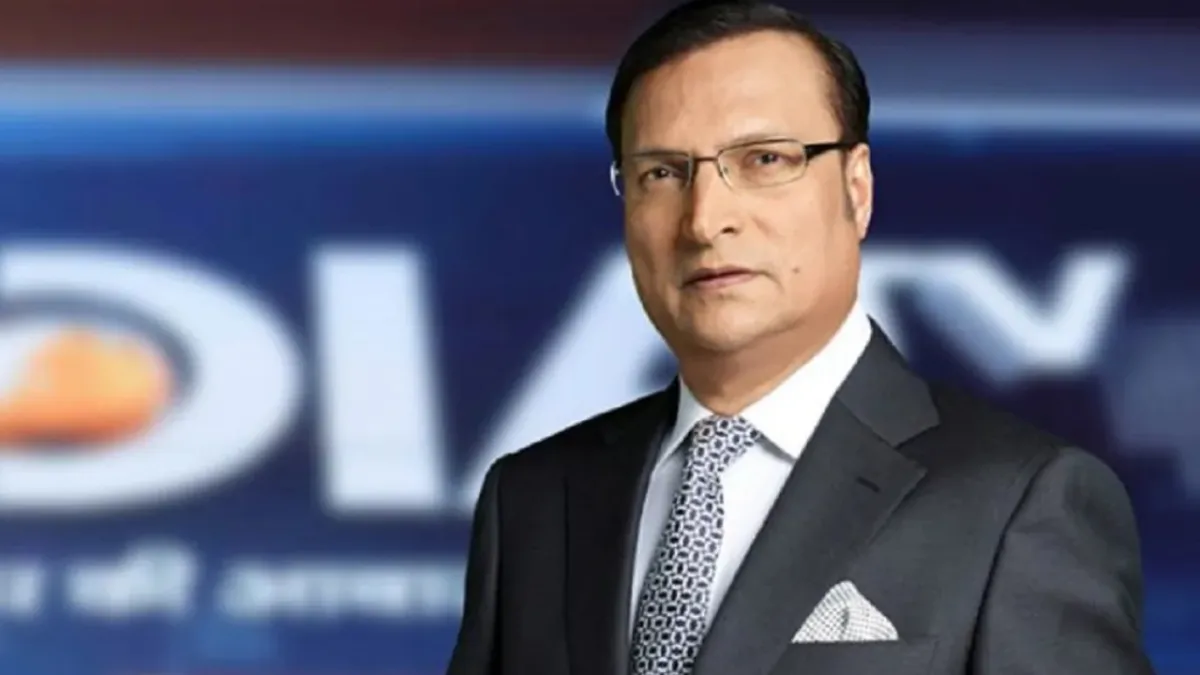
The Delhi High Court has ruled in favour of India TV Chairman and Editor-in-Chief Rajat Sharma in a case related to the misuse of personality rights. The court has directed Google LLC to remove two YouTube channels hosting deepfake videos of Rajat Sharma within 36 hours. The matter concerns doctored videos being circulated on YouTube, where Rajat Sharma's original videos were doctored using artificial intelligence tools. These misleading videos were being used to spread false information and misguide the public by using his name and face.
Here are the key directions given by the Delhi High Court in the case:
- The court noted that Rajat Sharma, in his affidavit, confirmed that the videos in question were edited and doctored. It accepted the case for issuing takedown orders. Google LLC (listed as defendant no. 17) has been instructed to delete the two YouTube channels (defendant nos. 14 and 16) that uploaded the deepfake content within 36 hours of the order being uploaded.
- The court further ordered Google to provide Rajat Sharma with the contact details, KYC information, and monetisation data of the channels involved in making the deepfake videos within one week.
- Representing Rajat Sharma, his counsel argued that to avoid repeated legal action, Google could be instructed under Rule 4(4) of the Information Technology (Intermediary Guidelines and Digital Media Ethics Code) Rules, 2021, to prevent such deepfake content from being uploaded again.
- The court also stated in paragraph 27 of the order that the plaintiff (Rajat Sharma) is willing to work together with defendant no. 17 (Google LLC) to help implement Rule 4(4) of the Information Technology (Intermediary Guidelines and Digital Media Ethics Code) Rules, 2021. The court directed Rajat Sharma and Google LLC to hold a joint meeting. In this meeting, Rajat Sharma will be able to directly inform Google about any other deepfake videos of him still available on YouTube, which should also be covered under the court's order. The court further instructed Google LLC to make efforts to ensure that all deepfake-related content is removed from its computer resources. This is to prevent Rajat Sharma from having to constantly search across social media platforms and YouTube channels for such deepfake content himself.
- The court observed that the order is necessary not only to protect Rajat Sharma's rights but also to prevent unsuspecting viewers from consuming misleading content.
- The court granted defendant no. 17 – Google LLC the liberty to file an affidavit if it faces any technical difficulty in implementing paragraph 27 of the order.
- The court also allowed Rajat Sharma to contact Google in the future regarding any similar fake or misleading content so that such videos can be removed. If Google has an objection to removing any flagged content, it must inform Rajat Sharma so that he may pursue appropriate remedies.
