
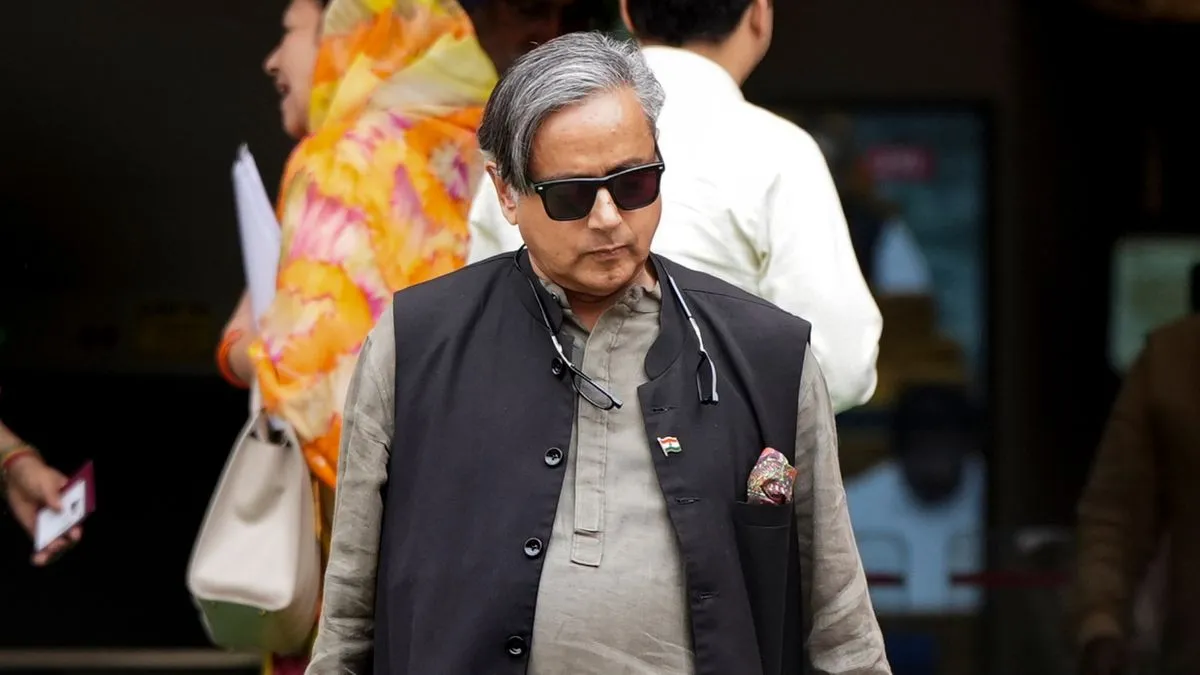
The Congress on Sunday 'outrightly' distanced itself from Shashi Tharoor's recent remarks on former deputy prime minister Lal Krishna Advani and said the MP from Kerala's Thiruvananthapuram 'speaks for himself'. It also said that Tharoor continues to make such remarks and the Congress Working Committee (CWC) reflects 'democratic spirit' unique to it.
"Like always, Dr. Shashi Tharoor speaks for himself and the Indian National Congress outrightly dissociates itself from his most recent statement," Congress' media and publicity department head Pawan Khera posted on X (previously Twitter). "That he continues to do so as a Congress MP and CWC member reflects the essential democratic and liberal spirit unique to INC."
Tharoor's praise for Advani and Hegde's criticism
On Advani's 98th birthday on Saturday, the veteran Congress leader lauded the former deputy prime minister for his role in shaping the trajectory of modern India, while sharing his photo with him on X. To this, lawyer Sanjay Hegde criticised Advani, but Tharoor replied that the veteran Bharatiya Janata Party (BJP) leader's legacy cannot be defined just by the Rath Yatra.
Advani, who was awarded the India's highest civilian honour Bharat Ratna this year, spearheaded the Rath Yatra and the Ram Janambhoomi movement, which many believe was responsible for the fall of Babri Masjid in Ayodhya on December 6, 1992.
"Reducing his long years of service to one episode, however significant, is also unfair. The totality of Nehruji’s career cannot be judged by the China setback, nor Indira Gandhi’s by the Emergency alone," he said, adding that the 'same courtesy' should be extended to Advani.
Tharoor's history of debated remarks
Tharoor has had a history of making remarks from which the Congress has regularly distanced itself. Recently, he had said dynastic politics across the political spectrum poses a 'grave threat' to India's democracy, asserting that the country traded "dynasty for meritocracy".
His remarks allowed the BJP to take a dig at Congress, but Tharoor argued that dynastic politics is not just limited to a handful of prominent families but is rather woven deeply into the fabric of Indian governance.
