
The Centre has formed an inter-ministerial group headed by Defence Minister Rajnath Singh to monitor the West Asia conflict and the issues arising out of it in the country amid concerns over natural gas and crude oil supply, sources said on Friday.
Home Minister Amit Shah, Finance Minister Nirmala Sitharaman, and Petroleum Minister Hardeep Singh Puri are also part of the panel among others, ANI reported.
Centre reduces excise duties on fuel
Earlier in the day, the government reduced excise duties on fuel, cutting the rate on petrol to Rs 3 per litre and eliminating it entirely for diesel. The windfall tax on diesel exports has been set at Rs 21.5 per litre.
At the same time, taxes on Aviation Turbine Fuel, ATF, have been revised. A new excise duty of Rs 50 per litre has been introduced, though exemptions bring the effective rate down to Rs 29.5 per litre in certain cases, easing pressure on the aviation sector.
According to the notification, Aviation Turbine Fuel carries a special additional excise duty of Rs 50 per litre, with applicable exemptions capping the effective rate at Rs 29.5 per litre.
Other adjustments to excise duties have also been made to help maintain overall stability in fuel prices.
Global energy crisis due to Iran war
The reduction comes amid a global energy crisis triggered by the US–Israel conflict with Iran and the resulting blockade of the Strait of Hormuz imposed by Tehran. The route carries roughly 20 to 25 million barrels per day, accounting for about one fifth of the world’s crude oil and gas supply. Prior to the conflict, India sourced about 12 to 15 per cent of its oil from this corridor.
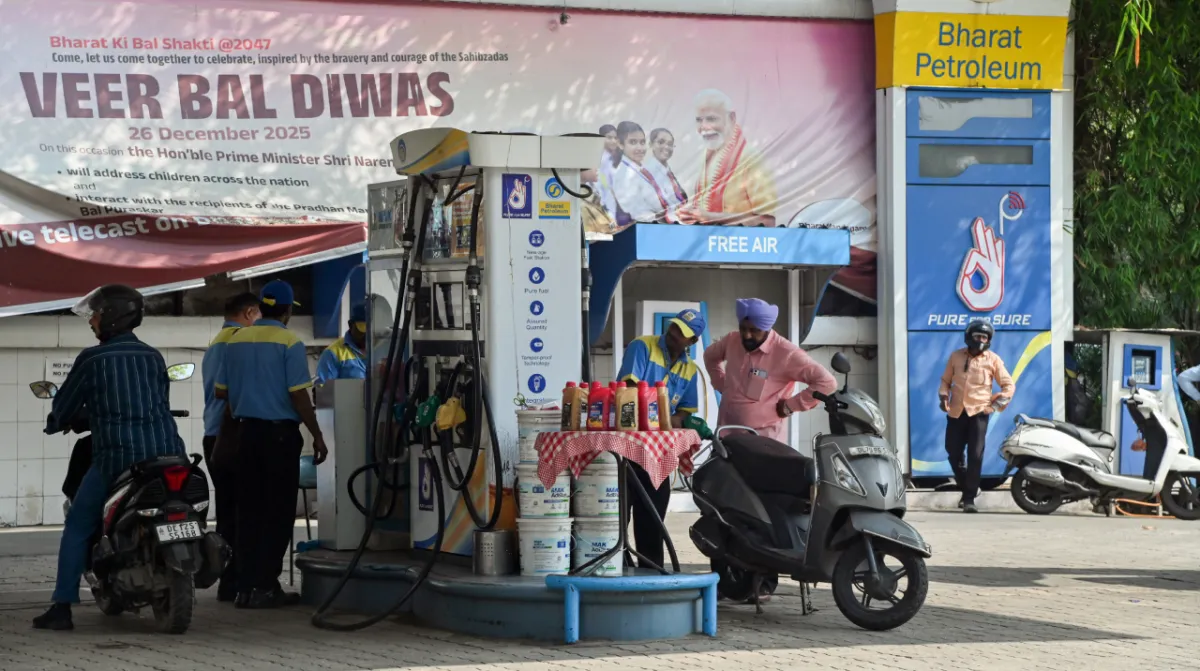
Meanwhile, the Ministry of Petroleum and Natural Gas, in an official statement, said that all retail outlets are operating normally across the country and that there are adequate stocks of petrol and diesel at all pumps. It also urged citizens to avoid panic buying amid circulating rumours.
On the situation in West Asia, despite public peace overtures by Donald Trump towards Iran, the conflict continues.
The Israel Defense Forces said on Saturday that it had struck the Iranian regime’s primary facility for the production of missiles and sea mines in Yazd. The IDF stated that the site was used for the planning, development, assembly, and storage of advanced missiles intended for launch from cruise platforms, submarines, and helicopters against both mobile and stationary maritime targets.
"In the strikes carried out across Tehran, the Air Force targeted infrastructure and sites used by the regime to produce weaponry, with an emphasis on ballistic missile production facilities," the IDF said.
