
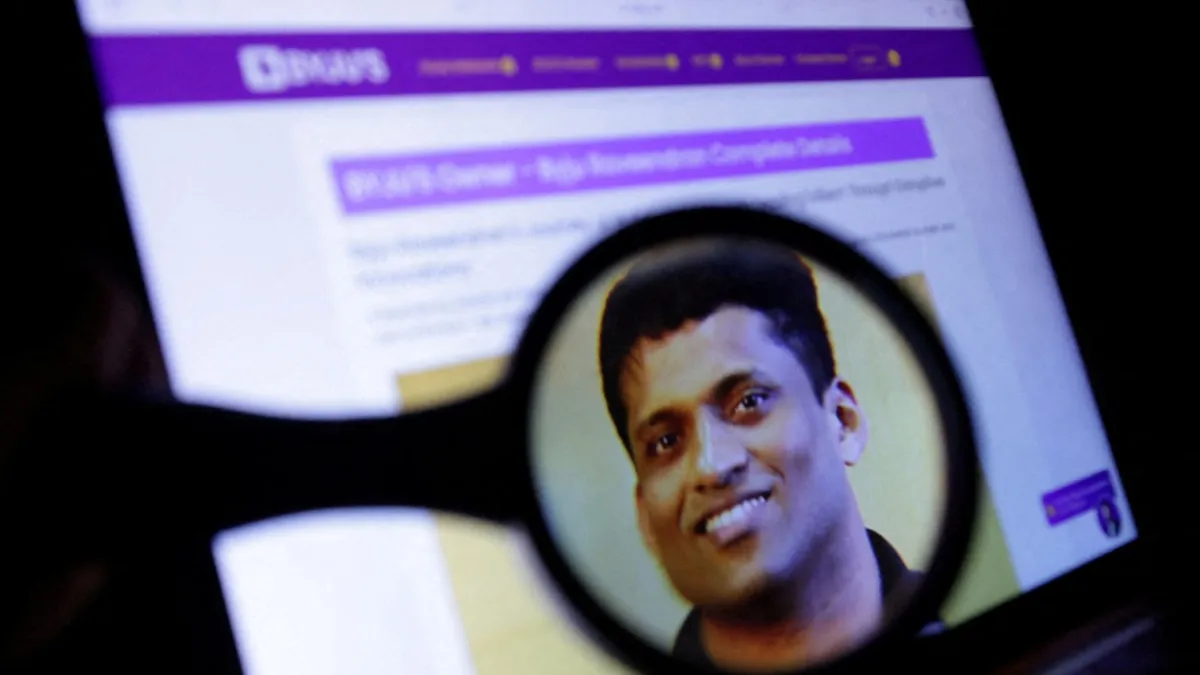
In a landmark move, the Supreme Court on Wednesday reversed the decision of the National Company Law Appellate Tribunal (NCLAT), which had stayed the bankruptcy proceedings against embattled ed-tech giant Bayju. Chief Justice DY Chandrachud also reversed the NCLAT’s approval of the Rs 158.9 crore dues settlement between Bayju and the Board of Control for Cricket in India (BCCI) and directed that the restricted amount be deposited with the committee of creditors.
A bench comprising Justices JB Pardiwala and Manoj Misra was hearing the appeal filed by US-based creditor Glas Trust Company LLC, against the NCLAT decision. The court slammed the NCLAT for not fully considering the case when it closed the insolvency proceedings and ordered a fresh adjudication.
NCLAT had earlier on August 2 approved the settlement with the BCCI and granted temporary relief to Byju's by halting the insolvency proceedings after approving the settlement with the BCCI. The decision temporarily enabled Byju’s founder Byju Ravindran to regain control of the company’s finances and operations. However, the Supreme Court termed the NCLAT decision on August 14 as “unreasonable” and stayed its case while issuing notices to Byju’s and other involved.
"The NCLAT cannot be considered a post office that merely puts a stamp on the withdrawal application submitted by the parties to the corporate insolvency resolution process (CIRP),” the bench said, adding that the withdrawal plea should have been moved by the IRP (insolvency resolution professional) not by the corporate debtor or other parties.
It said the exercise of discretionary powers by the NCLAT was not warranted in the present circumstances.
"As noted above, inherent powers cannot be used to subvert legal provisions, which exhaustively provide for a procedure to permit the NCLAT to circumvent this detailed procedure by invoking its inherent powers,” it said.
Also read | Bengaluru building collapse: Owner Muniraja Reddy named in FIR, son in police custody
