
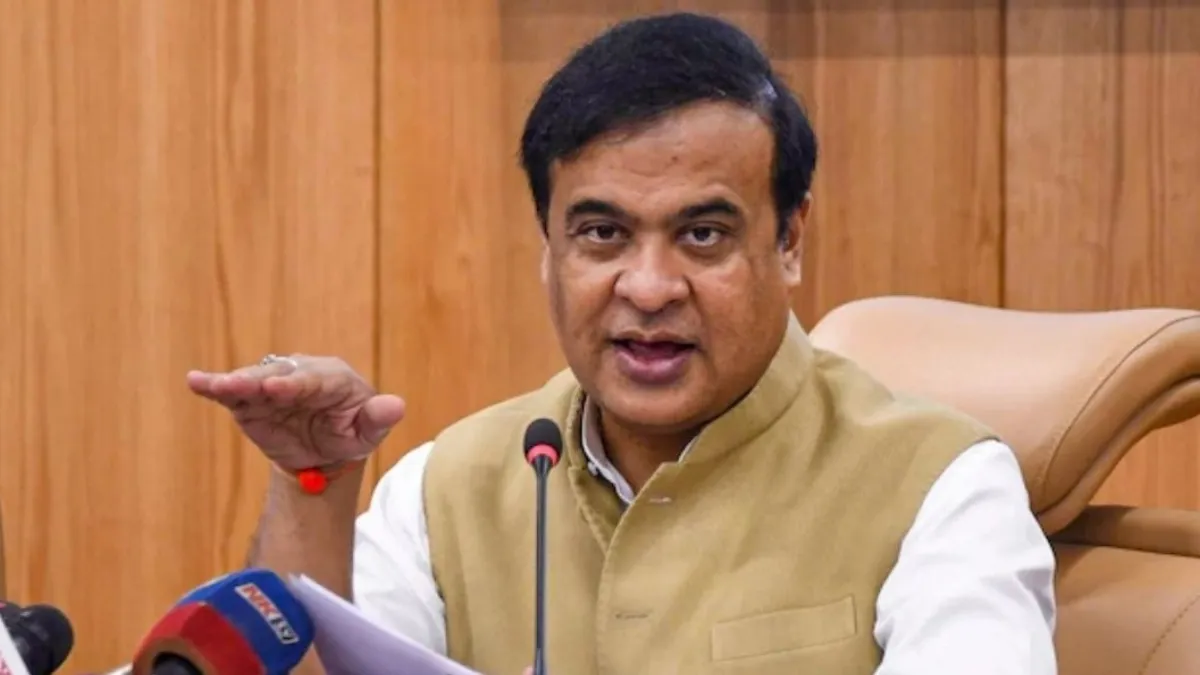
Assam Chief Minister Himanta Biswa Sarma on Monday sought to alleviate fears over China’s recent commencement of the world’s largest dam construction on the Brahmaputra River in Tibet. Speaking to reporters at a local event, Sarma said he does not foresee any immediate cause for worry, emphasising that the Brahmaputra receives most of its water from Bhutan, Arunachal Pradesh, and local rainfall in Assam.
China formally began construction last Saturday on a massive USD 167.8 billion hydropower dam over the Brahmaputra—known locally in Tibet as the Yarlung Zangbo—near the Indian border in Arunachal Pradesh. The project, which includes five cascade hydropower stations, has raised concerns in downstream countries like India and Bangladesh regarding water security and ecological impacts.
'I am not immediately worried because Brahmaputra is a mighty river and it is not dependent on a single source (of water),' Sarma said. When asked about the possible downstream impact on Assam, the Chief Minister noted that it is not yet clear whether the effect would be beneficial or harmful.
Sarma highlighted two contrasting scientific views regarding the dam’s impact. One suggests that if China disturbs the Brahmaputra’s flow, it could reduce water levels and adversely affect biodiversity. The other theory argues that reduced water flow might serve as a natural flood cushion, potentially lowering flood risks in Assam. “So, I don’t know which one is correct,” he admitted.
Regarding diplomatic efforts, Sarma expressed confidence that the Indian government is either already in discussions with China or will initiate talks soon. “The Centre is a better judge on this topic and will take a call. I am sure they must already be discussing with China or will have a discussion with the neighbouring country,” he said.
China’s groundbreaking ceremony for the dam was presided over by Premier Li Qiang in Nyingchi City, Tibet Autonomous Region, where the foundation was laid at the Mainling hydropower station site. Despite the scale and strategic implications of the project, geological challenges persist as the region lies on a tectonic boundary prone to seismic activity, complicating construction.
India, wary of China’s control over the Brahmaputra’s flow, is simultaneously developing its dam projects in Arunachal Pradesh to manage water resources and maintain strategic balance. Trans-border cooperation continues through mechanisms like the Expert Level Mechanism, enabling data sharing on river flows during the flood season.
As China’s ambitious project advances, Assam and India remain vigilant, balancing concerns with ongoing diplomatic engagement.
(PTI inputs)
